
May 5, 2021Insect repellents for berries identified by University of Minnesota
Like humans, insects use their senses of smell, sight and taste to find tasty fruit. The invasive insect pest spotted wing drosophila is attracted to many different fruits, including raspberries, strawberries and blueberries.
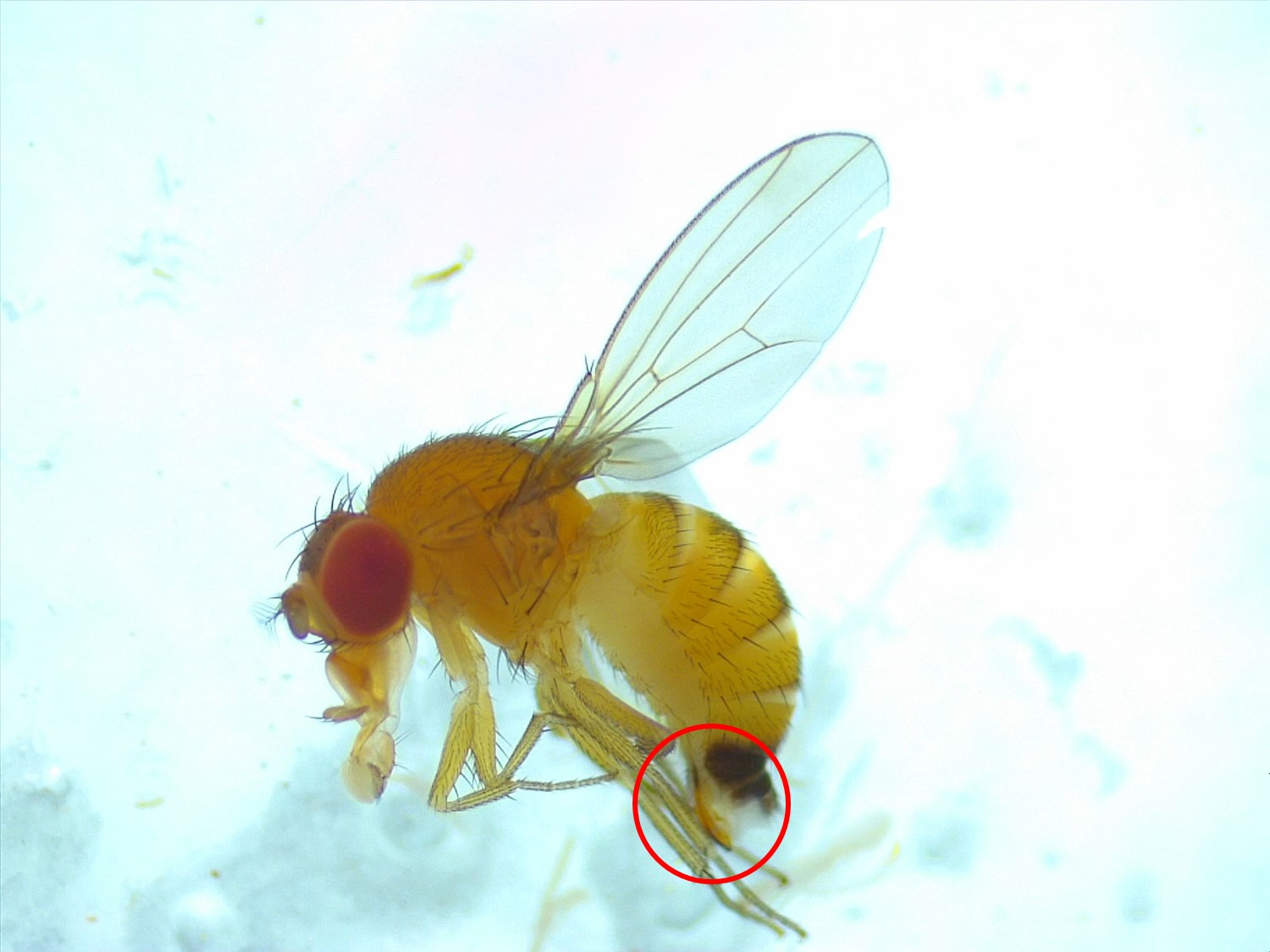
Adult female SWD search for ripening and ripe fruit to lay eggs inside the flesh with a large and serrated egg-laying device, unlike other drosophila species which use damaged and rotting fruit for egg-laying (oviposition).
Since SWD was first detected in North America, researchers have investigated various management strategies to control this pest, including chemical insecticides, sanitation, biocontrol, novel bioinsecticides, and physical exclusion. These practices vary in their effectiveness based on unique farm characteristics, can be expensive, and increase labor. For organic chemical insecticides, there is currently only a single product (spinosad) that has been shown to be consistently effective, and therefore, pesticide resistance is a concern. Due to these challenges associated with current SWD management strategies, there is a need for additional management options, understanding how these strategies may work together in an IPM program, and studies on the economic viability of these practices.
Botanical products such as essential oils and volatile organic compounds (VOCs) play a role in plant-insect interactions and could provide an alternative pest management strategy which could be used without additional equipment investment from growers. Naturally occurring yeast and fermentation odors attract SWD to fruit crops (Cha et al., 2012). This behavior is exploited for pest monitoring with baited traps. An interesting avenue of study from a pest management standpoint is whether certain odors can have an opposite effect, essentially masking the scent of ripening fruit and preventing adult SWD from ovipositing on the fruit crop.
Commercially available essential oil products have been developed for pest management purposes in recent years. For our research, we studied Ecotrol PLUS (Keyplex), and Sporan EC2 (Keyplex) which are OMRI (Organic Materials Review Institute) approved and contain varying combinations of rosemary oil, geraniol, peppermint oil, clove oil, and thyme oil. Because SWD is known to locate host fruit via visual and olfactory cues, plant odors that are different from berry fruit odors could mask the scent of SWD host fruit, while also decreasing the use of broad spectrum insecticides which negatively impact the environment, human health, pollinators and other beneficial insects. However, it is not yet understood how to effectively implement botanical essential oils in the field (e.g. volatilization rate, application method, and impact on infestation in small fruit).
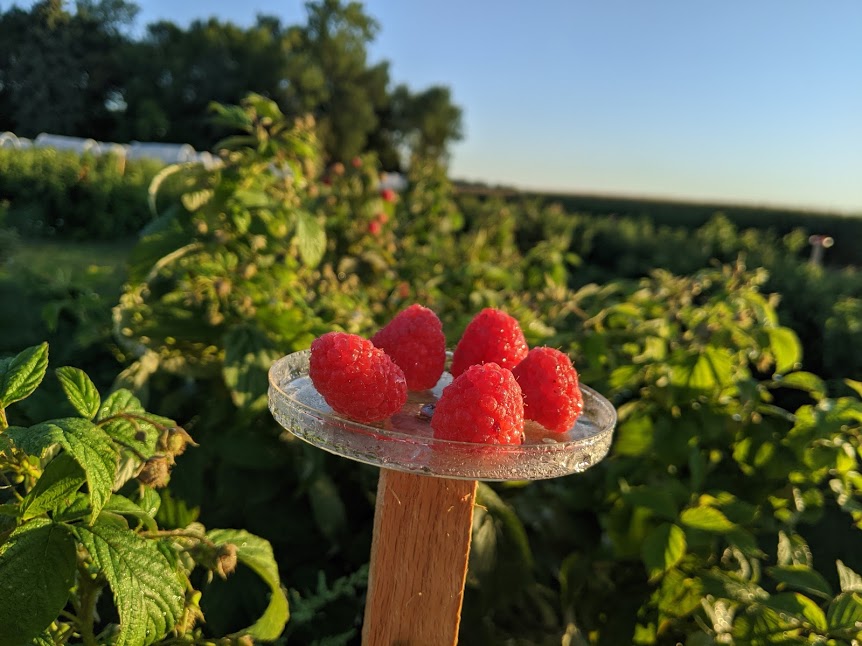
At the University of Minnesota, we have begun studying the efficacy of botanical repellents for organic management of SWD in blueberries and primocane raspberries. We compared the amount of SWD infested fruit when treated with one of three botanical essential oil treatments (lavender oil, Ecotrol Plus and Sporan) to spinosad and an untreated control in the field across harvest weeks. For blueberry crops, Ecotrol had marginally less infestation compared to Sporan and Lavender oil treated plants, but not less than the unsprayed control. For our raspberry trials, Ecotrol had significantly less infestation compared to the other treatments, but average infestation rates were still at 71% compared to 84% in the unsprayed plots. Ecotrol might be effective while SWD populations are low, but quickly becomes ineffective as the population grows. Temperature could also have an effect, since these botanical oils volatilize faster when it is warmer. The results of the project demonstrate that certain botanical volatiles may provide an alternative to broad-spectrum insecticide application that is also suitable for organic management of SWD but more research is needed to optimize their effectiveness.
A greater understanding of SWD’s response to aversive botanical odors may yield new management strategies for farmers. Botanical repellents in the form of applied essential oils or fragrant interplanted crops may provide SWD management through aversive stimuli. Although botanical repellents may provide incomplete protection against SWD, any reduction in pest pressure will be beneficial to growers and may be used in integrated pest management programs for this pest.
References
Cha, D.H.; Adams, T.; Rogg, H.; Landolt, P.J. Identification and field evaluation of fermentation volatiles from wine and vinegar that mediate attraction of spotted wing drosophila, Drosophila suzukii. J. Chem. Ecol. 2012, 38, 1419–1431.
Acknowledgements
Special thanks to Mary Rogers and Thaddeus McCamant for helping design and advising on this research project. Additional thanks to Aaron Wills of Little Hill Berry Farm in Northfield, Minnesota for collaborating with us on the blueberry experiment.
Funding for these experiments was provided by the North Central SARE Graduate Research Grant, GNC19-276: Field implementation of botanical repellents for organic management of spotted-wing drosophila (Drosophila suzukii) in small fruit.
– Matthew Gullickson, University of Minnesota
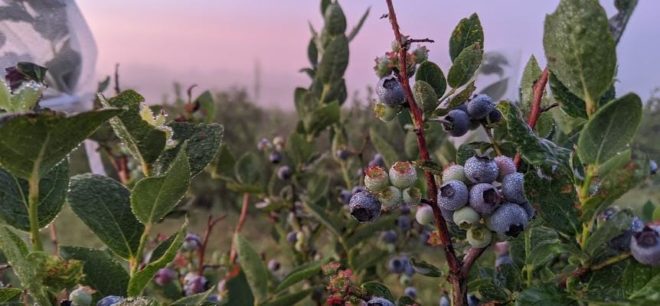
Photo at top: Blueberry plants at Little Hill Berry Farm, Northfield Minnesota. Plants are sprayed at sunrise to minimize effects on pollinators.





Current Issue
On-farm AI: Water, farm, labor research guide decisions
Data collection tool expands farm management
Carmel Valley winegrapes: Parsonage Village Vineyard
IFTA Yakima Valley tour provides orchard insights
IFTA recognizes tree fruit honorees
Pennsylvania recognizes fruit industry professionals
Fresh Views 40 Under 40
see all current issue »