

How Gee Whiz is redefining premium apples through innovation
Gee Whiz and Auvil Fruit Co. are redefining premium apples through innovation, sustainability and new varieties.





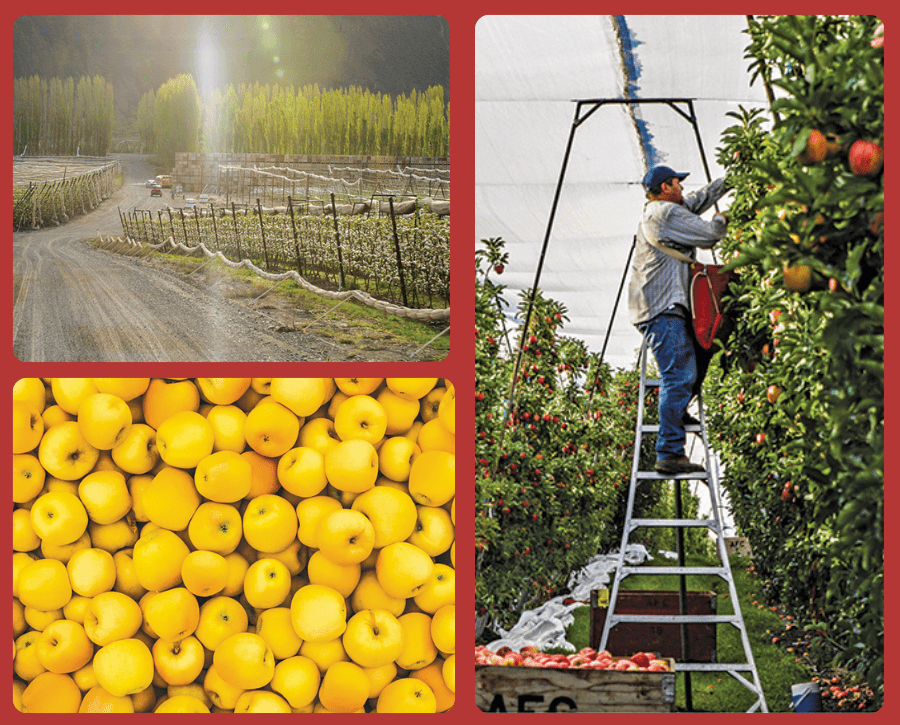
Key takeaways
- Gee Whiz traces its roots back to 1928 through Auvil Fruit Co.
- The company focuses on premium apples and cherries in Washington.
- Goldsnap was launched exclusively with Sprouts Farmers Market.
- Technology and precision agriculture are central to orchard management.
- Sustainability is integrated into long-term orchard stewardship.
- High-density plantings improve production efficiency and fruit quality.
Auvil Fruit Co. is growing exceptional fruit, building trusted relationships and investing in the future.
Gee Whiz, the premium brand of Auvil Fruit Co., a grower and producer of Washington apples and cherries, traces its roots back to 1928. It’s that historic legacy that continues to shape who the company is today.
“We started as a family farming operation in Washington State with a commitment to growing high-quality fruit and doing things the right way over the long term,” said Brian Traum, vice president of sales and marketing. “Over the decades, the business has evolved from a traditional grower into a more fully integrated tree fruit company with a strong focus on premium apples and cherries, varietal innovation, strategic retail partnerships and disciplined execution.”
While the scale and sophistication of the business have changed, the core philosophy remains the same: to grow exceptional fruit, build trusted relationships and keep investing in the future.
The company planted Washington’s first commercial Granny Smith crop in 1972, which Traum noted was a defining moment because it reflected a willingness to move early, take calculated risks and believe in where the market was headed.
“That mindset still influences us today,” he said. “Innovation at Gee Whiz is not about chasing every new trend; it is about identifying the right opportunities early, evaluating them carefully and committing when we believe we can do something exceptionally well. That same approach continues to guide our decisions around new varieties, orchard systems and market development.”
Growing regions define identity
The company grows in Orondo, Quincy and Vantage, which has helped define its success as a premium tree fruit producer.
“These three locations give us a unique set of advantages, including strong sunlight, warm days, cool nights and an environment that helps us develop fruit with excellent color, sugars, firmness and eating quality,” Traum said.
But producing premium fruit in the region is not without its challenges.
“The area requires a thoughtful approach to farming, especially around water management, crop timing and consistency,” Traum added.
Over time, Traum believes working in those production areas has helped shape Gee Whiz into a premium-focused grower, because the fruit has to perform both in the orchard and at the consumer level.
“Our regions are not just where we farm — they are a big part of why our fruit stands out,” he said.
Adding new varieties
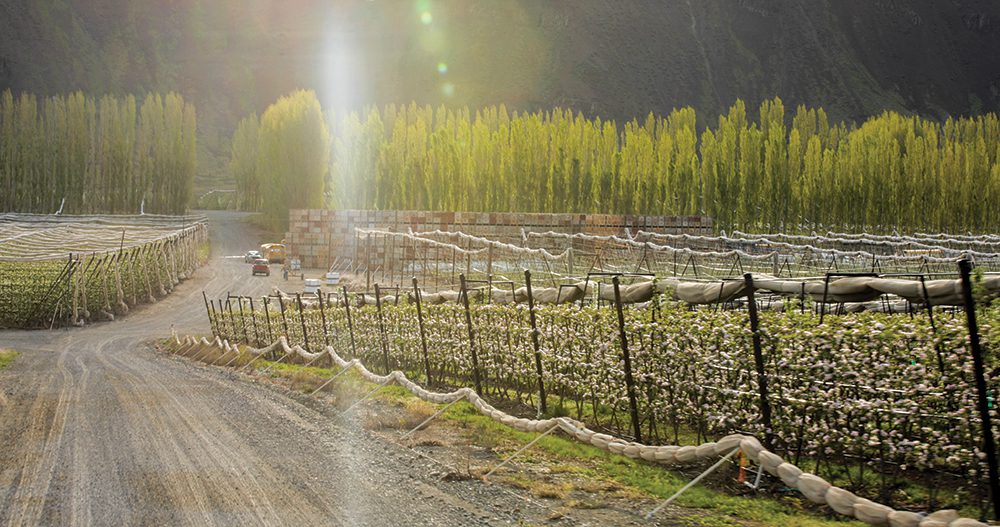
matched to the right varieties and sites within Auvil’s farm network.
The company recently launched a new partnership with Sprouts Farmers Market, introducing the Goldsnap apple — a vibrant, flavorful variety available exclusively at the retailer’s stores.
“Goldsnap stands out because it offers a very distinctive eating experience,” Traum said. “It is crisp, juicy and well balanced, with bright sweetness and a satisfying snap that makes it instantly memorable. We believe it brings a fresh profile to the premium apple category at a time when retailers are still looking for true differentiation, not just another apple with a new name.”
Partnerships like Sprouts are incredibly valuable, he said, because they allow a new variety to be introduced with focus, alignment and a clear consumer strategy.
Gee Whiz is known for developing proprietary varieties such as Hunnyz and Goldsnap. Before adding something new, the company’s process starts with the consumer.
“We look closely at eating quality first,” Traum said. “Flavor, texture, crispness, juiciness and overall repeat-purchase potential.”
From there, Traum said the company then evaluates how a variety performs agronomically: yield, packout, size profile, color, storage performance and consistency across growing conditions are all looked at closely.
“We also consider how the variety fits commercially,” he said. “Does it bring something differentiated to the category? Does it align with a retail need or merchandising opportunity?”
Ultimately, Gee Whiz looks for varieties that work across the full fresh produce chain — from the orchard, to the packing house, then to the retailer and onto the consumer’s table.
“If a variety is exciting but does not hold up operationally or commercially, it is probably not the right fit,” Traum said.
Knowing that consumers continue to gravitate toward apples that deliver a premium eating experience, crispness, juiciness, balanced flavor and consistency remain at the center of development.
“There is also growing demand for varieties that feel differentiated and memorable rather than interchangeable,” Traum said. “Shoppers respond well to apples with a strong story, a clear flavor identity and premium visual appeal. We also pay attention to how fruit performs in different formats, including bags versus tray packs, and how it fits within our evolving merchandising strategies.”
Tech talk
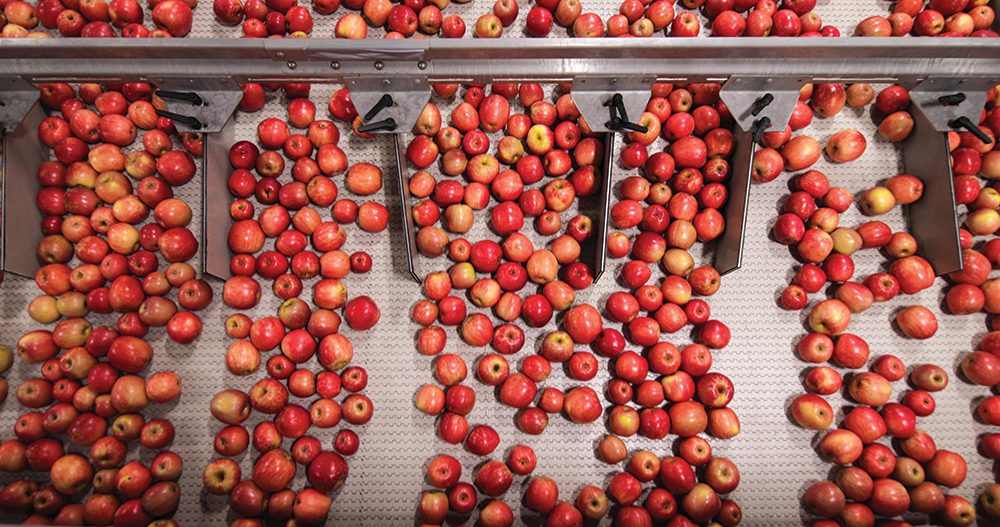
juiciness, balanced flavor and consistency remain at the center of new variety development.
Technology plays an increasingly important role in how Gee Whiz manages its orchard.
“Today, better data helps us make better decisions around irrigation, crop load, labor planning and harvest timing,” Traum said. “Precision tools and more disciplined monitoring allow us to respond faster and manage variability more effectively across blocks and regions.”
Gee Whiz also uses its crop data to connect orchard performance more directly to packout, quality outcomes and commercial returns.
“In a premium fruit business, small improvements in decision making can have a meaningful impact on quality and profitability, so technology is becoming more and more central to how we operate,” he said.
The company continuously evaluates new and emerging orchard systems that can improve efficiency, fruit quality and long-term returns, focusing on adopting systems that create measurable value, not just following the latest model.
“High-density plantings can create advantages in earlier production, more uniform fruit and more efficient labor use when they are matched to the right variety and site,” Traum said. “We also continue to look at mechanization and automation where it can improve consistency and help address labor pressures. The goal is always to improve quality and efficiency while protecting the long-term health of the orchard.”
RELATED – Inside CMI Orchards’ climate-positive tree fruit production strategy
Sustainability is part of Gee Whiz’s long-term orchard stewardship and that starts with responsible resource management.
“Water efficiency is a major focus, especially in Washington, so we continue to work on irrigation practices that help us use water more precisely and effectively,” Traum said. “We are also focused on maintaining healthy, productive orchards over time, which includes careful attention to soil, tree health and overall field management.”
More broadly, Traum says sustainability means making decisions that support the long-term viability of the land, the business and the communities Gee Whiz operates in.
“It is not a separate initiative,” he said. “It is part of how we think about running the business responsibly.”
Going forward, sustainability and growth are firmly in the company’s plans for the future.
“Any long-term growth strategy has to be built around efficient use of resources, resilient orchard systems and varieties that perform well agronomically as well as commercially,” Traum said. “As we evaluate future opportunities, sustainability is becoming part of the decision framework, not just in terms of environmental impact, but also in terms of operational efficiency and long-term return.
“The varieties and systems that will succeed in the future must deliver great fruit while also supporting more efficient, responsible production. We see sustainability not as a constraint on innovation, but as an important driver of better innovation.”
FAQs
What is Gee Whiz?
Gee Whiz is the premium brand of Auvil Fruit Co., a Washington grower and producer of apples and cherries.
What is the Goldsnap apple?
Goldsnap is a proprietary apple variety launched through a partnership with Sprouts Farmers Market.
Where does Gee Whiz grow apples?
The company grows in Orondo, Quincy and Vantage, Washington.
What technologies does Gee Whiz use?
The company uses precision agriculture tools, crop data and monitoring systems to improve orchard management.
How does Gee Whiz approach sustainability?
The company focuses on water efficiency, soil health, orchard longevity and responsible resource management.
A graduate of the University of Miami, Keith Loria is an award-winning journalist who has been writing for almost 20 years. View his recent writing at keithloria.contently.com.