

Rising labor, volatile markets: The cost disconnect growers can’t control
NCAE head John Hollay says It’s time for farm labor policy that better aligns wages with market realities.





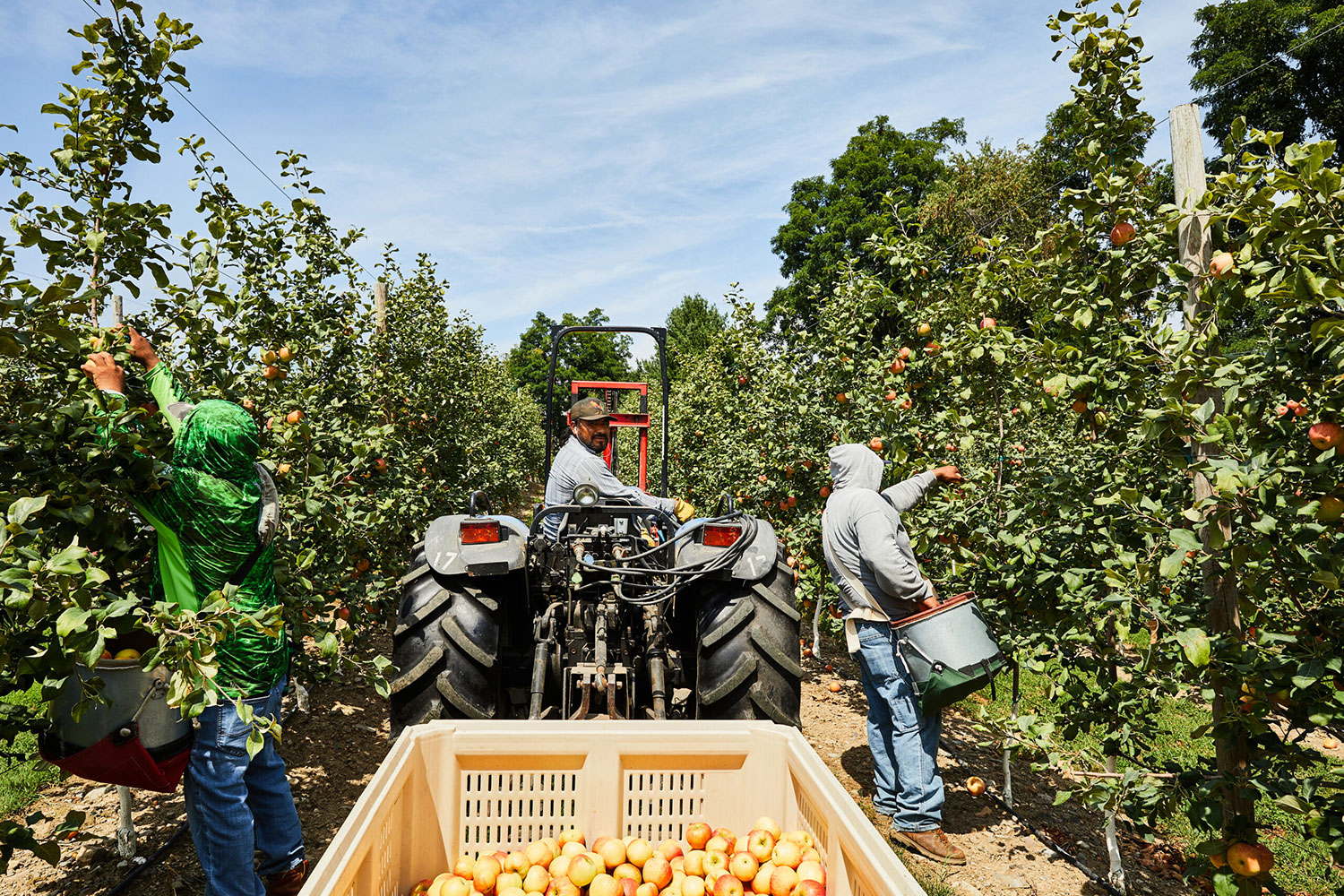
Turn to almost any page in this month’s market report and you’ll see prices doing what they’ve always done in the fruit and vegetable business: Moving in response to weather, supply shifts, promotions, consumer demand and global trade pressures. What you won’t see is labor costs moving in tandem. That disconnect has become one of the most defining — and destabilizing — features of today’s produce industry.
Unlike other inputs, labor costs in fruit and vegetable production do not rise and fall with market prices. When markets soften, labor costs don’t ease. When a crop struggles to clear at breakeven, payroll still runs at full price. In an industry where labor is often the single largest controllable cost, that imbalance matters.

It matters more because fresh produce operates in a fundamentally different market structure than row crops. Row crop producers, for all the volatility they face, operate within systems that include reference prices, countercyclical supports and risk-management tools designed to respond to prolonged price declines or cost spikes. Specialty crop growers do not have that safety net. Produce prices are set by the market, often day by day, and growers are price takers with limited ability to pass rising costs downstream. Yet labor costs rise independently of those market signals, leaving growers with little ability to control them.
California and Florida illustrate this problem clearly.
Between 2021 and 2025, California’s Adverse Effect Wage Rate (AEWR) rose from $16.05 to $19.97 per hour, an increase of roughly 24%. Over the same period, Florida growers experienced cumulative AEWR increases approaching 30%, including a single-year jump of about 10% in 2025 alone. These increases occurred regardless of market conditions. Weak berry prices in California did not slow mandated wage growth or overtime rules. A struggling citrus market in Florida did not moderate labor costs tied to the H-2A program. Despite different regulatory frameworks and production systems, growers in both states faced the same constraint: labor costs moved steadily upward while produce prices remained volatile and entirely market driven.
Rising pressure
Over the past several years, labor expenses in produce have continued to rise due to structural forces largely outside the control of individual growers — regulatory changes, minimum wage increases, overtime requirements, labor availability constraints and the rising cost of guest-worker programs. These pressures do not recede when markets turn down. They do not pause for a weak demand cycle or an oversupplied week. They move in one direction, even as produce pricing remains anything but stable.
At the same time, fresh produce markets experience pronounced price swings. Shipping-point prices fluctuate widely across commodities and seasons, driven by weather events, logistics disruptions and shifting demand. Volatility can create opportunity for some participants, but it also compresses margins and magnifies risk, especially when the largest cost line moves predictably in one direction.
This is where labor cost certainty becomes not just a workforce issue, but a market issue. Produce growers are asked to operate in a free-market pricing environment while absorbing labor costs that function more like regulated utilities — ratcheting upward, rarely adjusting downward and disconnected from revenue. That asymmetry complicates planning, discourages investment and makes long-term domestic production harder to sustain.
Policy divide
By contrast, row crop producers can at least model cost–price relationships against known policy parameters. Reference prices and support mechanisms do not eliminate risk, but they create a framework in which costs and revenue are linked by design. Produce growers have no equivalent mechanism. They manage risk through diversification, timing, contracts and operational efficiency — but not through price floors or guaranteed returns.
Without labor cost certainty, the produce industry faces increasingly difficult tradeoffs. Growers respond by harvesting less frequently, leaving product unpicked, reducing acreage or shifting production to regions or countries with different labor dynamics. Over time, those decisions affect supply reliability, domestic production capacity and the competitiveness of U.S. fruits and vegetables.
That is why President Trump’s Adverse Effect Wage Rate Interim Final Rule has been so critical for users of the H-2A program and producers in general. Wages were brought back to reality, and if Congress does its job and codifies them, it will not only represent the largest wage relief in the industry’s history but give growers a future in which they can actually compete.
As growers scan market tables and price charts, it’s worth remembering that behind every quoted carton price is a cost structure that does not move nearly as fast or flexibly as the market itself. Until labor policy and labor programs better reflect the realities of produce pricing, the disconnect between labor costs and market prices will remain one of the industry’s most pressing structural challenges.
Last chance to sound off – Take FGN’s 2026 Labor Survey
John Hollay became president and CEO of the National Council of Agricultural Employers (NCAE)) on Jan. 1, 2026. Hollay previously worked for national trade associations serving the fresh produce and dairy industries. Prior to working full time as an agricultural policy advocate, he worked as a senior legislative aide for his home state congressman from Connecticut.