

How Arkansas scientists harnessed predictive models to improve future grape varieties
Read more to see how predictive science could reshape the future of grape production and agricultural innovation.





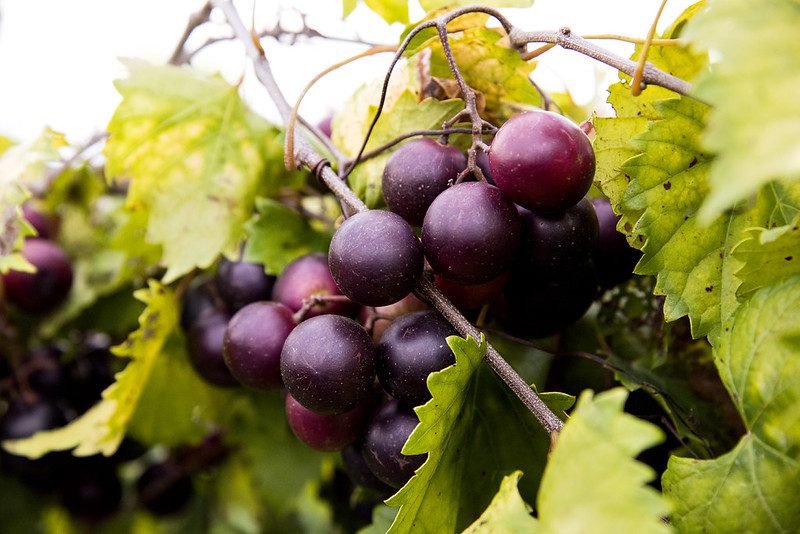

Using new genetic markers, fruit breeders at the University of Arkansas can now tell whether grapes will be seedless and self-pollinating even years before vines bear fruit, according to a recent news release from the university.
The approach will save time and resources in the pursuit of creating flavorful new grape varieties, including the major challenge of developing seedless muscadines on self-pollinating vines.
Margaret Worthington (pictured right), associate professor of horticulture and director of the fruit breeding program for the Arkansas Agricultural Experiment Station, joined colleagues at Cornell University, the U.S. Department of Agriculture, Gardens Alive! and E&J Gallo Winery in publishing a study validating a system for predicting flower sex type and seedlessness in muscadines and other grapes.
The study was conducted in association with the VitisGen3 Project and Vitis-x-Muscadinia, which are funded by the Specialty Crop Research Initiative, a USDA National Institute of Food and Agriculture federal grant program supporting research and extension efforts.
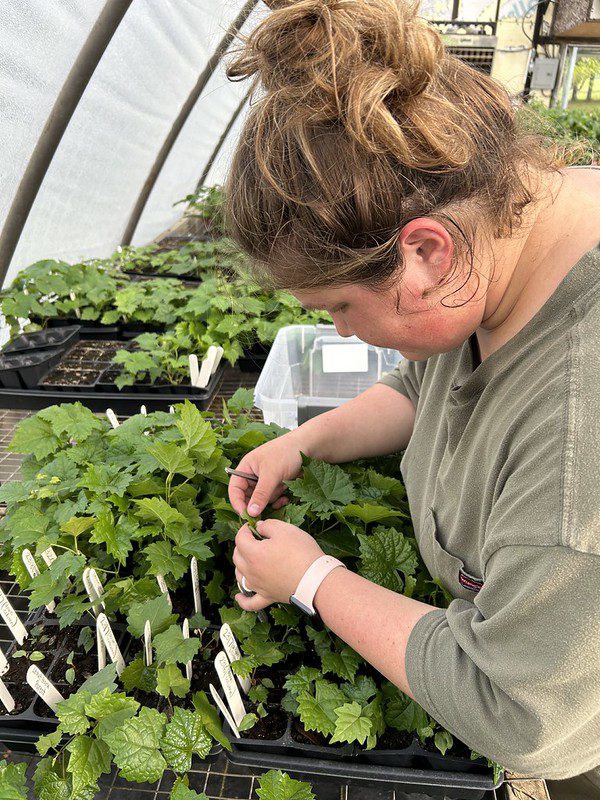
The researchers made their predictions using a genotyping platform that tests muscadine plant DNA for genetic markers — like signposts in the DNA pointing to specific traits.
The same genetic markers, which are publicly available, can also be used by wine and table grape breeders.
“This is a resource to the global breeding community,” Worthington said.
The experiment station is the research arm of the University of Arkansas Division of Agriculture, and Worthington is also part of the Dale Bumpers College of Agricultural, Food and Life Sciences at the University of Arkansas.
Dive into the details and read the full story on the grape breeding breakthrough at uada.edu.