

Pestalotia an emerging disease of strawberries in the Southeast





When strawberry plant shipments arrive, it is important that growers inspect their plants immediately upon receiving them. Well-known diseases such as gray mold (Botrytis cinerea) and anthracnose (Colletotrichum sp.) can be present in strawberry plants when they arrive from the nursery.
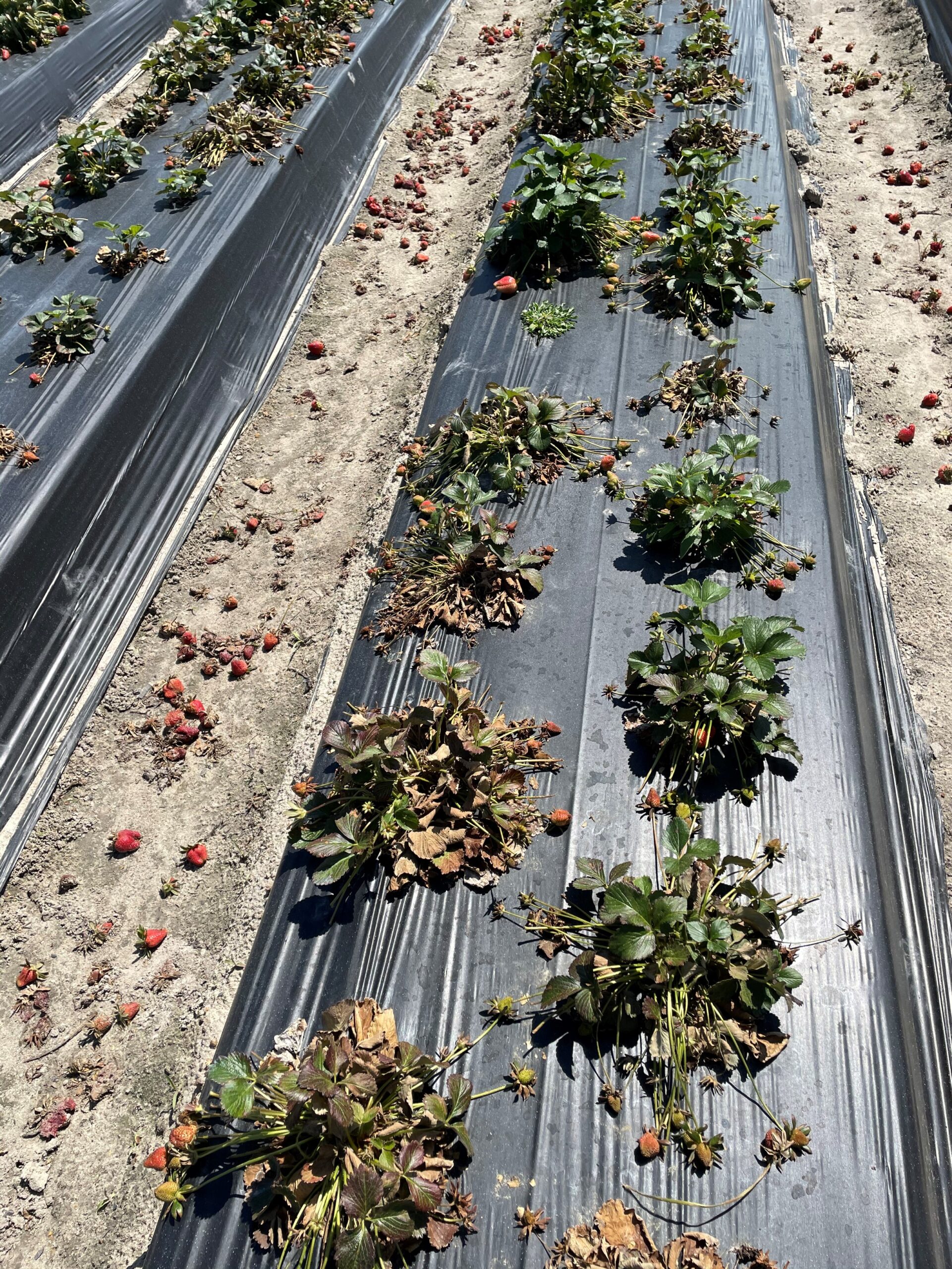
- Figure 1. Strawberry plant collapse due to pestalotia. Photo by Shane Curry, N.C. State University

- Figure 2. Strawberry infected with pestalotia. Photo by Phil Brannen, N.C. State University.
Pestalotia affects the roots, crown, leaves, and fruit of strawberry and can cause complete collapse of the plant (Figure 1). The disease thrives in rainy conditions in a temperature range of 50° F–86° F. The optimal temperature range is 77° F- 86° F. The decline and collapse of infected plants is similar to damage caused by phytophthora root and crown rot. The distinguishing characteristic of pestalotia is the fungal fruiting structures present on the surface of fruit and foliar lesions that resemble black pepper (Figures 2 and 3). The disease can remain in the field once it is introduced, an indication that it may overwinter on other host plants.
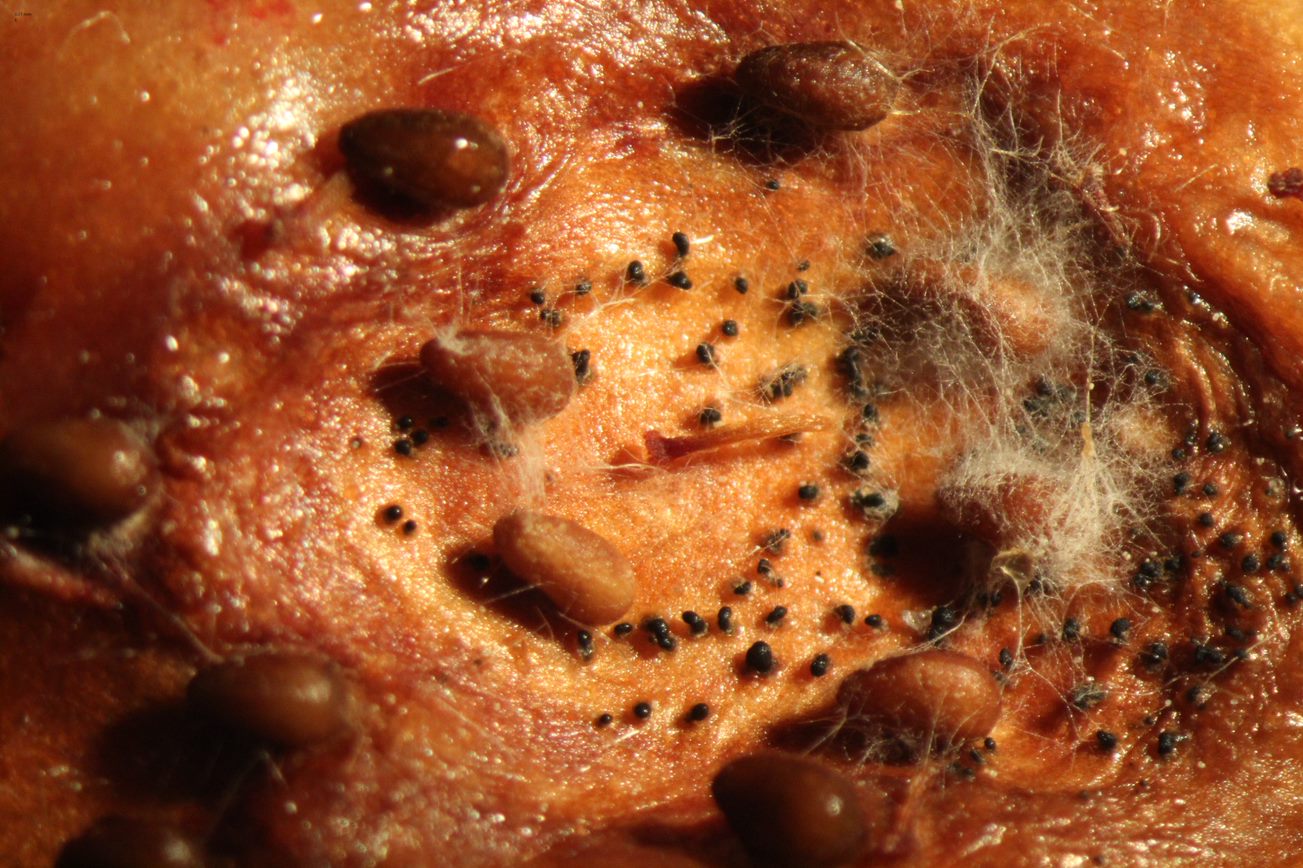
- Figure 3. Close-up of pestalotia fruiting bodies on the surface of a strawberry.. Photo by Phil Brannen, N.C. State University.
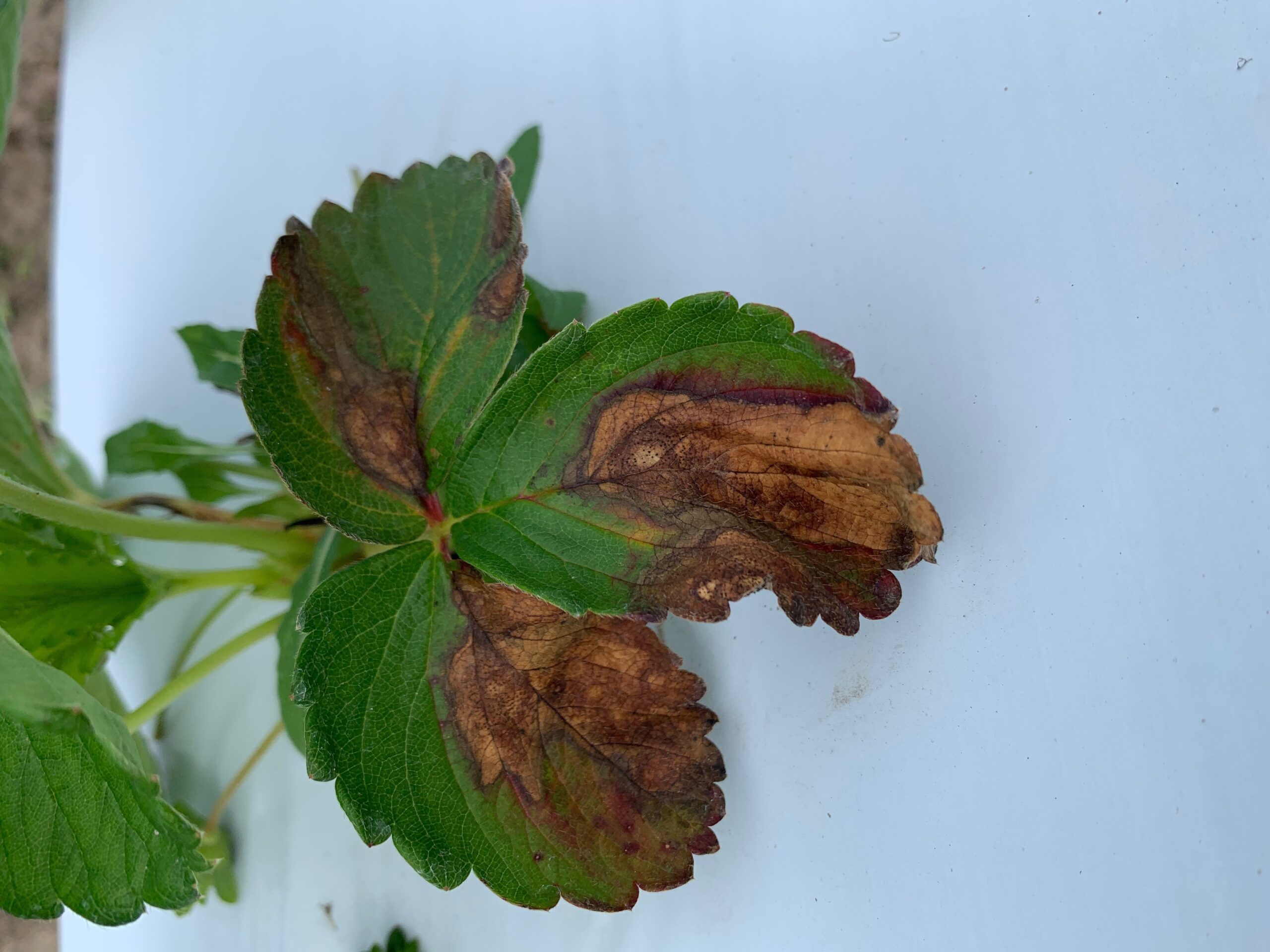
- Figure 4. Lesion caused by pestalotia on strawberry leaf. Photo by Mark Frye.
Little is known about this disease and there are few options for control. Research is underway to determine effective management options. Fludioxonil (Switch), Miravis Prime (Fludioxonil + Pydiflumetofen), and Thiram SC (Thiram) are fungicides that have had some measure of success in controlling pestalotia.
Tips to safeguard your strawberry season
- Inspect your plants as soon as they arrive. The disease can be present on plant material in nurseries. In fact, this is the primary source of infection. Be sure to purchase certified disease-free plants. If there are any symptoms on the plants that cause concern, consult professionals at your local Extension office. They can confirm a real problem and provide information to help you develop a course of action.
- Choose effective control methods. Current research suggests that Switch and Thiram are products registered for use in strawberries that have been the most effective against pestalotia in chemical trials. Applications of a suitable chemical prior to planting may reduce the fungal inoculum if it is present. If Switch is used, plant as early as possible to avoid stunting plant growth. If planting is to occur later, then avoid applying Switch to plants. Switch has also been used to prevent the spread of anthracnose. Be sure to consult the label of any product to ensure proper use. To prevent resistance, some products recommend limited applications through the season.
- Maintain a fungicide spray program throughout the season.
- Avoid harvesting when plants are wet. The moisture is an excellent vehicle in which to spread the disease. Consider harvesting later in the day, after the dew has evaporated to prevent spread of pathogens.
- Sanitary practices may be effective in controlling the disease. In the fall, scout for symptomatic leaves. Leaves showing symptoms of pestalotia should be removed from the field and destroyed.
- If the disease is found in your field, consider planting in another site. There is evidence that the disease remains in the soil in infected residual plant tissue and can infect newly planted strawberries the next season.
If you suspect you have pestalotia leaf spot and fruit rot, contact your Extension office and submit a sample as soon as possible to your local plant diagnostic lab: http://offices.aces.edu/plantlabauburn/.
– Edgar Vinson, Alabama A&M and Auburn University Extension
Photo at top: Pestalotia in a strawberry field. Photo: Alabama A&M and Auburn University Extension