

The leadership gap in specialty crop farming: Meet the program working to close it
Find out about a program helping farm supervisors learn to lead people, not just manage harvests and operations.





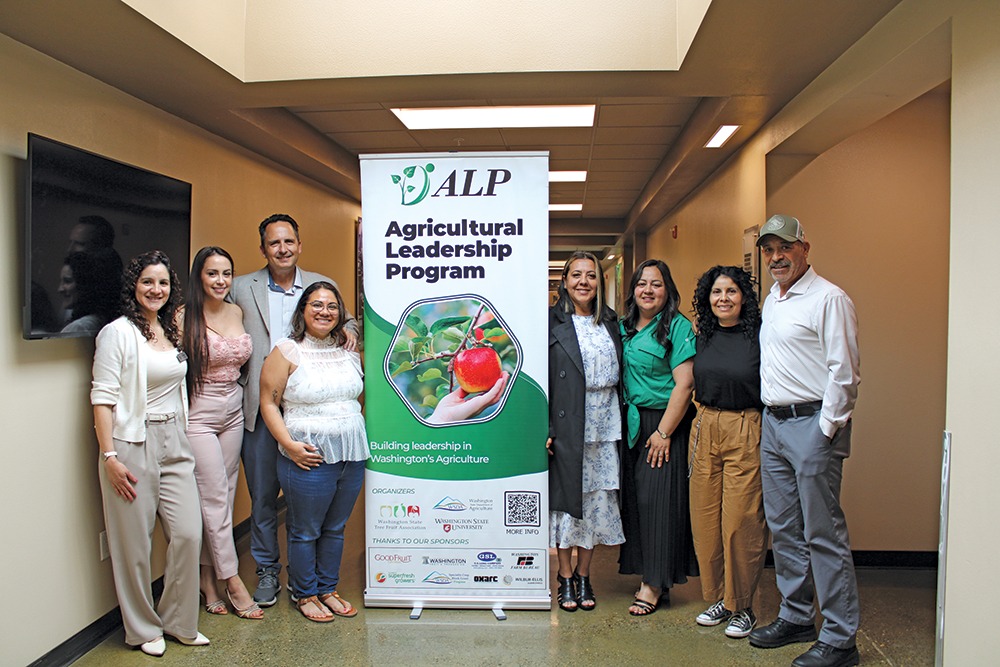
Key takeaways
- The Agricultural Leadership Program was developed to address leadership training gaps among farm supervisors.
- The bilingual program combines leadership instruction with practical workplace application over three months.
- Participants study leadership, conflict management, emotional intelligence and empathic listening.
- More than 300 supervisors and managers have completed the program since 2021.
- The program emphasizes leading through influence rather than authority.
Cherry season marks the start of tree fruit harvest in the Pacific Northwest, with crews often entering the field as early as 4 a.m. to avoid afternoon heat.
This also means that farm supervisors will go from leading crews of a few people to groups of hundreds of workers ready for a fast-paced harvest. With more people comes more potential for conflict, and the pressure to manage those issues proactively.
The problem is, few of those supervisors receive leadership training to learn how to do that.
Ofelio Borges experienced this challenge firsthand. He is the current technical services and education program (TSEP) manager of the Washington State Department of Agriculture. Before taking this role, he worked as a migrant farm worker who showed potential and was quickly promoted as a farm manager.
Like many other farm supervisors, Borges was baptized by fire. He faced daily conflicts with his crew members, struggled with delegation and managing his own emotions in a highly stressful role. So, he dreamed of a different way of leading people.
His experience highlighted a challenge faced across agriculture: people are often promoted into supervisory positions without being taught how to lead.
Turning vision to action
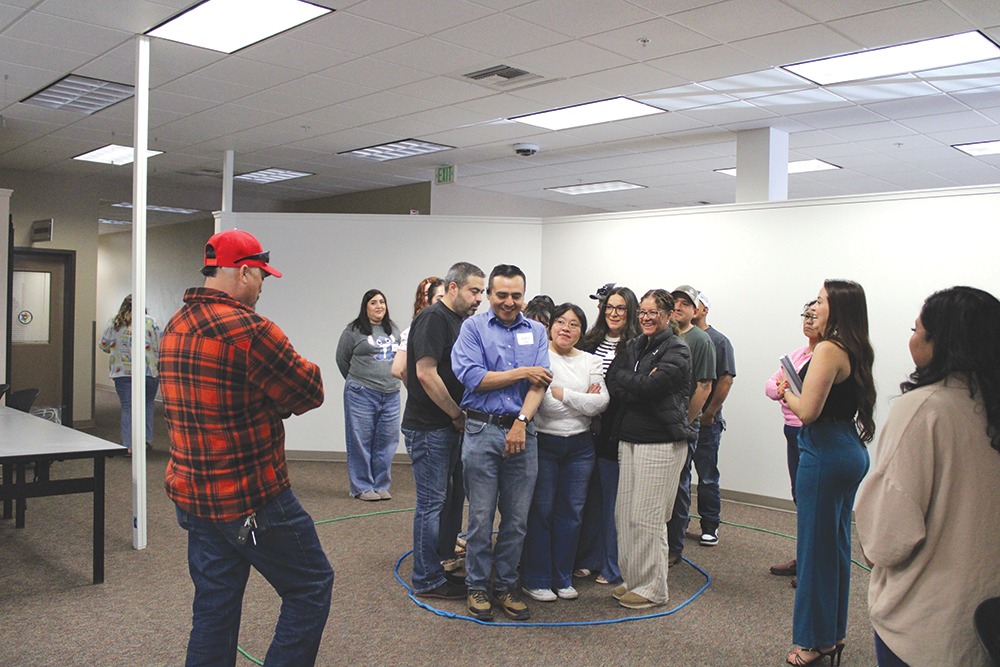
All photos courtesy of Jacqui Gordon Nunez
I met Borges when I started my position at the Washington State Tree Fruit Association (WSTFA). We have worked together for a decade offering pesticide safety training to tree fruit growers in Washington. In fact, TSEP is a national leader in delivering effective pesticide safety training and has been recognized for its quality and highly interactive components.
However, effective delivery of technical safety training did not address the workplace communication and leadership issues that could sometimes impede implementation of this training. This is being addressed with the creation of the Agricultural Leadership Program (ALP), a comprehensive bilingual leadership program designed for farm supervisors and managers.
Drawing on more than 35 years of combined experience in agriculture practices, bilingual and bicultural perspectives — and formal leadership education — we developed a curriculum tailored to the realities faced by first-line farm supervisors and managers.
In late 2021, WSTFA and the TSEP offered the first ALP pilot course with handpicked participants; these folks were seasoned supervisors who had experienced the challenges of managing people without proper leadership training.
Their feedback helped shape the program into a 3-month long course that includes 40 hours of leadership content distributed throughout six weeks, plus six weeks of practice.
Leadership vs. management
A core topic discussed in the program is the difference between management and leadership. A manager can create a harvest schedule. A leader helps employees understand why quality, food safety and teamwork matter during harvest.
At ALP, participants are encouraged to lead through influence rather than control. Instead of viewing leadership as a position of authority, supervisors can learn to see it as an activity and understand that their work is not limited to their job title.
Positive influence can come from anyone on the farm, from tractor drivers and irrigators to crew leaders, supervisors and upper management.
Modern agriculture cannot succeed with management alone. It also requires supervisors who build trust and empower their employees.
A different approach to conflict
Conflict management at the ALP is not treated as a disciplinary issue.
Farming can present a wide range of problems. An irrigation pipe breaks, a portable toilet leaks, or maybe sprayer nozzles become clogged. These are technical challenges, and they are easy to recognize because they can be resolved by an expert.
The issues farm supervisors face most often, however, involve people. Gossip, turnover, low morale and performance concerns are some examples of adaptive challenges. Unlike technical problems, solving these requires learning, experimentation and engagement from people who bring different perspectives to the table.
Think of it this way: Management solves technical problems; leadership addresses adaptive challenges.
The core principles taught at the ALP to manage conflict include:
• Emotional intelligence (EI): The ability to recognize and control our emotions while understanding the experiences of others. Strong emotional regulation helps supervisors resolve conflict constructively and maintain trust with their teams.
• Empathic listening: Listening to understand rather than to respond is essential to resolve conflict. This requires giving full attention to the speaker, minimizing distractions and avoiding jumping to conclusions or quick judgements.
• Understand values: Our core values shape our identity, and conflict often begins when we fail to recognize what matters most to others. Understanding personal values can help supervisors build stronger relationships with their team members and prevent conflict.
Since 2021, more than 300 farm supervisors and managers have completed the program, extending its impact to the thousands of agricultural workers they supervise.
This is not just about building a more pleasant workplace with less conflict. ALP graduates are also prepared to improve productivity and farming outcomes in a challenging environment. And they learn skills which reduce their own stress in their positions, which we hope helps address the alarming rates of stress and suicide among farmers and farm workers.
The next generation of agricultural leaders will not be defined by job titles but by their ability to build trust, develop people and guide teams through increasingly complex labor challenges.
To learn more about the ALP, visit our website at alp-wa.com.
With over 10 years of experience in the produce industry, Jacqui Gordon Nunez specializes in developing impactful training and educational programs for Washington State tree fruit producers in her role as vice president of the Washington State Tree Fruit Association. Her true passion lies in empowering others to discover their full potential and uncover their “why.”
FAQs
What is the Agricultural Leadership Program?
It is a bilingual leadership program designed for farm supervisors and managers.
How long is the program?
The course lasts three months and includes leadership instruction followed by practice.
What leadership skills are taught?
Participants study emotional intelligence, empathic listening, values-based leadership and conflict management.
Why was the program created?
It was developed to help supervisors who are promoted into leadership roles without formal leadership training.
Who developed the program?
The Washington State Tree Fruit Association and the Washington State Department of Agriculture’s Technical Services and Education Program collaborated on its development.
With over 10 years of experience in the produce industry, Jacqui Gordon Nunez specializes in developing impactful training and educational programs for Washington State tree fruit producers in her role as vice president of the Washington State Tree Fruit Association. Her true passion lies in empowering others to discover their full potential and uncover their “why.”