

Michigan Tree Fruit Commission: Start-up funding maintains tree fruit competitiveness
There’s a new Michigan Tree Fruit Commission executive director. Learn how the organization’s new leadership helps Michigan’s tree fruit growers.





The Michigan Tree Fruit Commission (MTFC) was established by a producer referendum in 2014 to collect an assessment on Michigan’s apples, cherries, peaches and plums to support tree fruit research.
The MTFC has since funded hundreds of thousands of dollars of capital improvements at Michigan State University’s (MSU) research farms for tree fruit.
A hallmark of the MTFC has been that no money was spent on administration. All of its work was done by board members and other volunteers, with some minor expenses paid by commodity groups in Michigan’s tree fruit industry.
Jim Nugent, a fruit grower from Suttons Bay, Michigan — and retired MSU district horticulturalist and retired coordinator of MSU’s Northwest Michigan Horticultural Research Center — served as the MTFC chair and assumed a leadership role in the MTFC’s work.
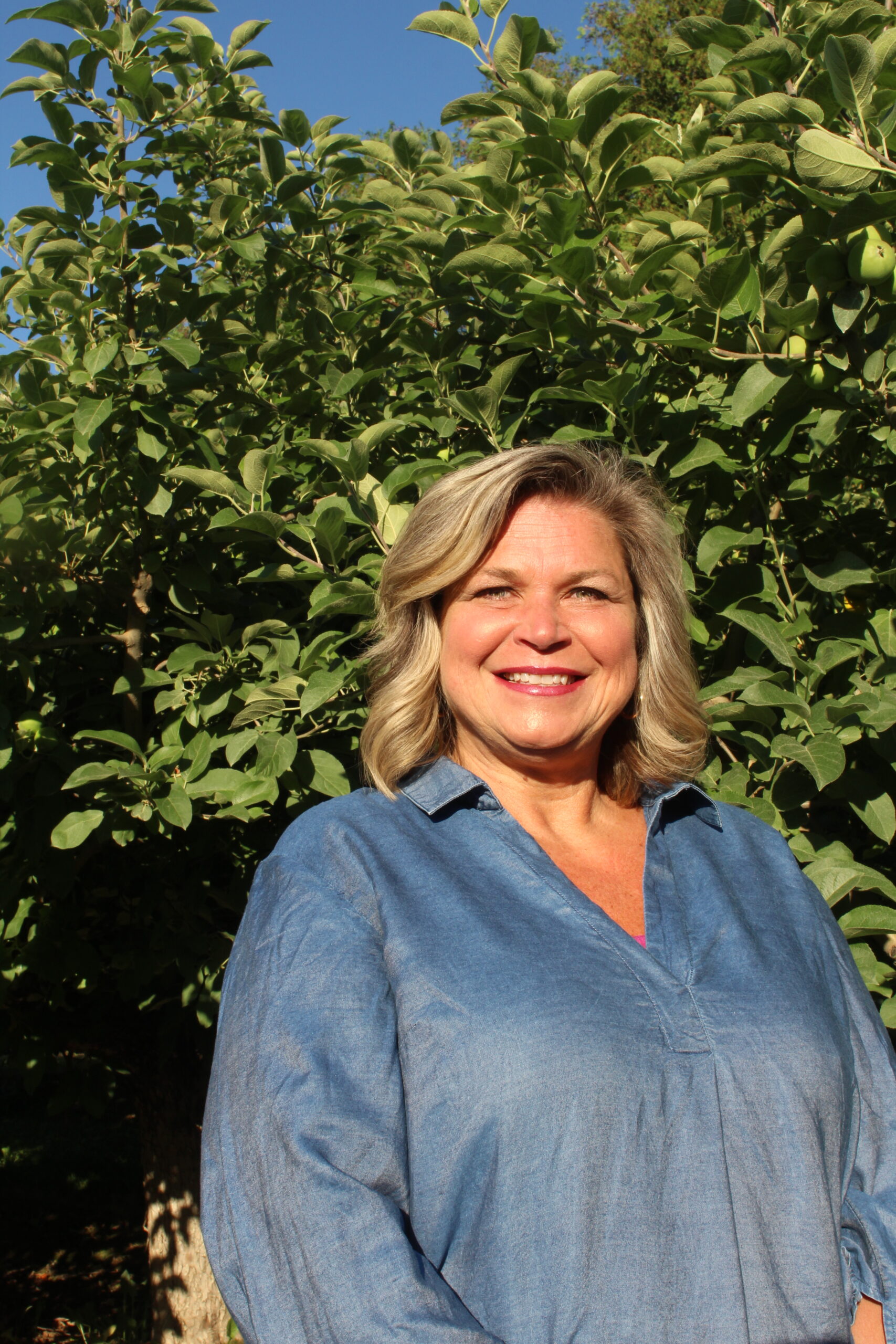
After eight years as the volunteer board chair, Nugent stepped down from the role in 2022. Nancy Nyquist, Michigan Farm Bureau’s (MFB) external executive management services and policy specialist in MFB’s Public Policy and Commodity Division, became the MTFC’s part-time executive director.
Fruit state leadership
“The board felt they needed to have someone who could devote the time to the role,” Nugent said. “Orchards need pruned, sprayed and harvested, and those demands don’t stop when there’s MTFC work to do.”
Dan Dietrich, a fruit grower from Conklin, Michigan, is MTFC board’s vice-chair.
“We’re volunteers and we’re growers,” he said. “Having an executive director has taken some of the burden off the board.”
A single contact person has offered more consistency. MSU faculty or educators can contact Nyquist at any time, she said. Before joining the MFB, Nyquist had experience working at MSU, in the Michigan Department of Agriculture and Rural Development, and in the state legislature.
Nyquist’s role with the MTFC is about one-quarter time. She also serves in a similar capacity as the Michigan Blueberry Commission’s part-time executive director.
The two positions complement each other.
“It’s a good fit,” Nyquist said. “There’s a lot of overlap in the meetings I attend, meaning I can spend quality time interacting with both groups’ members. It allows me to better support blueberry and tree fruit growers on issues both industries face.
“That’s been a big part of my role, — maintaining a presence. I can attend meetings and listen to former board members and other growers.”
Research support
MTFC funding supports MSU’s Northwest Michigan Horticultural Research Center at Traverse City; Trevor Nichols Research Center at Fennville; Southwest Michigan Research and Extension Center at Benton Harbor; Clarksville Research Center at Clarksville; and West Central Michigan Research and Extension Center at Hart.
Besides capital improvements, the MTFC has supported operations and research projects, and purchased thousands of dollars of equipment. MTFC’s mini-grant program helps MSU field staff respond quickly to emerging issues.
MTFC has also supported MSU field staff with funds for programming, research and professional development, and supported researchers on campus.
“We’re starting to fund more start-up packages for researchers,” Dietrich said. “This helps make us competitive so we can continue to attract top talent when filling research positions at MSU.”
New researchers need immediate funding to hire student employees and pay for equipment, materials and other costs associated with research.

The years before the MTFC was established weren’t pretty, saidexplained Phil Korson, a fruit grower from Haslett, Michigan, and retired president of the Cherry Marketing Institute and retired executive director of the Michigan Cherry Committee.
“With the downturn in the ag economy at that time, MSU had to cut funding to the research stations,” said Korson. “The big question was, ‘How do we stay on the cutting edge of research?’” Korson said. “As we look to the future, how does the next generation have access to the same answers and solutions we have had? The tree fruit industry is here to stay, but it must be supported by the best research.”
The discussions within the industry evolved into the producer referendum establishing the MTFC, which was continued by additional referendums in 2019 and 2024.
“Nancy is doing an excellent job,” Dietrich said, “but the board holds her accountable. It’s our job to do the best we can, allocating MTFC funds to the best uses.”
— Dean Peterson, Contributing Writer