

Titan Farms, a southeast peach powerhouse, tests soil, combats pests and disease
Monitoring soil health and protecting its peaches from pests and diseases are big challenges for Titan Farms, a leading Southeastern grower.





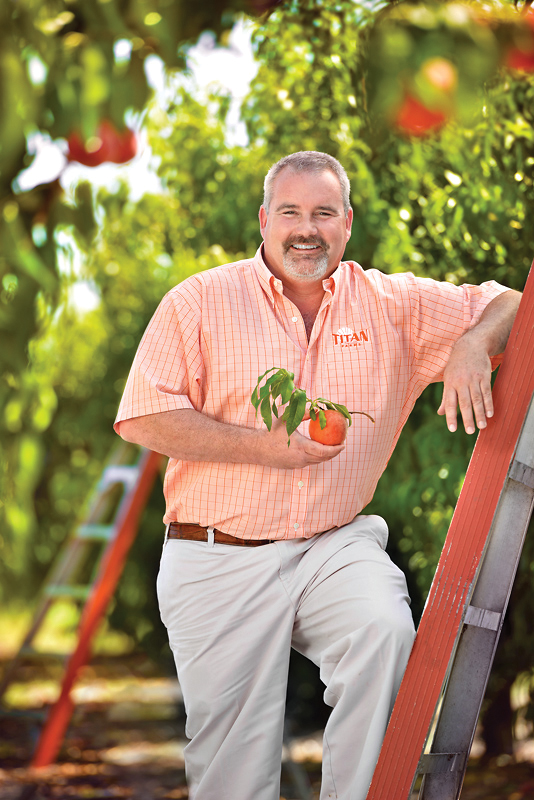
Titan Farms’ Chalmers Carr has been growing peaches since he was a child. Photos courtesy of Titan Farms.
While peaches are a Southern staple, climate and soil pathogens influence tree fruit growth and limit geographic production, said Chalmers Carr III, president, owner and operator of the family-run operation.
“Our area is a challenge with land availability, and there is a reason why peaches are grown (only) in certain parts of the Southeast,” he said.
For Carr, growers are the best environmentalists. “If our sole revenue is dependent on our land, there’s no reason and no way in the world that we’re going to abuse it,” he said. “You have to monitor it at a micro level. You cannot monitor it at a macro level.”
To ensure favorable soil, Titan constantly monitors soil conditions through tests. “Take petiole tests in your trees to make sure they’re healthy,” Carr said. “You can rebuild soils easily if you take care of them.”
Titan relies on expensive surface water, which makes sustainability critical. Microjets reduced Titan’s water usage by more than 50%. Soil moisture monitors cut water use another 20%.
Cutting inputs
Declining pesticide registrations forces Titan to work more efficiently. Titan reduced its chemical dependency by as much as 40%. The feat was accomplished through tree sensors, which make spraying more efficient, Carr said.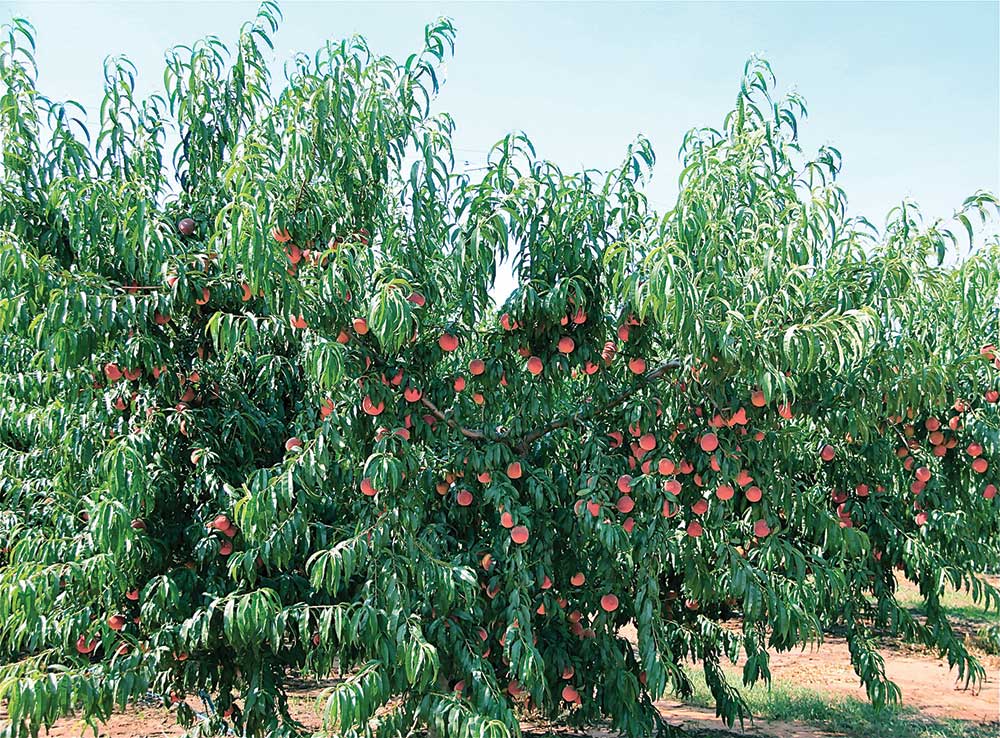
Titan Farms grows on more than 6,200 acres of peaches. Photo courtesy of Titan Farms.
“It’s hard to fathom, but you’d mix up a tank that used to go 7 acres and all of a sudden, it started doing 10 acres because it was saving all that spray, which means you’re saving all those chemicals and those are things that you can put a real ROI to when you start to look at these sensors on these tractors,” he said.
Cover crops are important in orchard establishment, preventing soil erosion and rebuilding organic matter. Still, there are obstacles. When growers are in growth mode and possess limited land availability, cover crops can be challenging. Carr said it isn’t always easy to rotate between alternative and permanent crops for five to six years.
The canopy and tree structure help protect the land.
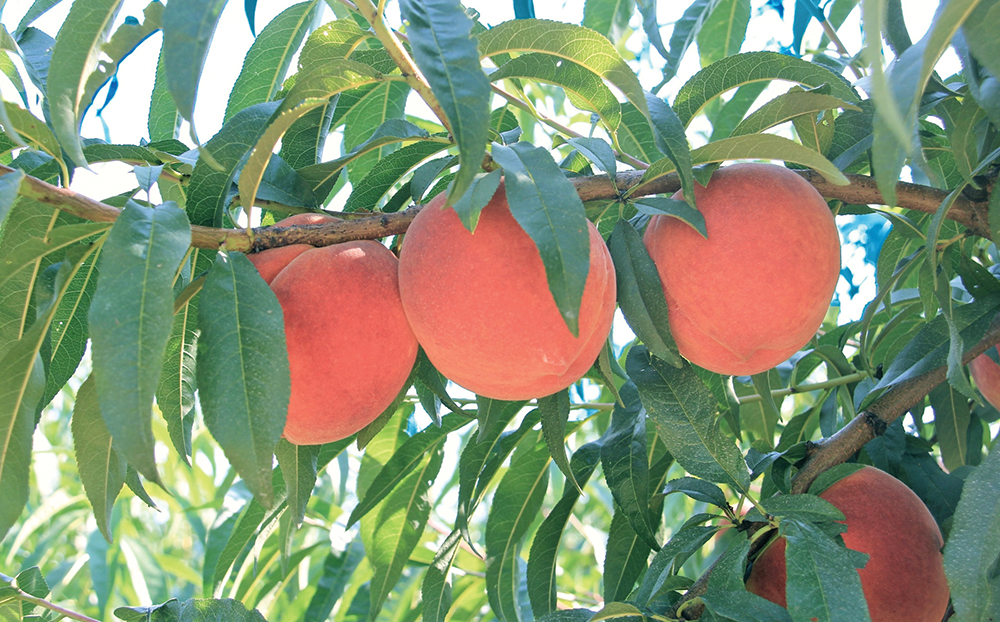
Photo courtesy of Titan Farms
“Cover crops are something that we are adapting because as trees get older, it’s hard to have floors with grass because grass can be a host for a lot of different things,” he said.
With pruning, Carr removes half the wood each year. Flail mowers, which handle tough vegetation standard mowers can’t manage, recycle discards into the land. Shredding wood into fine matter adds nutrients into the soil and affords faster tree access to the nutrients.
In the 2010s, Titan was on the forefront of adopting this now common shredding practice that saves on brush dragging and burning expenses.
Composting trials
Titan Farms is involved in a Clemson University established orchard composting trial. Carr also learned of composting practices by visiting apple, leafy greens and mushroom composting operations. While it’s too early to tell, the science behind the trials looks positive, Carr said.To manage weeds, Titan attempts to establish a band underneath the tree with herbicides. Because weeds are becoming resistant to crop protectants, rotation and avoiding repeated use of the same chemicals have been a key to battling weeds, he said.
From the late 1980s through the mid-1990s, bacterial canker soil fungus almost decimated the South Carolina and Georgia peach industries. Many growers left the business before Guardian resistant rootstock saved the industry and helped it expand, Carr said.
When many growers were either keeping status quo or adding resistant rootstock, Titan was a leader in planting the rootstock, he said.
Today, armillaria root rot or oak root rot is a major peach disease. With commercially resistant rootstocks unavailable, Titan is searching for a solution. While Carr isn’t positive it could prompt any huge industry expansion, he said Titan’s efforts should provide the industry some future and allow growers to be able to continue farming without being forced to leave land out of production for a decade.
Clemson and University of Georgia researchers are working to discover solutions for the disease.
Bacteriosis, another major peach disease, drops on the leaves and produces acid, resulting in unmarketable fruit. Overly wet and warm springs foster the disease. Thrips is a major pest threat of peaches, causing coloring on edible fruit, making it unmarketable.
Plum curculio, oriental fruit moth and grasshoppers are also daunting. During abnormally dry periods, when orchard floors become too dry, grasshoppers devour peaches.
Deep farming roots
Growing up in a military family, Carr at 11 years of age began working on his mother’s North Carolina family peach and tobacco farm. After graduating from Clemson in 1990, he leased and later purchased a north Florida peach farming operation. While the region’s low chill varieties produced tasty and colorful peaches, sizing was problematic, as was competition from California.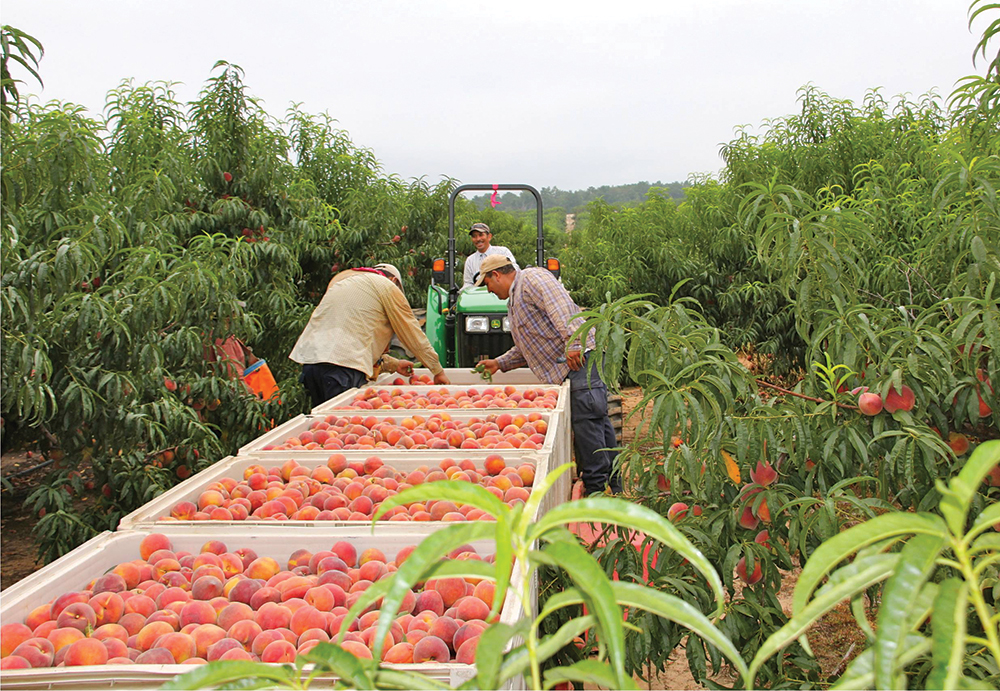
While peaches are a southern staple, climate and soil pathogens influence tree fruit growth and limit where peaches can be grown.
Carr sold the Madison, Florida, operation in 1996 after he moved to Ridge Spring, South Carolina, to work as a farm manager for RW DuBose & Sons with a lease-purchase agreement. Carr and his wife Lori Anne began in 1999 and completed in 2001.
Despite the challenges, Titan remains bullish on peaches. For two decades, the business consistently increased peach production at of rate of 18% yearly, from 1,500 acres initially to today’s 6,200 acres.
One of the most difficult changes Carr made over the years was leaving a broker he had worked with since his teens to market his fruit through his own sales team. The change increased sales, improved his relationships with retail buyers and gave him more control over his business, he said. Utilizing as much of his crops as possible, Carr’s Palmetto Processing Solutions slices, dices and freezes peaches and strawberries. Titan also markets through three farm market stands.
Carr advises growers to carefully study their markets before planting any crop.
“Don’t just plant it and think you’re going to sell it,” he said. “Understand your marketplace and your consumers, who in today’s world are changing. The real thing is their access to information, so we can’t run and hide in the shadows anymore, so to speak. Being out there and being an industry leader instead of a follower is the key. It doesn’t mean you have to be the first to do everything, but don’t be the last to do everything.”