

Grape cultivation best practices: Markus Keller on winter pruning
Winter pruning is vital to vineyard health. Discover grape cultivation best practices with Markus Keller’s insights on winter pruning.





Winter pruning in grapes is one of the most important grape cultivation best practices for achieving uniform canopies and evenly distributed buds. It also keeps vine size consistent and manageable, allowing growers to use equipment and machinery efficiently during harvest.

Fruit Growers News spoke with Markus Keller, Chateau Ste. Michelle distinguished professor in viticulture at Washington State University’s Irrigated Agriculture Research & Extension Center in Prosser, Washington to explore how proper winter vineyard pruning supports both wine and table grape production.
Keller’s research examines developmental and environmental factors in vineyard management, including scion-rootstock interactions, grape development and water relations during fruit ripening, irrigation and crop load management, yield information and cold hardiness.
Why vineyards benefit from winter pruning
Pruning determines the number and position of buds on a grapevine. “That, in turn, determines the distribution of the shoot on the canopy,” Keller explained.
For established vines, pruning also influences vigor. “The more material you prune off the canopy in the winter, the more vigorously the remaining shoots will grow,” Keller said.
Typically, growers prune off about 90% of annual growth but can adjust that percentage to increase or decrease plant vigor.
Managing canopy growth and spray coverage
While pruning does not directly change pathogen resistance, it affects spray accessibility. “If your canopy is open and the shoots are evenly distributed and there are some gaps, then your spray coverage is going to be better,” Keller said. Dense canopies with overlapping leaves reduce spray effectiveness.
Dormant pruning and disease prevention
Dormant pruning carries some disease risks. “During the winter, you can get infections from trunk disease pathogens, fungal species that will enter the plant through pruning wounds and then establish themselves in the plant’s vascular system,” Keller explained.
His advice? Avoid large cuts whenever possible. Smaller, more frequent cuts reduce infection risk, and in case of trunk disease, growers may need to retain vines from suckers near the ground.
Avoiding under-pruning
Minimal or mechanical pruning, common in Australian vineyards and Washington juice grape production, allows vines to self-regulate. “In the first year or two, the vines will overshoot and overproduce, and will kind of self-regulate over time,” Keller said. Although the canopy grows larger, crop balance usually returns.
Winegrape verses table grape pruning
The general pruning approach remains the same for both wine and table grapes, but differences exist in execution.
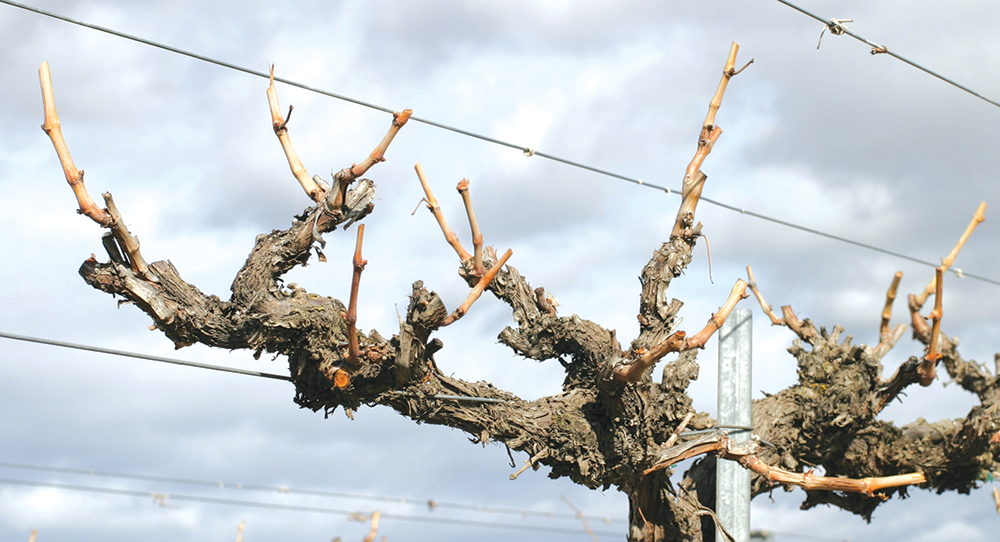
Winegrape canopies are pruned closer to the ground and to fewer buds. “Most winegrapes nowadays in America are pruned to spurs,” Keller said. “They’re cordon trained vines and then spur-pruned.”
Table grapes, however, are often cane-pruned to take advantage of increased fruitfulness at higher bud positions. “They’re leaving longer canes on a table grape than they do in a winegrape,” Keller noted.
Timing pruning for cold and frost conditions
Pruning timing depends on climate. In areas without freeze or frost risk, growers can prune anytime during the winter. Where low temperatures pose a threat, delayed pruning may protest vines. “If there’s a spring frost, it’s often beneficial to delay pruning even until after bud break,” Keller said.
Delayed pruning slows bud break, allowing shoots to emerge in warmer weather and reducing frost risk. However, pruning more than four weeks after bud break can delay ripening.
Balancing vigor through dormant pruning
Dormant pruning helps regulate canopy size and crop load. “The more buds you leave on a plant, the less vigorous the individual shoots are,” Keller said.
Leaving more buds results in a larger canopy and heavier crop load, while removing more buds produces fewer but stronger shoots.
Emphasizing grape cultivation best practices
For Keller, effective pruning is one of the most essential grape cultivation best practices. Whether managing vigor, improving spray coverage, or balancing crop load, careful pruning decisions support long-term vineyard health and productivity.
— Doug Ohlemeier, Assistant Editor