

NNYADP: Apple thinning and economic data results shared, webinar set





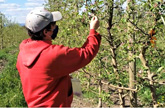
NYADP precision apple orchard project leader Michael Basedow collects apple king blossoms for measurement in the 2021 research trial in NNY orchards. Photo: Andy Galimberti
The research, aimed at fully understanding how to best incorporate the use of computer-based fruit physiology modeling into timing orchard thinning practices to achieve optimal crop load and quality, includes data on the use of alternative thinning products and evaluates the economic impact.
Commercial apple orchards in northeastern New York participated in the in-orchard trials. Project leader Michael Basedow, a tree fruit specialist with Cornell Cooperative Extension’s Eastern New York Commercial Horticulture Program, explained the motivation for the research and its importance to Northern New York growers.
“Trees thinned earlier at bloom with alternative thinning materials in this trial may produce larger fruit at harvest and greater return bloom the following spring; however, while bloom thinning with these materials is used extensively by Washington State apple growers, it has been difficult to precisely time its application under Northern New York conditions,” said Basedow.
“Our findings from the 2021 trials validate that adequate levels of thinning can be achieved with the use of alternative thinning materials to provide Northern New York fruit growers more choices of products to choose for thinning at bloom, when they are followed by an integrated, multiple step thinning program at petal fall, fruit set, and beyond,” Basedow noted.
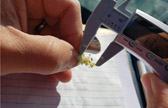
Basedow’s work focused on the popular Gala and Honeycrisp varieties in the Northern New York orchards.
The gross crop value per acre ranged from $14,586 to $28,857 per acre, with total returns per acre from $14,541.60 to $28,827.40 depending on the variety of apple, orchard location, and type of application. These values are estimates of the gross crop value minus the cost of the thinning applications; other per acre expenses that growers incur throughout the course of the production season are not included.
Estimated production from these NNY precision orchard management research trials ranged from 1,214 to 1,307 bushels per acre with a fruit size range of 87-118 apples per bushel.
The next research steps will be to more precisely target the optimal rate of application to achieve optimal crop load with fewer follow-up thinning applications post-bloom, and to further understand the impact of weather on the efficacy of the applications.
Basedow will present the results of these in-orchard thinning trials in more detail as part of a “What’s New in Crop Load Management” webinar via Zoom from 1:30 to 4:45 pm on March 18, 2022. To register, visit https://enych.cce.cornell.edu/events.php or call 518-410-6823.
Funding for the Northern New York Agricultural Development Program is supported by the New York State Legislature and administered by the New York State Department of Agriculture and Markets.