

Penn State: Early warmth, spring rains heighten apple scab risk
A warm start to March followed by rain is increasing the risk of apple scab and powdery mildew. Growers must act now to stay protected.





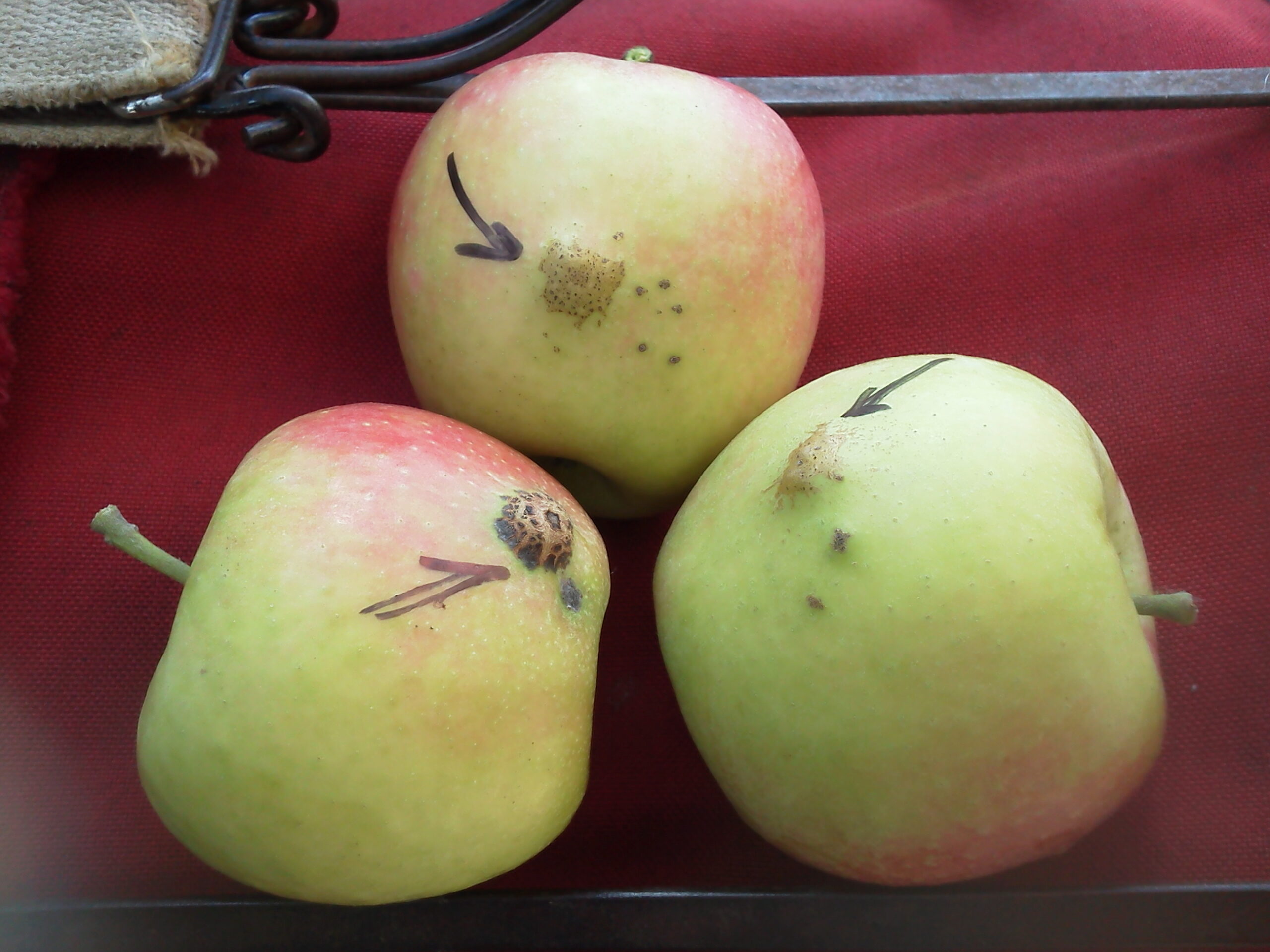
In southern areas of the region especially, early March warmth accelerated bud development, with green tip already underway or imminent depending on location and variety. That shift, according to Kari A. Peter, associate research professor in tree fruit pathology with Penn State Extension, signals the start of apple scab season, as spores in overwintering leaf litter begin to mature and release.
Recent rain events have already triggered initial infection periods in some areas. Orchards that received a dormant copper application were protected, but continued warm temperatures and additional rain chances in the forecast could create favorable conditions for further infections.
Early-season disease management
Through half-inch green tip, protection remains critical. Growers who recently applied dormant copper should have coverage through early infection periods.
Other options include rainfast mancozeb alone at 3 lb/A or in combination with Syllit or micronized sulfur. Organic growers can turn to potassium bicarbonate or sulfur for protection.
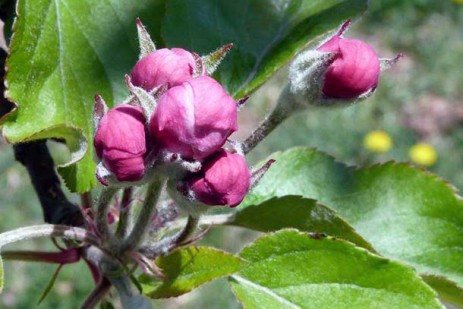
With temperatures forecast to reach into the 70s°F across parts of the Midwest, rapid bud development is likely. At tight cluster, growers should consider tank mixing rainfast mancozeb with fungicides such as Cevya, Indar, Inspire Super, Scala or Vangard.
FRAC Group 7 fungicides should be avoided at this stage and reserved for peak disease pressure periods later in the season, particularly from late pink through petal fall for apple scab.
Don’t overlook powdery mildew
Tight cluster also marks the start of powdery mildew management. Unlike apple scab, mildew thrives in dry conditions with moderate temperatures and high humidity.
Extended dry stretches between rain events can increase risk. In these conditions, growers should tank mix mancozeb with materials such as Rally, Rhyme, Torino or micronized sulfur. Organic options include sulfur, potassium bicarbonate and EcoSwing.
While dry weather may limit apple scab, it does not reduce powdery mildew pressure. Because some mildew-targeting products offer limited scab control, pairing them with a broad-spectrum fungicide remains essential when rain returns.
Staying proactive now will help Midwest growers maintain clean orchards as the season ramps up.