

Illinois Extension: Assess winter fruit tree damage now to avoid issues later
Winter weather can cause hidden trunk damage in apple trees. Here’s how to identify frost cracks, sunscald and assess potential long-term impacts.





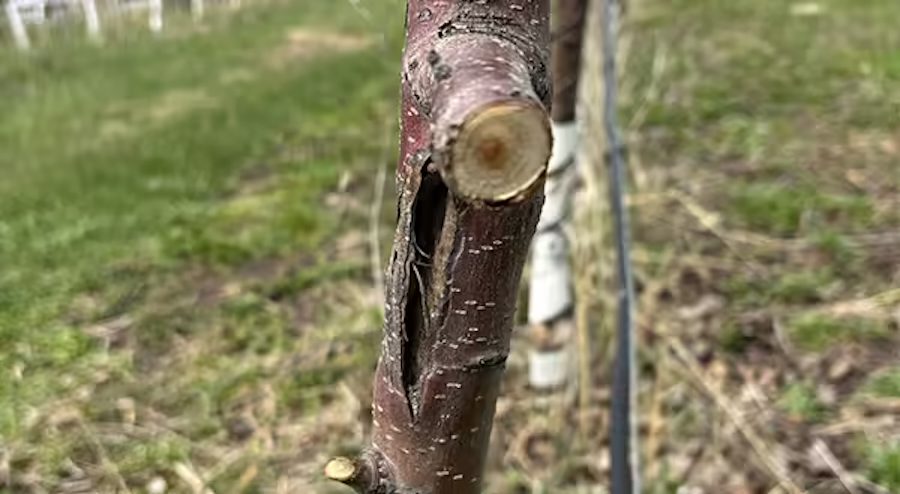
Winter conditions can leave lasting effects on fruit trees, particularly on the trunk. The damage is not always immediately visible, and symptoms may emerge gradually as trees resume growth in spring, warns University of Illinois Extension educator Grant McCarty in a May 2026 update for commercial fruit and vegetable growers.
Cold injury in fruit trees is often linked to fluctuating winter temperatures. Warm daytime conditions followed by rapid nighttime cooling can stress bark tissues, sometimes leading to vertical splits known as frost cracks. These injuries weaken the protective outer layer of the tree and can expose internal tissues to moisture, pathogens, and insects.
And believe it or not, sunscald is another common form of winter damage. It occurs when sunlight warms the bark during the day, triggering limited metabolic activity, followed by freezing temperatures that kill those reactivated cells. This type of injury is typically found on the southwest-facing side of trunks and may appear as sunken or discolored bark.
Common types of winter trunk damage
When assessing damage, McCarty writes it is important to distinguish between superficial injury and more severe structural issues. Minor cracking or localized bark damage may heal over time as the tree compartmentalizes the wound. However, repeated or extensive injury can compromise long-term health and structural stability.
Growers should also consider that winter injury can interact with other stressors. Cracks or weakened tissue can provide entry points for pathogens, leading to trunk cankers or further decline. In many cases, identifying the underlying cause of damage is necessary before determining appropriate management steps.
How to assess severity
Evaluation should begin with a close inspection of the trunk and the area around the graft union. Look for splitting bark, sunken tissue, discoloration, or areas where bark has sloughed off. Internal damage may not be immediately obvious, and symptoms such as delayed leaf-out or reduced vigor can indicate more extensive injury beneath the surface.
University of Illinois Extension experts recommend a knife test to help confirm injury; healthy cambium is green and moist, whereas winter‑killed tissue appears brown and dry. In high‑density systems, even partial trunk damage can permanently limit uniformity and long‑term productivity. In mature blocks, damage may persist as chronically weak scaffolds or reduced yield.
Not all damaged trees will require intervention. Trees with limited injury may recover naturally, while those with more severe trunk damage may decline over time. In cases where a large portion of the trunk is affected, long-term survival may be uncertain.
Preventative measures focus on reducing stress during winter. Young trees and those with thin bark are particularly vulnerable. Practices such as trunk wrapping or minimizing conditions that contribute to temperature fluctuations can help limit future injury.
Careful assessment in early spring provides the best opportunity to understand the extent of winter damage to plan next steps for orchard management.
Photo via Illinois Extension