

Women in agriculture lead change and innovation
There are more women in ag. Read how ag women are leading fruit farms, boosting innovation and shaping the future of the industry.





Women are increasingly stepping into pivotal roles in the ag industry, challenging stereotypes and reshaping how farming and food production move forward. From small family orchards to commercial operations to academic leadership, women in agriculture are combining tradition with innovation, driving change and sustainability to their communities.
Allison Hiller: continuing a family legacy
Growing up on a farm in Penn Yan, New York, Allison Hiller experienced agriculture as part of her everyday life.
“My father, grandfather, and great-grandfather all lived on this farm and worked the land,” she said. ” Over the years we’ve produced fresh fruit, including apples, grapes, cherries, black raspberries, and peaches.”
After high school, Hiller left for Penn State University. After she earned her degree, Hiller began a career in senior living across the northeast.

Still, the pull of her hometown and the family farm remained strong.
“As I got older, my parents began discussing retirement and the possibility of selling the farm,” Hiller said. “My sister and I were both well-established in our careers, but we also knew we were the next generation to carry on the family legacy. Neither of us wanted to see the farm sold.
That legacy became reality in 2020, when she and her husband Michael purchased Apple Barrel Orchards. The couple now co-own the farm, which offers u-pick apples, grapes, and cherries, as well as a farm store and cidery.
“I oversee much of the farm store and cidery operations, including staffing, marketing, and financial management,” Hiller said. “We’re focused on maintaining the family business and ensuring its continued success.”
Hiller believes women bring a fresh perspective. “From a marketing standpoint, we’ve noticed a shift in the demographic of visitors to our farm,” she said. “Social media plays a significant role in shaping public perceptions. As a woman, I’m able to share our story in a way that resonates with a wider audience.”
Still, fitting in wasn’t always easy. “I recall attending a grape growers’ meeting a few years ago. I was seven months pregnant, surrounded by men who had been farming for decades,” she said. “Feeling out of place or as though I don’t belong in the agricultural community can sometimes be a barrier.”
Hiller credits relationship-building as key to overcoming that feeling. “Taking the initiative to introduce myself, starting conversations in new settings and being willing to help others has helped me.”
Mary Sheppard: a career in asparagus
In Mears, Michigan, Mary Sheppard works as field manager and agronomist at Golden Stock Farms. She oversees production of 350 acres of asparagus and some row crops.
But unlike many of her peers, she didn’t grow up on a farm. “I wasn’t even involved in 4H, FFA, or anything like that,” Sheppard said. “But I’ve always been an avid outdoors person.”
College counselors helped steer her toward Michigan State’s Crop and Soil Science program. “I received an internship on the other side of the state from where I grew up,” she said. “I moved there for the internship, and then was hired full time by that crop consulting company upon graduation.” When the location closed in 2020, Sheppard joined Golden Stock Farms.
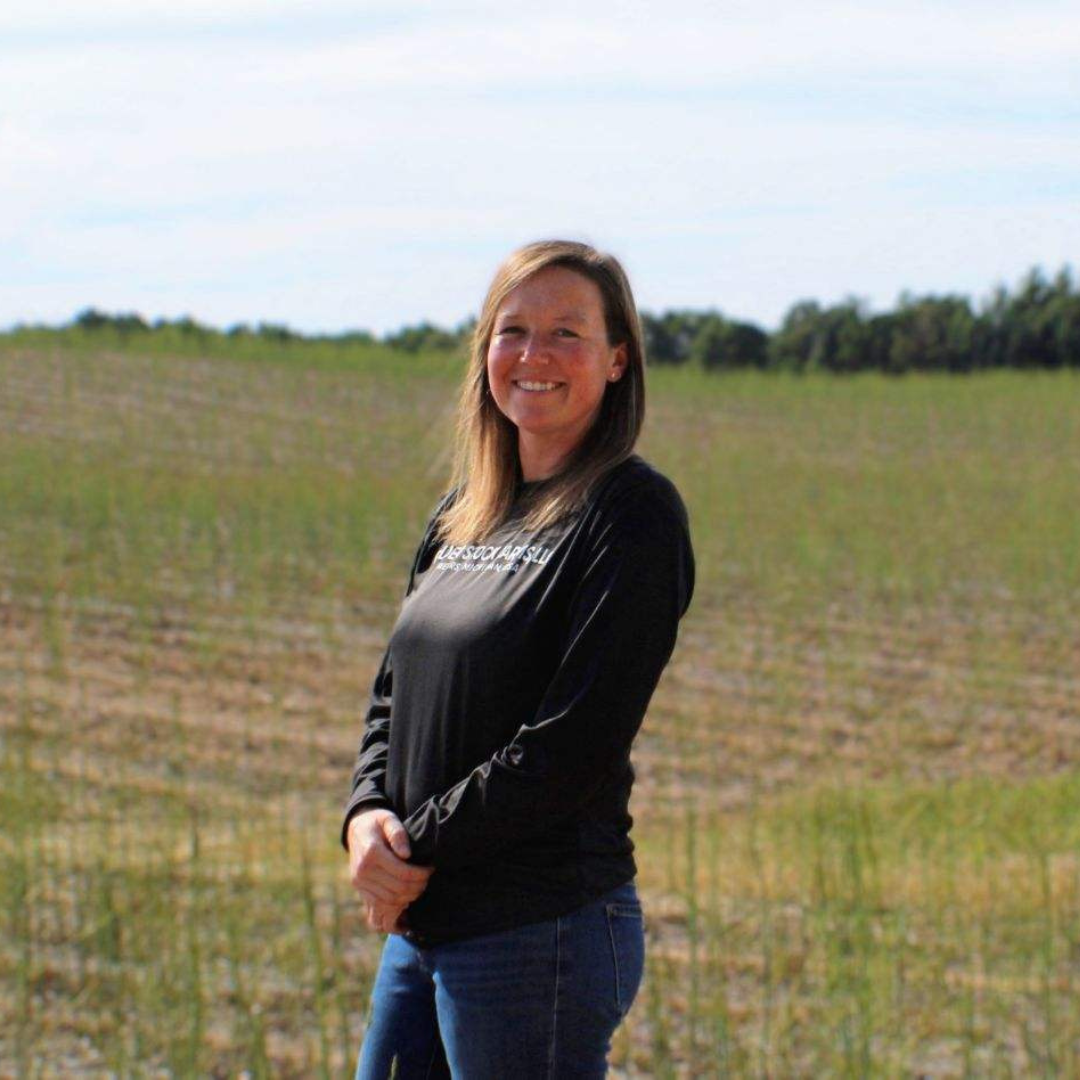
Her role quickly expanded. “I operate all of the equipment — sprayer, disc, chopper, etc. — and do winter maintenance. Really, I help my boss with whatever needs to be done during the day,” she said. “I am the crop consultant, so I do soil sampling, make fertilizer and chemical recommendations, and scout the fields. I also oversee our migrant workers during asparagus harvest while making harvest decisions daily for each field.”
Sheppard sees clear differences in how men and women operate. “In my experience, women are more patient, better communicators, and better at multitasking,” she said. “I think women are more compassionate and empathetic toward people, as well.”
Promotion plays an important role. “Specifically, when it comes to agriculture promotion, which we need now more than ever, women are the pros,” she said. “Consumers relate better to women farmers since the women in the family are the ones doing the grocery shopping. Women in ag have done such a wonderful job these past few years of promoting ag on social media and telling the farmer’s story.”
Amy Wysocki: growing a blueberry tradition
As director of operations for S. Kamphuis Blueberries in Holland, Michigan, Amy Wysocki manages the process shed alongside her father while taking on many other roles.
“I am a fifth-generation blueberry farmer,” she said. “Both my parents still run it, but I do a lot at the farm. We have a u-pick, and we also have a small store with ice cream, muffins and gourmet foods. I also process for wholesale, packaging blueberries in a 30-pound box. I do a lot of paperwork for the sales, as well. We package over a million pounds.”
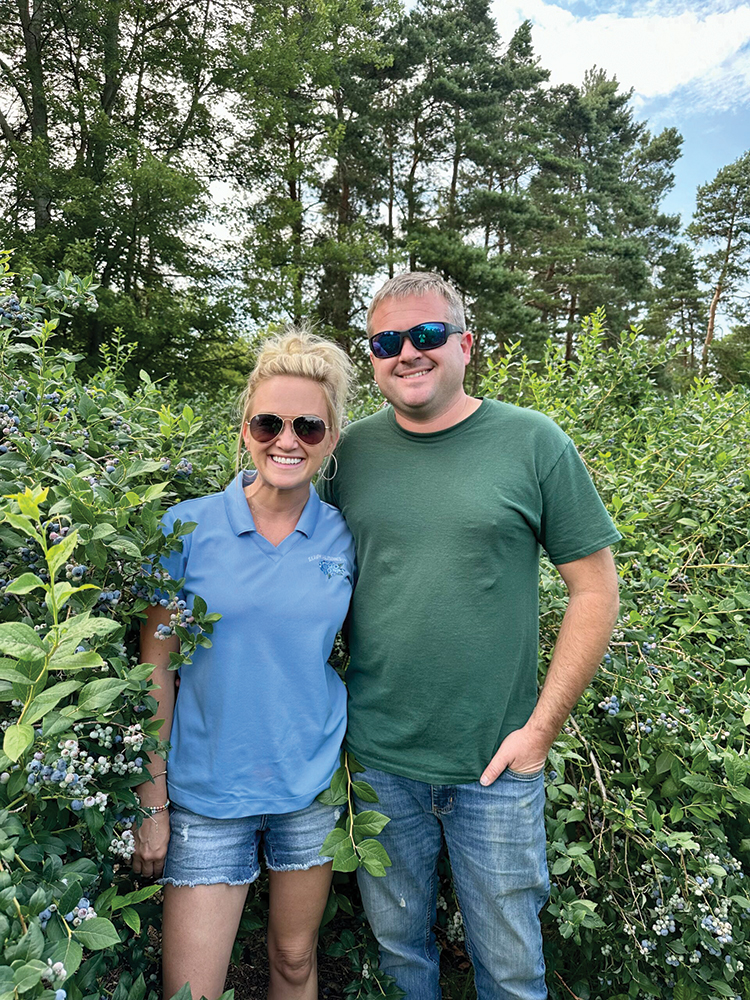
Though she once thought she would leave the farm, Wysocki returned after college to continue the family legacy. “This is a place where people can make memories with their families and friends,” she said. “Plus, I wanted to work with my family.”
She noticed few women in the industry at first, but that has changed. “I do see more women working on farms today,” she said. “There’s been a lot of growth in the industry, and women constantly show that they can do hard work.” Mentors, including her mother, late grandmother, and a female food safety director, inspired her.
“I often confide in women in the industry, and find that everyone likes to help fellow farmers,” Wysocki said. “Your neighbor isn’t your competitor. We all hope to see other farmers win. I’m there for other women who need support, and have found a great support system for myself.”
One of her favorite roles is educating visitors. “For any women who want to do this, I just say to be confident and pray about it. If it wasn’t for my faith, I couldn’t do it,” she said. “Even though it can be hard, the outcome is so worth it. There’s nothing better than seeing people come to pick blueberries and make core memories at the farm.”
Alicea Shukin: learning and leading at Shukin Orchards
In Creston, British Columbia, Alicea Shukin works as a horticulturist for her family’s orchard after earning a horticulture degree from Olds College.
“I manage the spray scheduling, and receiving and shipping,” she said. “In the field, I also help with pruning and work alongside my dad, who is the big boss here. Learning from what he teaches me while taking on more of the business side has become a big focus.”

Her father transitioned the orchard from apples to cherries 25 years ago, and it now spans 200 acres. “Over the last couple of years, I’ve really dug into the farm.” she said. “Helping my dad and making him proud as I follow in his footsteps means a lot to me. Being outdoors and growing fruit brings me joy. Seeing the fruit come off the trees gives me a real sense of accomplishment.”
Shukin expects to one day take on more leadership, though she knows she still has a lot to learn. “Women have seen success as well. I want to be learning from them, too, not just my dad.”
The growing role of women in agriculture
Across North America, women in agriculture are transforming the industry through leadership, innovation, and perseverance. From preserving multigenerational family farms to managing large-scale asparagus fields to building blueberry operations and cherry orchards, their voices and visions are shaping the future of fruit farming.
— Keith Loria is an award-winning journalist who has been writing for almost 20 years.