

Farm Bureau study: H‐2A use hits record levels
The latest ag labor data highlights ongoing challenges in finding domestic workers. Get updated insights into H-2 program usage.





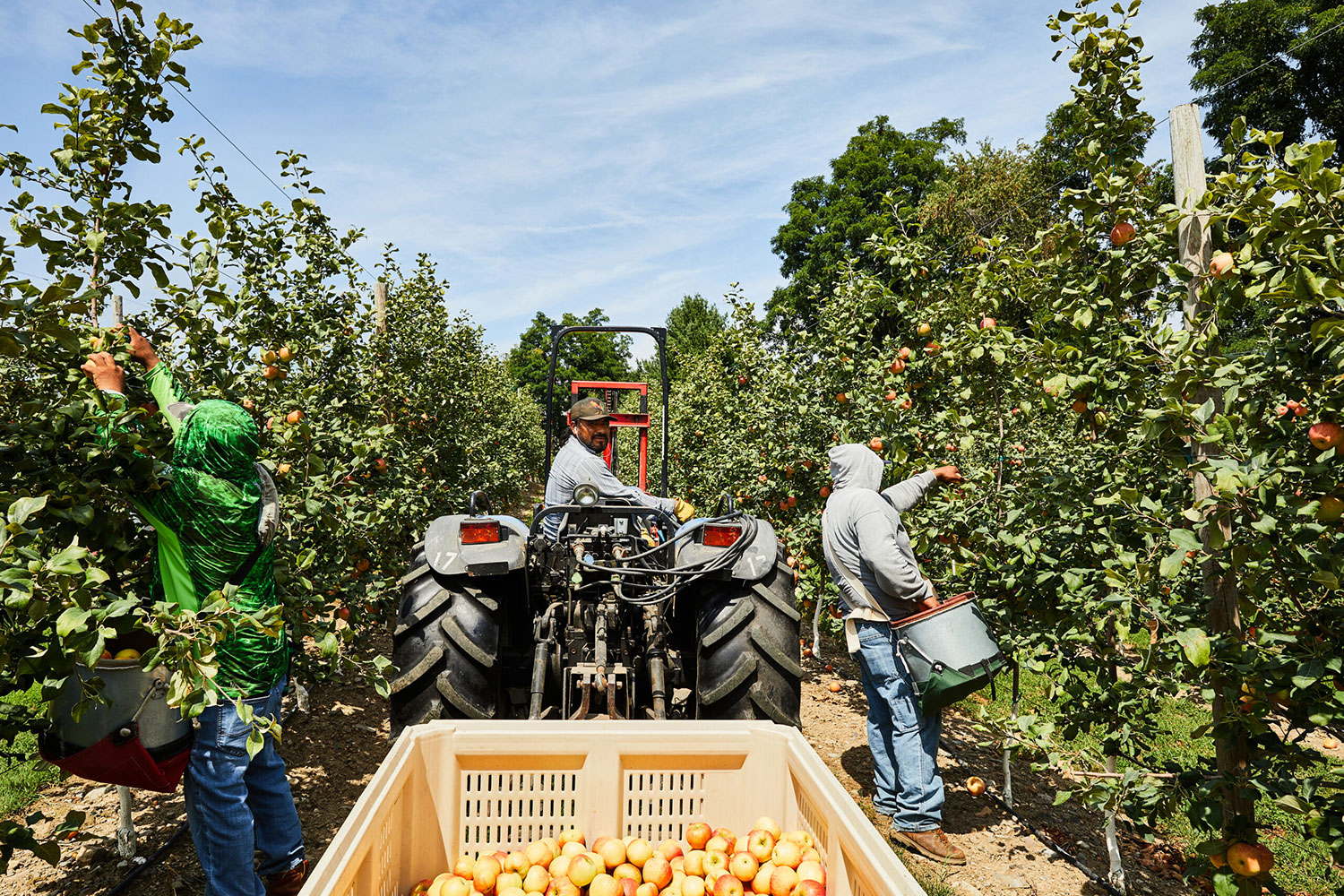
Seasonal labor shortages continue to squeeze U.S. specialty crop growers, pushing reliance on H‐2A guestworkers to historic levels.
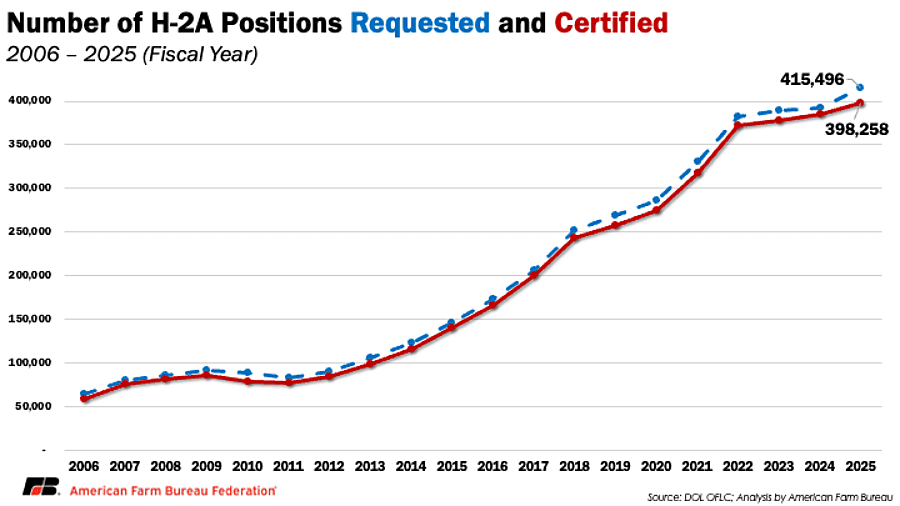
According to recent American Farm Bureau Federation data, more than 400,000 workers were requested in fiscal year 2025 (October 2024 to September 2025), and H‐2A certifications grew by 13,358 positions over the previous year. Over the past decade, H‐2A use has increased 185%, reflecting the ongoing gap between available domestic workers and the seasonal workforce needed to harvest fruits, vegetables, nuts and other specialty crops.
Growth, regional reliance and rising costs
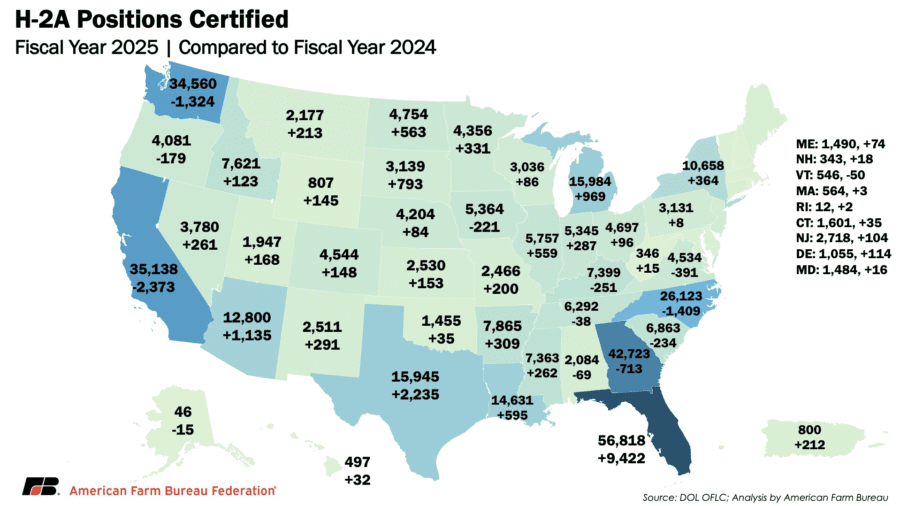
Reporting from the Farm Bureau shows that nearly half of all H‐2A certifications in FY 2025 were concentrated in Florida, Georgia, California, Washington and North Carolina (see graph above), highlighting that certain states remain particularly dependent on foreign seasonal labor.
While the program continues to be essential, it carries growing financial and administrative costs. Growers must meet higher wage requirements, provide housing and transportation, and navigate complex application processes, all of which can strain farm budgets. The combination of rising demand and administrative complexity underscores the delicate balance growers face: securing enough labor to complete harvests while managing costs that can approach or exceed profitability thresholds.
The historic request for more than 400,000 workers (see graph below) illustrates the persistent challenge of finding domestic labor, even as the H‐2A program expands. Year-over- year growth in certified positions demonstrates that, while the program provides critical support, growers continue to face a significant labor gap.
Grower experiences mirror national trends
National trends in H‐2A use are reflected in grower experiences on the ground. Fruit Growers News’ 2025 Specialty Ag Labor Survey found that 70% of respondents were able to secure adequate labor — a modest improvement from previous years — yet many growers continue to face significant challenges.
Rising wages and H‐2A compliance costs were cited repeatedly as pressures on profitability, and some operations reported losing up to a third of their harvests due to labor shortages. Nearly half of survey respondents said they relied on H‐2A workers in 2025, while about a quarter said they were considering reducing participation in the program because of cost pressures. Many explored alternative strategies to adapt to labor constraints, including mechanization, modifying planting schedules or reallocating acreage. These operational adjustments illustrated how labor availability directly shaped farm decision-making, from daily staffing to long-term planning.
RELATED – Powerful partnership: How Jamaica’s H-2 workers withstood Hurricane Melissa
Looking ahead
With domestic labor in short supply, growers will continue to rely on H‐2A workers and need to plan ahead to keep harvests on track. Insights from FY 2025 Farm Bureau data and the 2025 FGN Specialty Ag Labor Survey show that growers who adjust crop schedules, adopt mechanization and closely track labor trends are better positioned to sustain harvests, maximize efficiency and maintain profitability despite ongoing labor challenges.
Share your experience
Labor is one of the biggest challenges for growers. Fruit Growers News’ 2026 Ag Labor Survey is open through May 22, 2026, and your input matters. Share your experiences with H‐2A workers, labor availability, wage pressures and more. Your responses help the industry track trends, highlight challenges and provide insights growers can use to plan for the season ahead.