

Orchard protective netting systems enhance fruit quality and protection
Discover how orchard protective netting systems safeguard fruit from hail, heat and stress while improving quality and water efficiency.





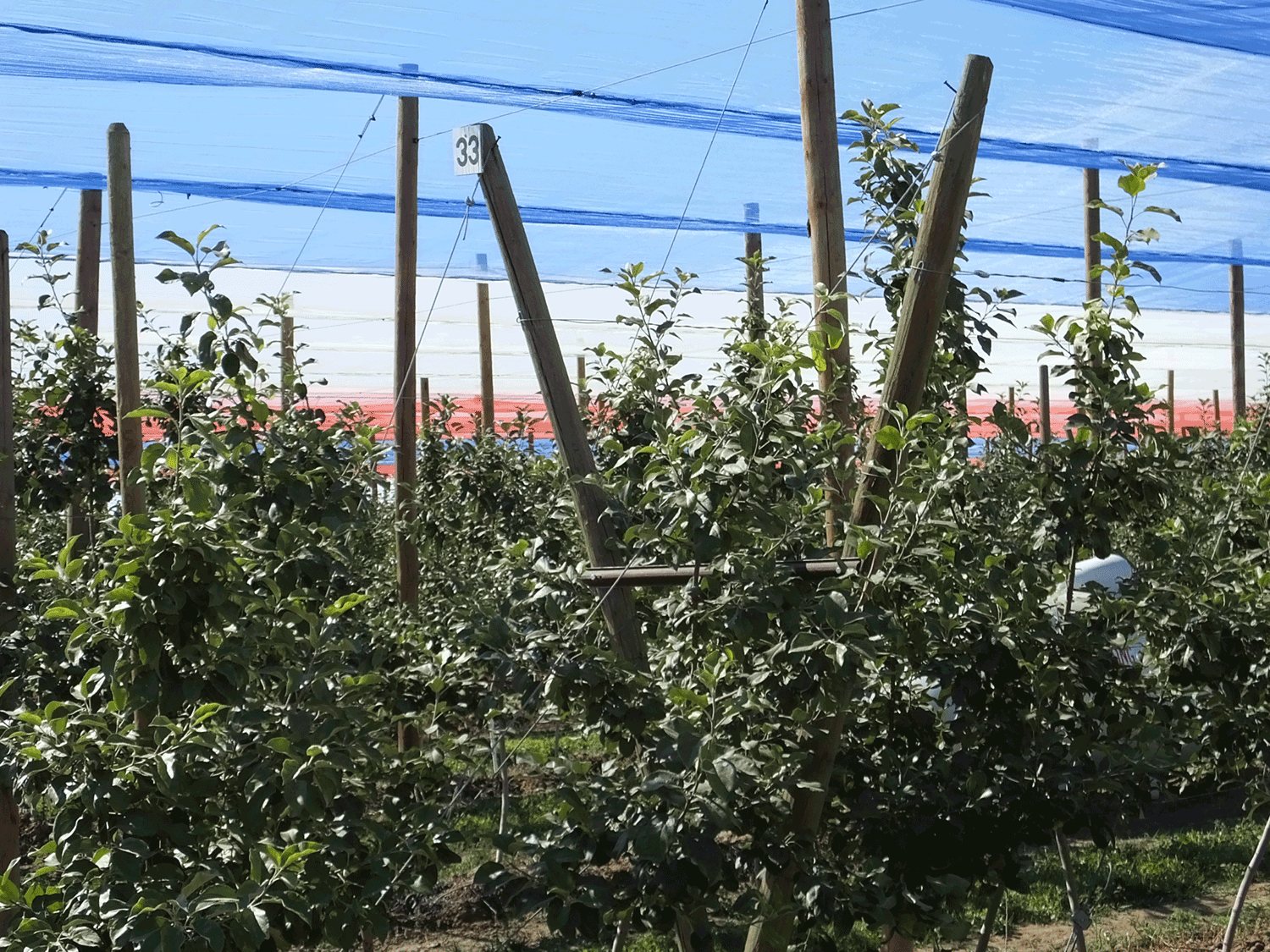
Orchard protective netting systems are becoming an essential tool in fruit production, helping growers minimize hail damage, prevent sunburn and manage microclimates for healthier, higher-quality fruit. Experts say the right system design can also improve water conservation, canopy growth and overall orchard efficiency.
“Just 45 minutes of sunburn pressure can damage the fruit surface,” said Lee Kalcsits, assistant professor of tree fruit physiology at Washington State University.
Benefits of protective netting
Netting also helps maintain cooler soil temperatures up to 16 inches deep, reduces root stress and supports more efficient water use. Standard nets with 20% shading allow growers to control irrigation and conserve water.
Design options and material choices
Growers use fruit tree netting to protect crops from birds, bats and other pests. Most systems employ polyethylene or polypropylene mesh.

Continuous over-the-top structures vary in design — some are stitched along rows while others use cable systems with sliding panels. Retractable systems, which can be pulled back from the ground, offer better labor efficiency.
Kalcsits added that drape netting is the easiest and least expensive to install, though it’s harder to work under and less durable. Retracting nets about 10 days before harvest allows apples to develop a redder color without sunburn.
Growers should consider labor availability for deploying and retracting nets along with post-bloom and post-harvest demands. Retrofitting existing orchards can be labor-intensive and costly. “Engineering is essential,” Kalcsits said. “Costs are a factor. It’s only going to have a role for high-volume varieties in key blocks where you have higher margins.
Microclimate and fruit quality
Dugald Close, associate head of global at the Tasmanian Institute of Agriculture, examined how self-ventilating rain covers affect microclimates and fruit performance. His research found that orchard protective netting systems and coverings can lead to bigger, sweeter fruit and more vigorous trees.
“Microclimate stability under covers led to reduced wind speeds, warmer — but moderate — temperatures and more humidity,” Close said. Water use under covers dropped by about 70% compared to netted trees and remained consistent across sites.
Covered fruit matured faster, though at warmer sites, fruit was softer; at cooler sites, it was firmer and sweeter. Close continues to explore the connection between firmness loss and calcium uptake under varying temperature and humidity conditions.
Managing production and weather extremes
Richard Vollebregt, president and CEO of Cravo Equipment Ltd. in Brantford, Ontario, said seasonal orchard covers protect crops from weather extremes but can have trade-offs.
“In 2012, we had growers ask us, can you put cherries under a retractable roof? We said you can put anything under a roof. What’s the impact on yield, quality and timing? Vollebregt said.
Cravo partnered with Greg Lang, Michigan State University horticulture professor, to test a retractable roof system at MSU’s Clarksville Research Station. The goal was to study climate optimization and its impact on crop development.
“We were able to show a one- to two-week change in flowering,” Vollebregt said. “A client in New Zealand did three weeks, and another in Hungary did four weeks. That carries its own challenges because growers risk frost when they’re going four weeks earlier.”
Vollebregt emphasized the difference between ambient and tree temperature. “The temperature of a trunk in the winter was 48°F, but it was 68°F in the sun. When someone asks about the temperature, we talk about air temperature. When we’re talking about chill unit hours, a sunny climate warms trees during the day and cools them at night, reducing overall chill efficiency.”
He added that every type of covering changes environmental conditions. “A covering is going to change your light quantity, light quality, wind, leaf and fruit temperature, soil temperature, humidity, transpiration and water stress. It basically changes everything.”
Trellis design and engineering considerations
Mark DeKleine, founder of TrellX, said trellis design plays a critical role in supporting orchard protective netting systems and other structures. “We boil everything down to math and equations that define the requirements for a trellis,” DeKleine said. “As we start adding structures, as they get taller, more loads have to be accounted for — that’s what we specialize in.”
TrellX designs trellis systems for diverse growing regions across North and South America, and part of Europe. “We have special cases,” he said. “In gorges, for example, out in Washington there’s a lot higher wind load. Soil conditions can affect trellises, materials, depth and anchors. Superficially, looking at a trellis there are nuances that should be taken into consideration.”
— Gary Pullano, FGN senior correspondent