

Genetically modified apples find their place in the market
Discover how genetically modified apples like Arctic varieties are reshaping fruit production with non-browning traits and consumer appeal.





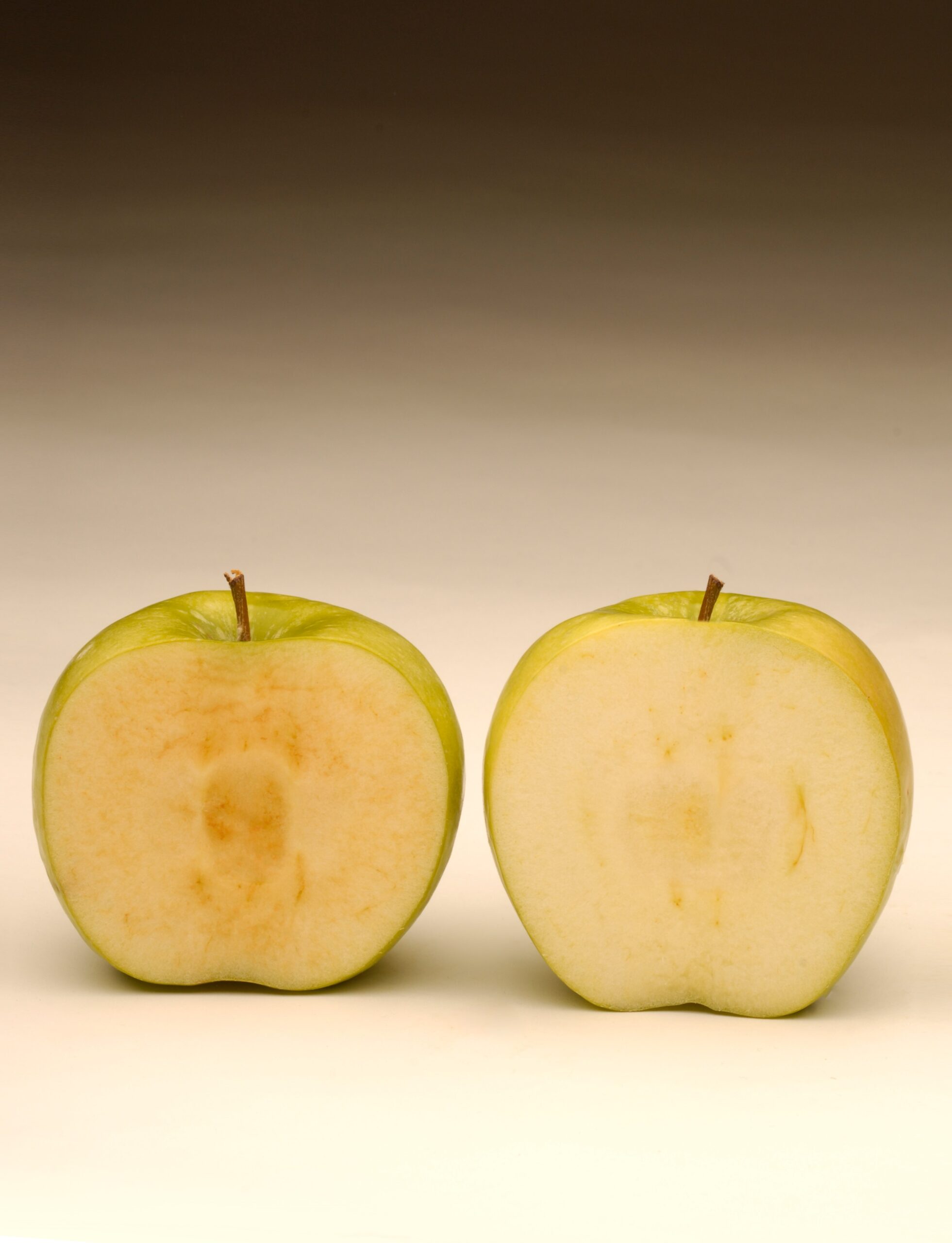
Genetically modified apples are gaining attention from consumers and the fruit industry alike. Arctic apples, which don’t brown due to oxidation, first reached U.S. consumers in the fall of 2017.
Although the apples are available at retail, the trees that produce them remain unavailable for commercial sale or distribution to growers. Okanagan Specialty Fruits, the British Columbia-based company behind Arctic apples, continues to develop the brand and communicate with growers about its future.
Arctic apples are one of only two genetically modified fruit approved by the USDA. The other is a papaya engineered to resist disease.
Founded in 1996, Okanagan Specialty Fruits developed the science behind Arctic apples in 2002 and received USDA approval in 2015. Since then, the company has focused on refining its technology, expanding production and developing new fruit products.
Educating consumers about biotechnology
Neal Carter, president of Okanagan and an apple and cherry grower, said public understanding remains one of the biggest hurdles.
“One of the biggest challenge is the misinformation that is out there regarding biotech foods,” Carter said. “Our goal is to educate as many consumers as possible, including sharing that there is an extremely rigorous process that all biotech foods must satisfy before they can be freely grown and sold.”
He added that transparency and direct experience have proven powerful. “Transparency and enabling the public to experience Arctic apples firsthand are very impactful in educating consumers and gaining their support, especially when they discover the benefits biotechnology can offer.”
Strong market response to genetically modified apples
Arctic apples’ non-browning trait has proven popular. “Although our company has been around for quite some time now, this past fall was actually the very first time our non-browning Arctic Golden apple slices were available commercially,” Carter said. “The response by consumers really does echo the many years of consumer research we conducted. Consumers continue to love the idea of non-browning apples and the convenience they deliver, as well as the superior eating experience of Arctic apples.”
Carter said initial production totaled 170,000 pounds from the 2017 harvest. “We were very pleased with the reception and the consumer response data generated by these initial sales,” he said. “Our harvest in 2018 will be much larger. We’re busy in the orchard planting more trees so that we can expand our fresh market presence following the fall harvest of 2018. We expect to expand availability across the U.S. and Canada in due course.”
Consumer products expand beyond slices
In 2017, Arctic Golden apples were sold exclusively in 10-ounce grab-and-go bags of fresh-cut slices. “The packaging highlights our apples’ unique non-browning trait, which enables Arctic apples to be preservative-free, and provides consumers with the convenience factor they desire and an unparalleled eating experience,” Carter said.

Taste tests have shown that consumers prefer Arctic apples to other sliced apple brands because they don’t require anti-browning treatments. “Since Arctic apple slices don’t require any anti-browning treatments, any potential off-tastes that may come with them are avoided,” Carter said.
Okanagan has since released Arctic ApBitz dried apple snacks, also preservative-free, and early consumer feedback has been strong. “We’ve received rave reviews from customers about their crunch and sweetness,” Carter said. The dried snacks are currently available on Amazon.
Coming soon, Okanagan plans to introduce whole Arctic Golden apples in two-pound grab-and-go bags and additional fresh sliced varieties, including Arctic Granny and Arctic Golden apples.
Growth and production plans for genetically modified apples
Carter said all Arctic apple trees are grown in Washington state, where expansion continues. “We’ve been extremely busy in the orchard rapidly planting more trees so that we can expand our fresh market presence,” he said. “We anticipate that we’ll have approximately 660 acres of Arctic apple trees planted at the end of this year and that number will increase to over 2,000 acres by the end of 2020.”
Although Okanagan receives frequent inquiries from growers, the company currently maintains full control of production and sales. “For the time being we’ve been able to acquire enough acreage to support our business goals,” Carter said. “But we aren’t ruling out the possibility of working with growers in the future, particularly with growers who are interested in growing apples for us.”
Vertical integration and future innovation

While other apple companies have pursued club variety models, Okanagan has chosen a different approach. “Early in our company’s history, we explored the club variety model,” Carter said. “Instead, with the support of our parent company, we’ve opted to become a vertically integrated company, all the way from the technology to being able to deliver our products to consumers.”
Carter said growers often ask how they can benefit from the biotechnology behind genetically modified apples. “There is value at every point in the supply chain so that more of the apples that are grown will make it to market,” he said.
Superficial browning that results in downgraded fruit, even though there is really nothing wrong with the apples, is no longer an issue with Arctic varieties. “We are able to produce higher quality apples with less waste because of our non-browning trait,” Carter said.
Looking ahead, Okanagan continues to explore additional research and development opportunities. “We have done some preliminary work with other crops such as pears and cherries,” he explained. “While those projects are promising, they will be several years away. Our primary focus will remain on developing other Arctic apple products and new non-browning varieties.”
— Stephen Kloosterman, FGN Associate Editor