

Feeding the Economy report highlights $10.4T impact of U.S. ag
The 2026 Feeding the Economy report shows how the U.S. food and ag sector drives a $10.4T economy. Explore key report insights now.





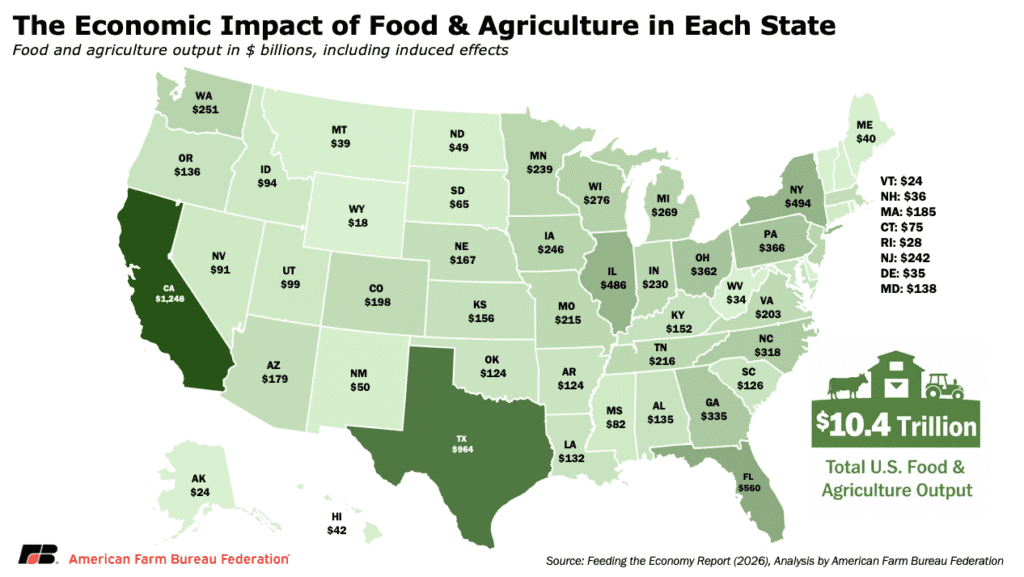
The annual analysis, supported by 35 industry groups, examines the sector’s direct and indirect contributions to jobs, wages, output and taxes. The latest report reflects an increase of nearly $894 billion from the previous year, despite ongoing inflation, a difficult farm economy and global trade uncertainty.
According to the Feeding the Economy report, the ag sector supports 48.7 million jobs nationwide, including about 24.3 million direct positions across farming, manufacturing, processing, distribution, retail and foodservice. Direct employment has grown 6.5% over the past decade, though job growth slowed over the past year.
“The nut industry is an economic powerhouse, supporting more than 515,000 jobs and contributing $148.25 billion to the U.S. economy with $10.69 billion in exports annually,” said Jeannie Shaughnessy, CEO of the Peanut and Tree Nut Processors Association (PTNPA), in a release.
Wages tied to food and agriculture totaled more than $3 trillion, rising 4% year-over-year and 13% over the past decade, generally outpacing inflation. The sector also generated $1.35 trillion in tax revenue, up 7% from the previous year.
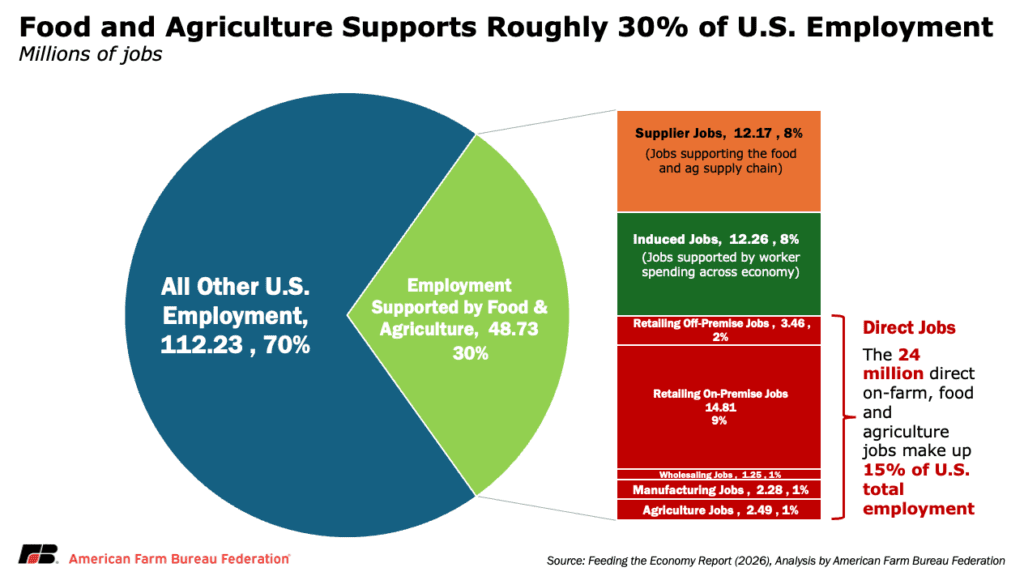
Food manufacturing remains the largest manufacturing sector in the U.S., employing more than 2.28 million workers, according to the report.
Despite overall growth, the report points to ongoing challenges. Employment in production agriculture and food manufacturing remained largely flat compared to the previous year, reflecting continued pressure on farmers, processors and rural communities.
The findings underscore the sector’s broad economic role while signaling potential headwinds tied to trade tensions, labor and market conditions.
Along with the PTNPA, organizations including the American Farm Bureau Federation, Global Cold Chain Alliance, International Fresh Produce Association and National Association of State Departments of Agriculture helped support the 2026 study.