

Costs of mechanized winegrape production studied





All four cost studies illustrate the cost and benefit of nearly full mechanization on winegrape production. The studies estimate the cost of establishing a vineyard and producing wine grapes, focusing on four winegrape varieties – Cabernet Sauvignon, Chardonnay, Rubired and Colombard.

Cabernet Sauvignon
“Those studies take into consideration mechanical pruning, leafing, shoot thinning, and harvest on a typical winegrape vineyard with the average production level for this region,” said George Zhuang, UC Cooperative Extension viticulture advisor in Fresno County.
“With farming labor becoming more scarce and expensive, growers will opt to transition into more mechanization,” Zhuang said. “These studies provide detailed information about the trellis type, planting density, cost and potential benefit of vineyard mechanization. Based on these studies, fully implemented mechanization reduces the production cost from $3,000 to $2,500 per acre and that represents 17% cost reduction. This information will ultimately help growers to guide their production practices to more profitable and competitive ways under the new era of farming labor.”

Winegrape growers should look at the costs, particularly expenses associated with mechanization, Zhuang said.“The investment to purchase and own equipment can be high,” Zhuang said. “Fortunately, it is easy to find a contractor in this region to perform certain vineyard tasks, if the initial investment to purchase equipment is prohibitive.”
Numerous studies, including UC studies, have confirmed the benefits of vineyard mechanization to grape and wine quality with lower production costs.
“It is a win-win-win situation,” Zhuang said. “Growers can improve their farming margins, wineries and juice processing plants can get reliable and higher quality grapes and juice from farms, and average consumers can enjoy better wine and more healthy grape products at an affordable price.”
The studies are based on 200-acre farms with the vineyard established on 40 acres using two types of trellis systems – quadrilateral cordon system and bilateral cordon system. In addition to regular grape production expenses – such as irrigation, fertilization and pest control – the researchers broke out the differences between machinery costs and hand labor hours required for thinning, pruning and harvesting for each variety. The prices for labor, materials, equipment and custom services are based on October 2019 figures.
The California minimum wage law will gradually decrease the number of hours employees can work on a daily and weekly basis before overtime wages are required. For more information and to view the California minimum wage and overtime phase-in schedules visit aic.ucdavis.edu.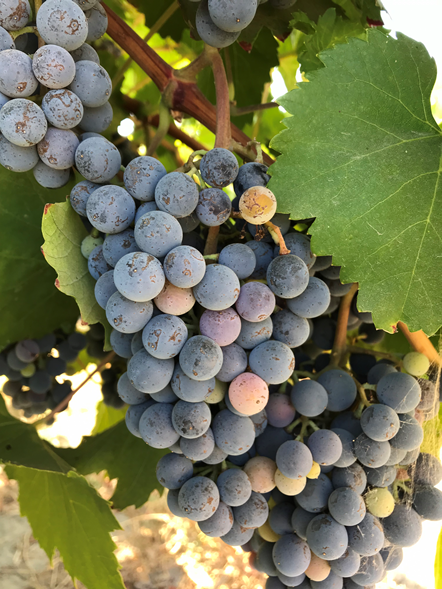
Input and reviews were provided by UC Cooperative Extension farm advisors, specialists, grower cooperators and other agricultural associates. The authors describe the assumptions used to identify current costs for wine grape establishment and production, material inputs, cash and non-cash overhead. A ranging analysis table shows profits over a range of prices and yields.
The new studies are:
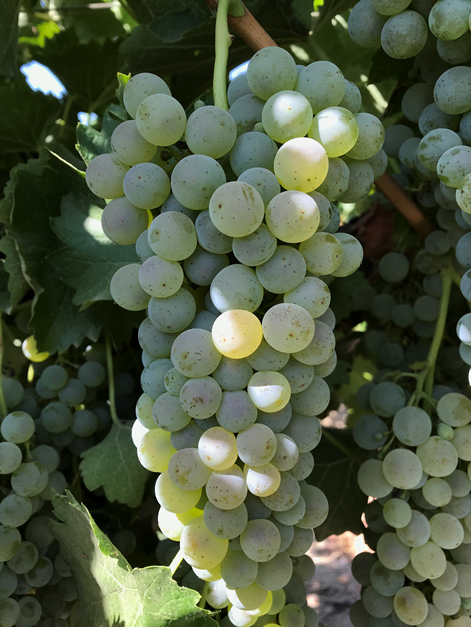
- 2019 – Sample Costs to Establish and Produce Winegrapes in the Southern San Joaquin Valley – Chardonnay Variety
- 2019 – Sample Costs to Establish and Produce Winegrapes in the Southern San Joaquin Valley –Cabernet Sauvignon Variety
- 2019 – Sample Costs to Establish and Produce Winegrapes in the Southern San Joaquin Valley – Rubired Variety
- 2019 – Sample Costs to Establish and Produce Winegrapes in the Southern San Joaquin Valley – Colombard Variety
For information about local grape production, contact George Zhuang, UCCE viticulture advisor for Fresno County, at gzhuang@ucanr.edu; UCCE viticulture specialist Matt Fidelibus at mwfidelibus@ucanr.edu; UCCE viticulture specialist Kaan Kurtural at skkurtural@ucdavis.edu; Karl Lund, UCCE viticulture advisor for Madera, Merced and Mariposa counties, at ktlund@ucanr.edu; or Gabriel Torres, UCCE viticulture advisor for Kings and Tulare counties, at gabtorres@ucanr.edu.
– Pamela Kan-Rice, University of California
Photo at top: Mechanical removal of winegrape shoots.