

Four generations strong: Balakian Farms’ organic commitment endures
At this California stone fruit farm, sustainable practices shape deep roots. Read how farming is more than a job at Balakian.





As a fourth-generation grower at Balakian Farms, Ambe traces her family’s roots back to 1925, when her great-grandparents purchased a ranch about five minutes from where the family farms today. They began growing grapes after immigrating to the U.S. during the Armenian genocide.
Her grandfather, the oldest of his siblings, bought the ranch the family currently farms after marrying her grandmother, Stella.

carry on the farm’s family-centered, organic tradition. All photos courtesy of Balakian Farms.
Tree fruit and row crops were added to the grapes. Each generation evolved the farm, but it was Balakian’s mother who made one of the most consequential decisions in the farm’s history: transitioning the entire operation to organic production in the 1990s.
“We were one of the first farms in our area to do that,” Balakian said.
Taking the organic leap
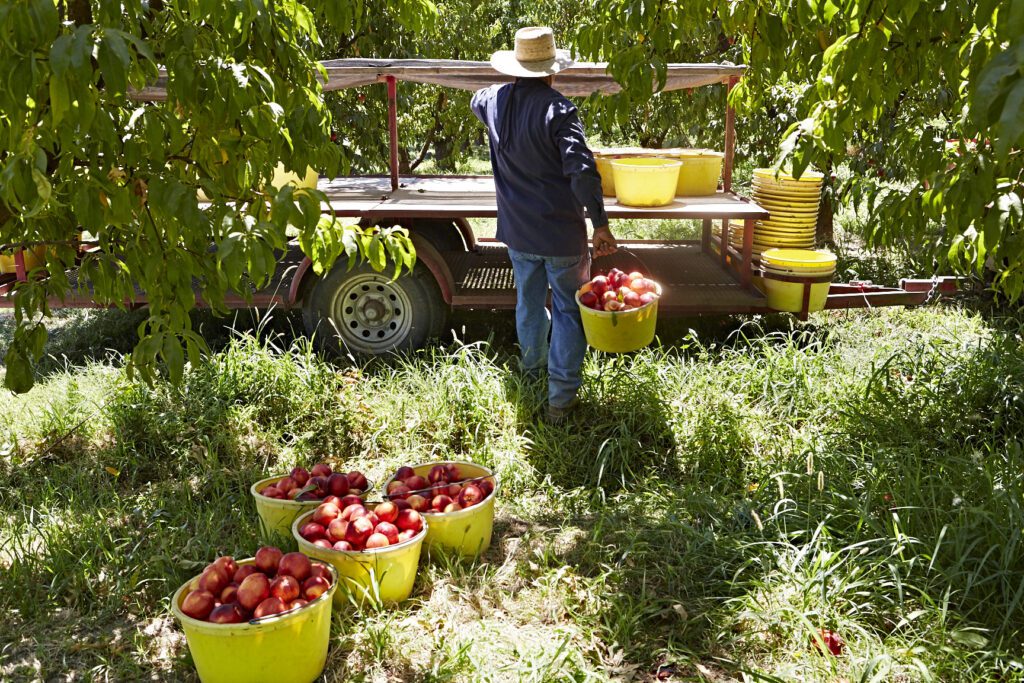
Organic production may be more mainstream these days, but in the 1990s it was anything but a sure bet.
The required three-year transition period to achieve organic certification was costly and uncertain, especially for a small family farm.
Even things that are a little more delicate, we’ll grow them because of how our operation is set up. —Amber Balakian
Back then, consumer awareness around organic food was limited, and few shoppers were willing to pay a premium. The family had to trust its instincts.
Today, Balakian Farms maintains strong relationships with certifiers and regularly collaborates with experts, including researchers at UC Davis’ Kearney Agricultural Research and Extension Center.
Stone fruit and heirloom character
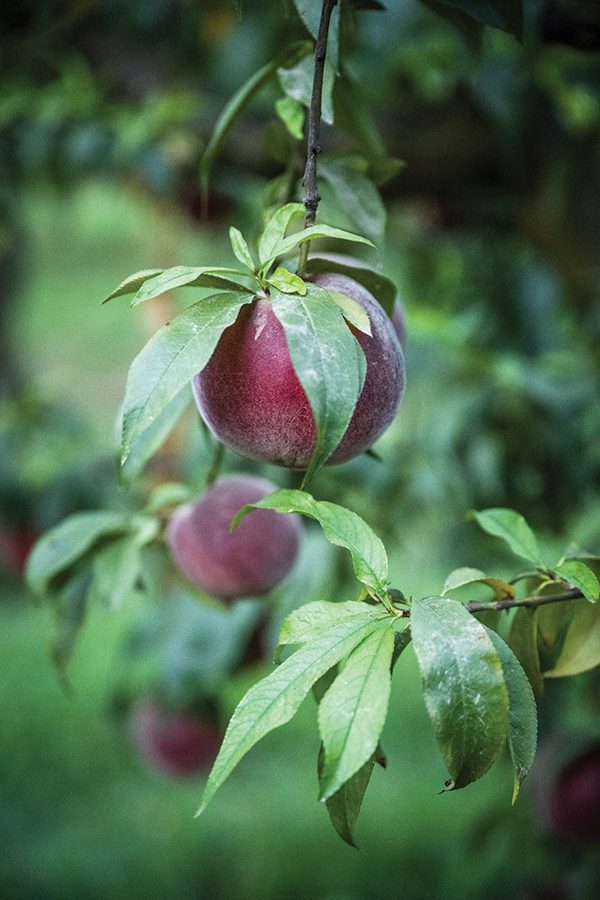
Stone fruit remains a cornerstone of the farm’s operation. While many Central Valley growers have removed orchards in favor of nut crops over the past five years, Balakian Farms has remained committed to tree fruit.
“We consistently have tree fruit, and it has done really well,” Balakian said. “In addition to peaches, plums and other stone fruit, we grow heirloom tomatoes, summer squash, eggplant and other seasonal crops. We like to grow unique things — even older varieties that are difficult to find.”
Rather than focusing on varieties bred primarily for long shelf life, Balakian Farms leans into flavor, tradition and character.
“Even things that are a little more delicate, we’ll grow them because of how our operation is set up,” she said.
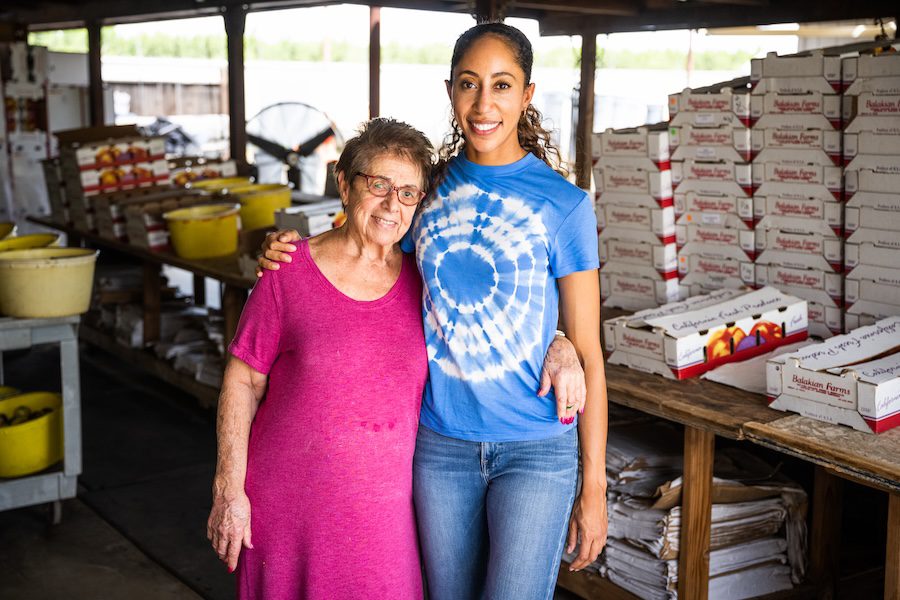
That philosophy reflects Balakian’s personal mission. She creates small-batch products using the farm’s organic produce, inspired by Armenian recipes handed down from her 96-year-old grandmother, who still helps out with sales at the farm when she can.
For Balakian, honoring the past and building the future are intertwined.
Organic practices in action
Organic farming at Balakian Farms is both regulated and practical.
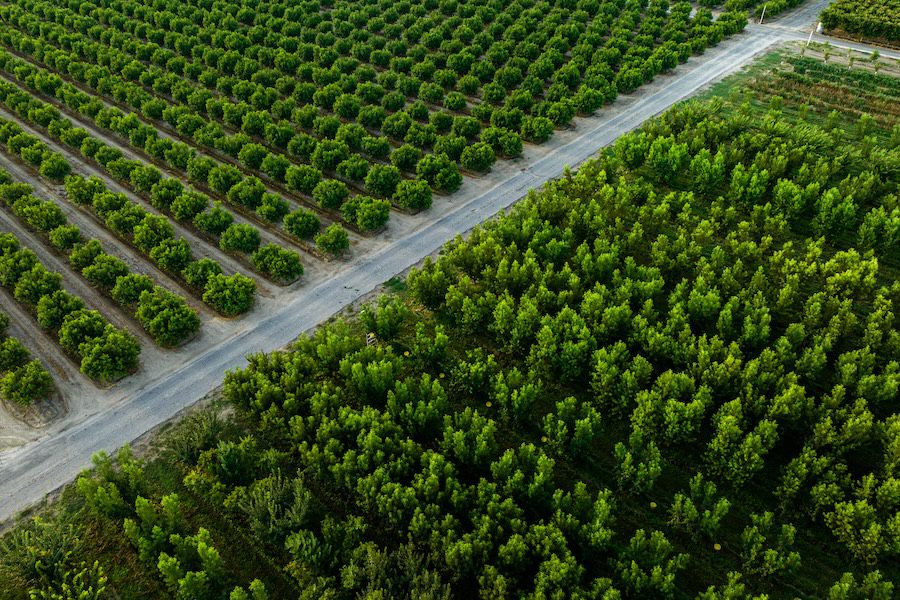
The farm uses approved organic inputs, follows strict fertilizer guidelines and tests its soils annually. Over time, the difference between its fields and neighboring conventional farms has become visible.
“You can really tell,” Amber said. “If you look at their soil versus ours, it’s a drastic difference.”
Pest management at Balakian Farms blends organic-approved compounds with integrated practices.
For tomatoes, the farm plants basil at the end of each row — a companion crop believed to deter certain pests.
“It’s not that we don’t use chemicals,” she said. “It’s just that they’re natural compounds, which are less invasive than traditional conventional chemicals.”
Drip irrigation has been installed across much of the farm, and the family is transitioning more of its tree fruit acreage to drip as well.
A family affair
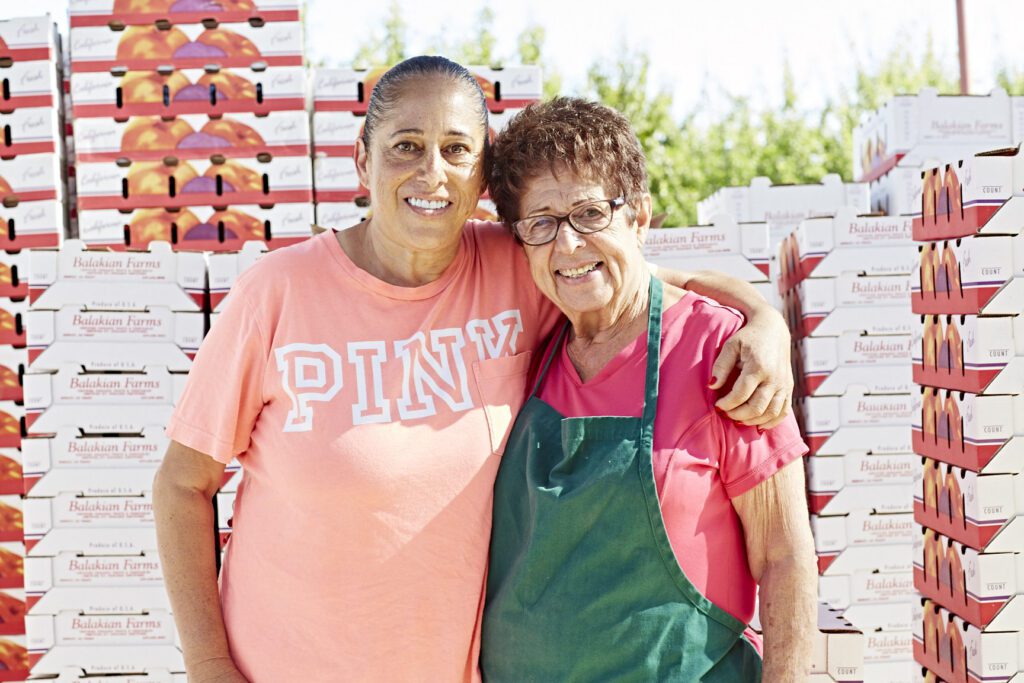
Balakian Farms remains deeply family-centered.
Balakian works alongside her mother and father. Her father, who was diagnosed with Parkinson’s disease, is less active than he once was but previously managed farmers markets and customer engagement.
An aunt drives up weekly from San Diego to assist at farmers markets. Longtime employees, including some who have been with the farm for more than 25 years, and provide continuity and stability.
“In peak summer months, crews of 10 to 20 workers may join to manage harvest surges,” Balakian said. “But at its core, the operation is intentionally small.”
The family farms and lives on 20 acres, with additional leased land depending on seasonal needs.
Sustainability and safety
Sustainability at Balakian Farms begins with organic certification but extends further.
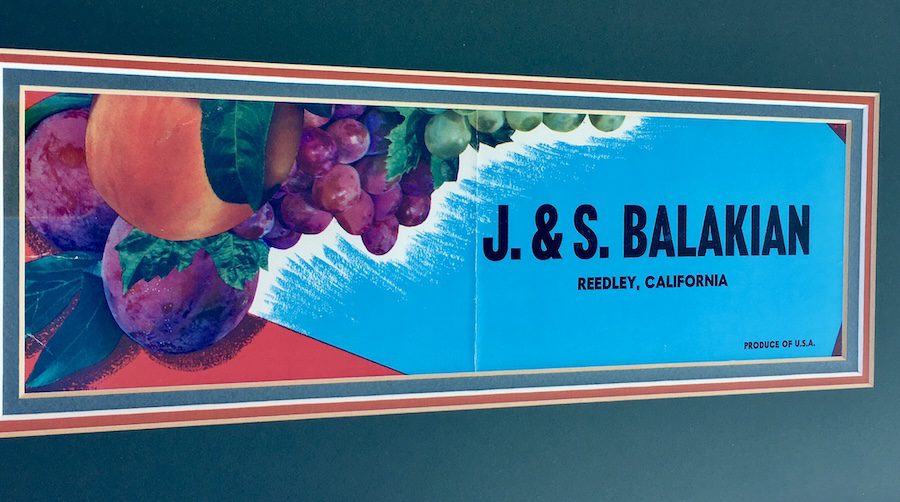
The farm follows GAP Version 1 standards and operates under a formal food safety plan. Recordkeeping, traceability and careful handling are now embedded in daily routines.
“A lot of people say that when they come to visit, it’s just so green and pretty and lush,” Balakian said.
That aesthetic reflects years of soil stewardship and a culture of care. Employees treat the land “like it’s their own,” she added.
Looking ahead
Despite industry consolidation and ongoing uncertainty in agriculture, Balakian doesn’t envision Balakian Farms becoming a huge enterprise.
“I don’t see us growing into a massive farm,” she said. “Instead, I see growth in creativity — developing new products, expanding brand recognition and finding innovative ways to supply customers. Strengthening relationships with retailers and farmers markets is part of that strategy, as is building a brand people trust.”
For Balakian, the farm represents something increasingly rare: a multi-generational, family-run organic operation grounded in culture and community.
After living pursuing higher education — Balakian also teaches at Fresno City College — she returned home with a renewed appreciation for what her family had built.
“It really is something unique,” she said. “It’s just a blessing to have that. I want to keep doing it. Not just because I have to, but because I want to keep doing it.”
A graduate of the University of Miami, Keith Loria is an award-winning journalist who has been writing for almost 20 years. View his recent writing at keithloria.contently.com.