

Sundale Vineyards moves from winegrapes to table grapes
Making grape strides: Read how Sundale Vineyards moved from winegrapes to table grapes.


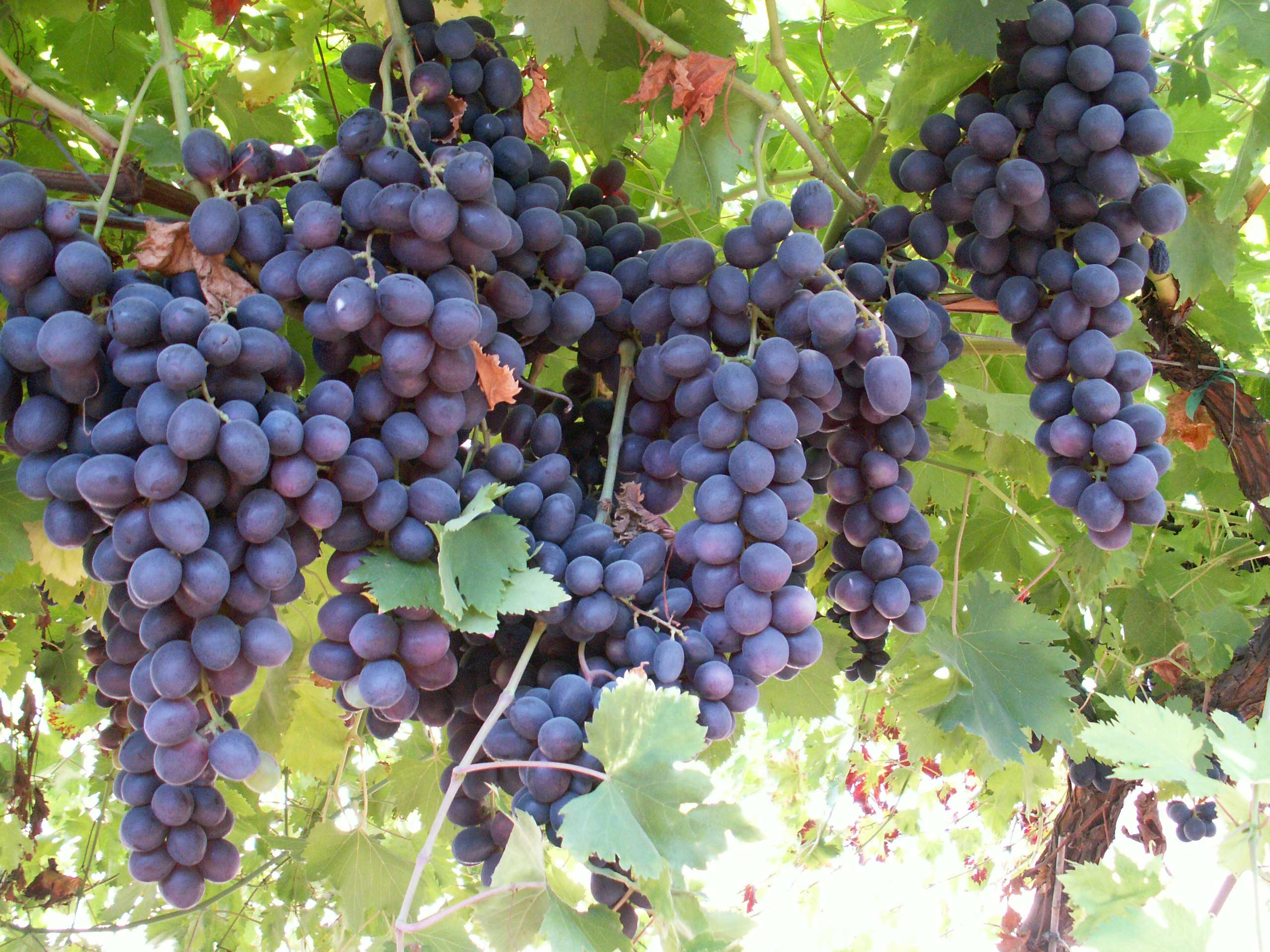
“My grandfather grew raisin grapes around their home, where my dad (Aram) started learning to grow grapes on the home farm,” said Todd Kinosian, now owner of the family business.
Eventually, Aram was able to transition to more family-inherited land and began growing winegrapes. He began with roughly 650 acres, but table grapes started to become the product of choice for the company around 1996.

From its modest start, Sundale has evolved into a prominent leader in the table grape industry, harvesting 18 varieties of grapes including, reds, greens, organics and candy varieties. It’s also done well with keeping up with customers’ demands for new varieties.
“I started becoming really involved around 1994 and started learning about table grapes based on what we had,” Kinosian said. “We didn’t have the technical skills, and we went through some challenges at first. We had maybe a quarter million boxes of table grapes, and as time went on, we really learned what it took to be successful.”
Growing a company
Over the years, Sundale continued to expand with the development of a cold storage facility, packing facilities and the cultivation of unique varieties to serve its customers.
In 2006, it also added a sales arm, Sundale Sales, led by its president, Sean Stockton.
Stockton started working in his family’s packing sheds at 8 years old and has been in the produce business since 1991, when he graduated from UC Davis and started his career with CH Robinson.
He and Kinosian were golfing buddies who spent a lot of their time talking about grapes. Those conversations sparked the idea to launch a marketing company that would sell Sundale’s fruit directly and eliminate brokers.

“We came up with a concept to create our own company, which I was a bit terrified of at the time, but with the amount of support we had from my own company and the retail side of the trade, we really hit the ground running,” Stockton said. “The first few years, we were fairly successful at what we were doing on a smaller scale that allowed the family to continue to grow, but the real turn of events from the marketing side came in 2008 when there was a massive freeze in California.”
He explained how Tulare County was hit hard, including a majority of the 650 acres on the family farm that were lost to the freeze. That led to the swift decision to graft a lot of the older wine varieties to newer varieties that June, which was late, but seemed to be a savvy move.
“It was a massive gamble,” Stockton said. “We transitioned into new varieties that have helped us establish our table grapes. We doubled and tripled in size.”
Tech talk
Sundale continues to lead the table grape industry by actively implementing a number of tech innovations over the years.
Sundale employs advanced technology to enhance both irrigation and quality assurance processes. For instance, its irrigation monitoring system provides real-time environmental and soil moisture data, enabling precise scheduling, risk mitigation, optimized water use, and improved crop health and root development while reducing labor.
The company’s quality assurance software allows for real-time field data collection and analysis during the growing season, streamlining communication. During harvest, the platform provides sales with direct access to quality data, ensuring standards are met throughout the supply chain.

The trellising system has changed significantly, moving from the typical cross-arm to a more extensive — and more expensive — open gable trellising system.
“We have low-volume spray rigs where a lot less water comes out of these things,” Kinosian said. “The particles of water can be charged with electrostatics. You can cover more ground and use less water with the equipment we have.”
On the cold storage side, Sundale’s investment in solar energy generates 2 megawatt-hours (mWh) to offset energy costs, and the company’s carbon footprint is one of the lowest in the industry. It also made sure its cold storage was top of the line.
“We intentionally wanted to have the ability to store grapes as long as possible and give us the best shelf life,” Kinosian said. “When we built the cold storage, we really factored in coil surface to get the fruit colder sooner and have a lot less air flow, so the stems don’t dry out.”
The company expanded its cold storage in 2011 and 2014 and today possesses roughly 275,000 square feet.
Staying on top
Today, Sundale grows about 3,500 acres of grapes.
“We sell to a lot of different customers, with major retailers across the country,” Stockton said. “We’re selling Sam’s Club, Costco and BJ’s down in the south, plus we’re dealing internationally with Walmart, Sam’s Club [and more].”

With about 120 permanent employees — including many who have been part of Sundale for decades — the team has been critical to the company’s success.
“The Kinosians strive to have an immaculate cold storage and farming operation,” Stockton said.
As Sundale’s reputation has continued to attract new customers, the future of the farm and company looks bright, even with challenges like water and labor impacting the industry.
“We have strived to be consistent for 20 years, and there’s a reason why people do business with us: We keep up with today’s challenges and make our best effort to do the best we can,” Stockton said.
— A graduate of the University of Miami, Keith Loria is an award-winning journalist who has been writing for almost 20 years. View his recent writing at keithloria.contently.com.