

2026 IFTA Summer Tour: Hudson Valley orchards showcase agritourism, innovation and resilience
Tag along for a photo tour of the International Fruit Tree Association’s 2026 Summer Tour in New York’s Hudson Valley.





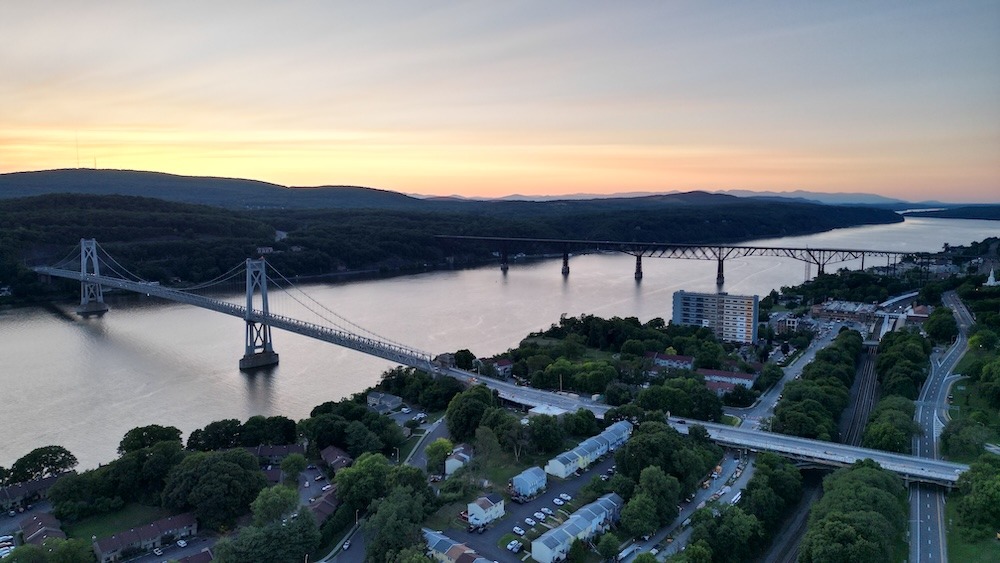
“Show me, don’t tell me” could perhaps be the official motto for the International Fruit Tree Association’s (IFTA) popular biannual orchard tours. The fruit industry advocacy group has proven adept at organizing informative and entertaining excursions showcasing the best-of-the-best in the commercial fruit orchard industry.
This summer, the group launched its summer tour from the sleepy upstate riverfront enclave of Poughkeepsie, New York, hitting 10 specialty crop operations over two days throughout the crop diverse, agritourism-focused Hudson Valley region. Farms throughout the area are noted for their diverse crop mixes, as well as time-tested expertise in crafting direct-to-consumer produce programs and agritourism operations. Families and ag-curious folks from New York City, Albany and northern New Jersey are known to flock to the area for summer and fall farm tourism fun.
Here’s a brief roundup of where the tour stopped and what attendees saw:
Klein Kill Fruit Farms — Germantown, NY
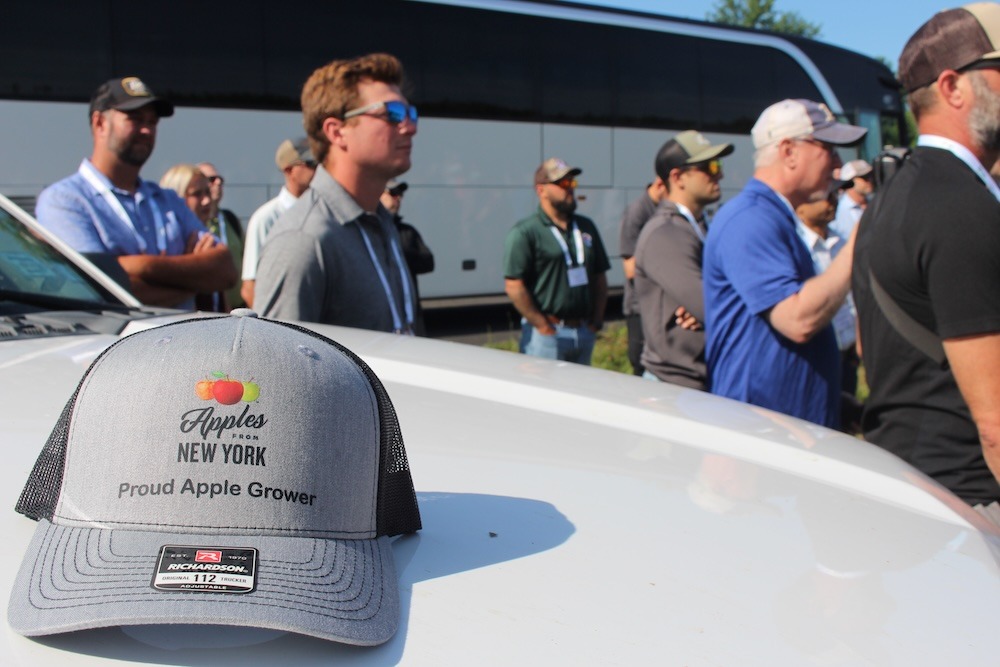
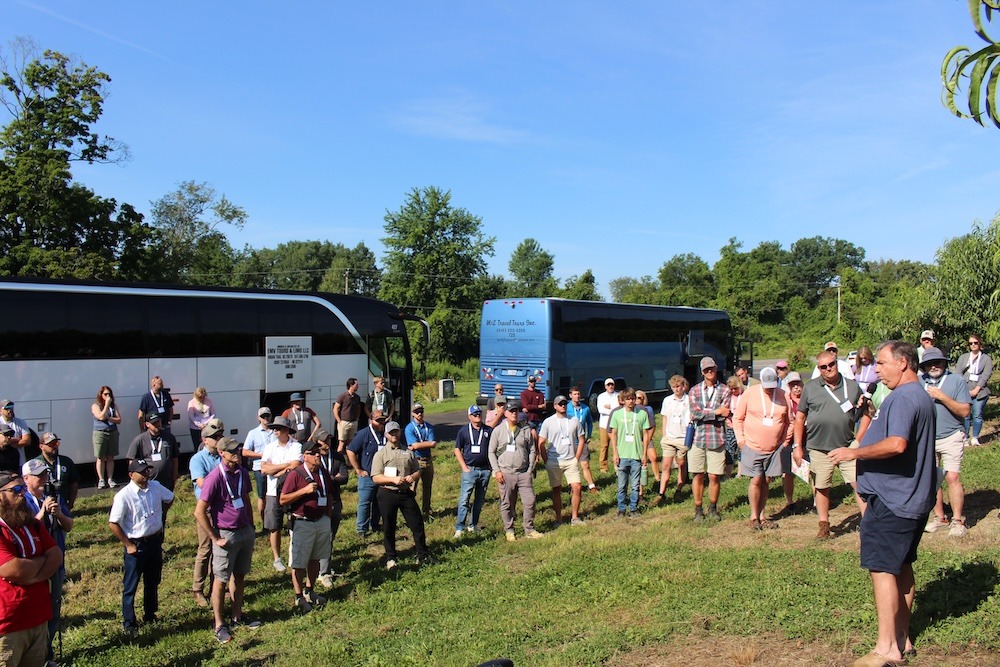
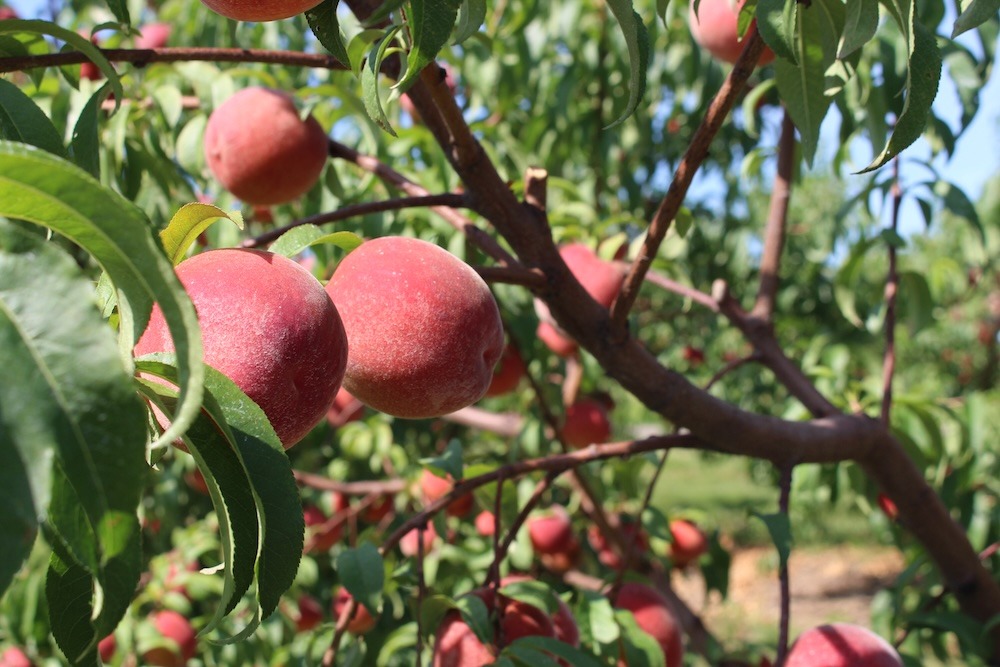
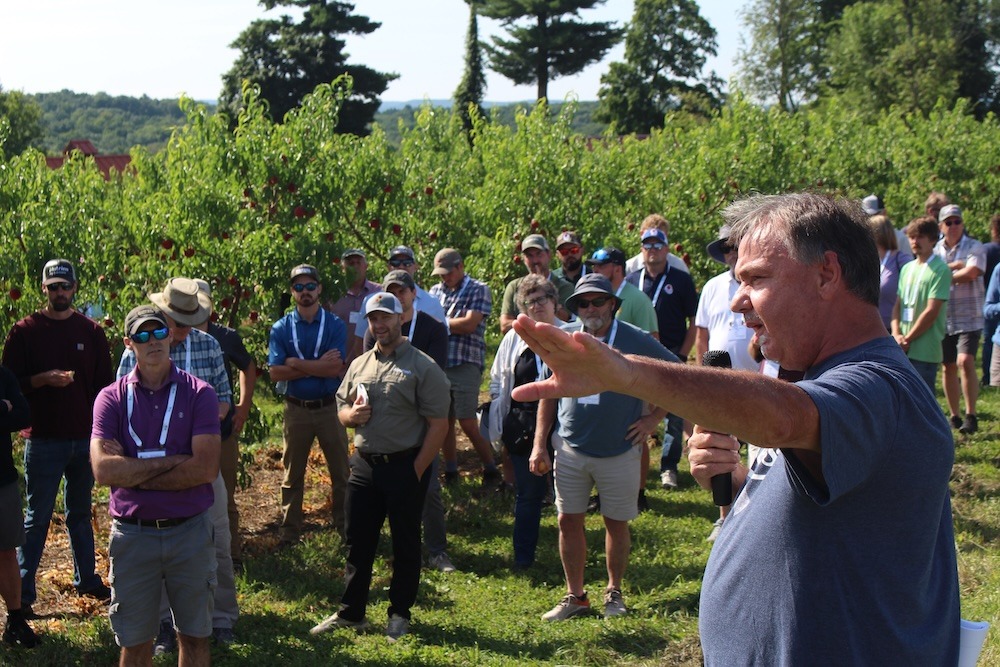
Third generation apple and peach farmer Russ Bartolotta welcomed the group to his 600-acre fruit growing operation to kick off the tour. Bartolotta wholesales to “all of the big [retail] chains” throughout the region and he also delivers to many roadside farm stands and farmer’s markets throughout Long Island. He almost lost his entire peach crop to the April 21 freeze event that hit Hudson Valley growers hard this spring, but a bit of good fortune and machinery helped his crew harvest and ship a solid crop.
“This year proved it for me—helicopters and [orchard] turbines work if you have an inversion [in the orchard],” Bartolotta told the group. “We focused all of our helicopters and fans into the apple blocks because that’s our best crop.”
Bartolotta is in the midst of building out a new packing house with automated fruit sizing and bagging technologies near the orchard site the group toured. That facility will open by spring 2027 if all goes to plan, but as Bartolotta himself noted, it rarely does in farming.
Samsacott Orchards —Kinderhook, NY
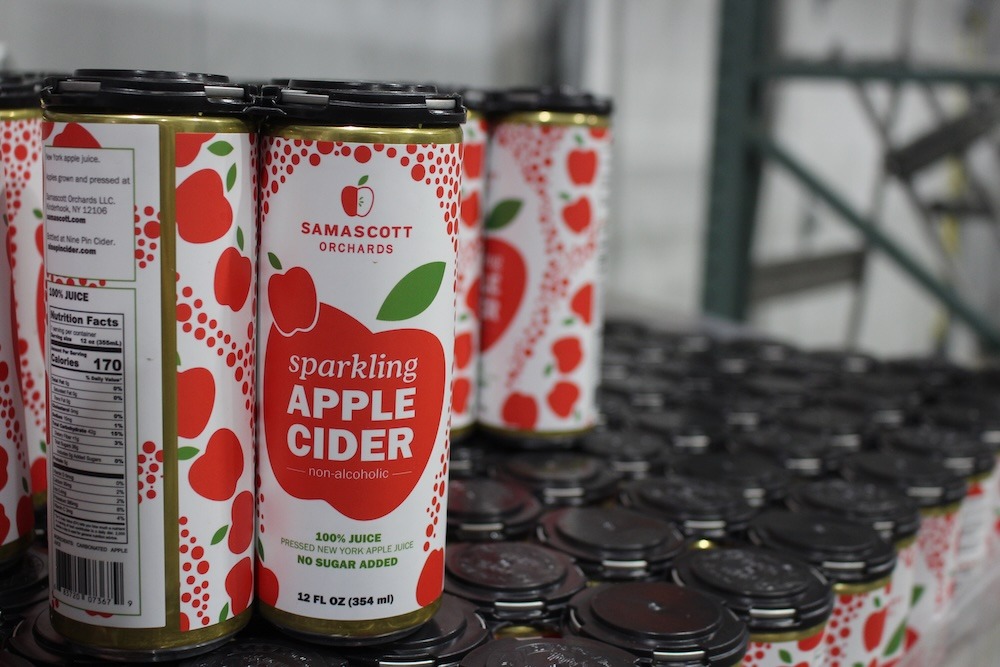
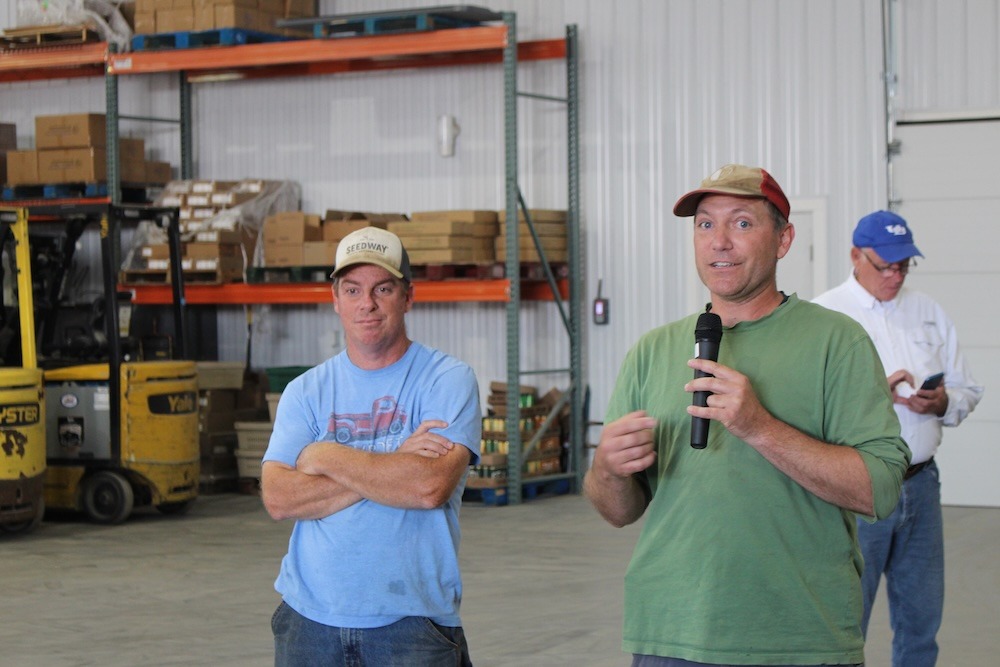
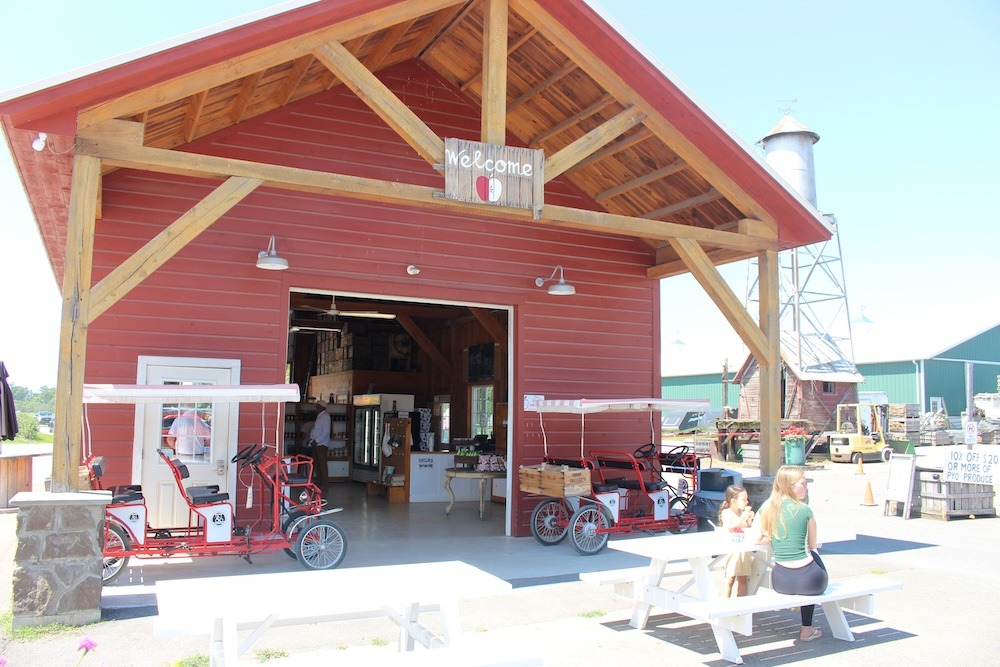
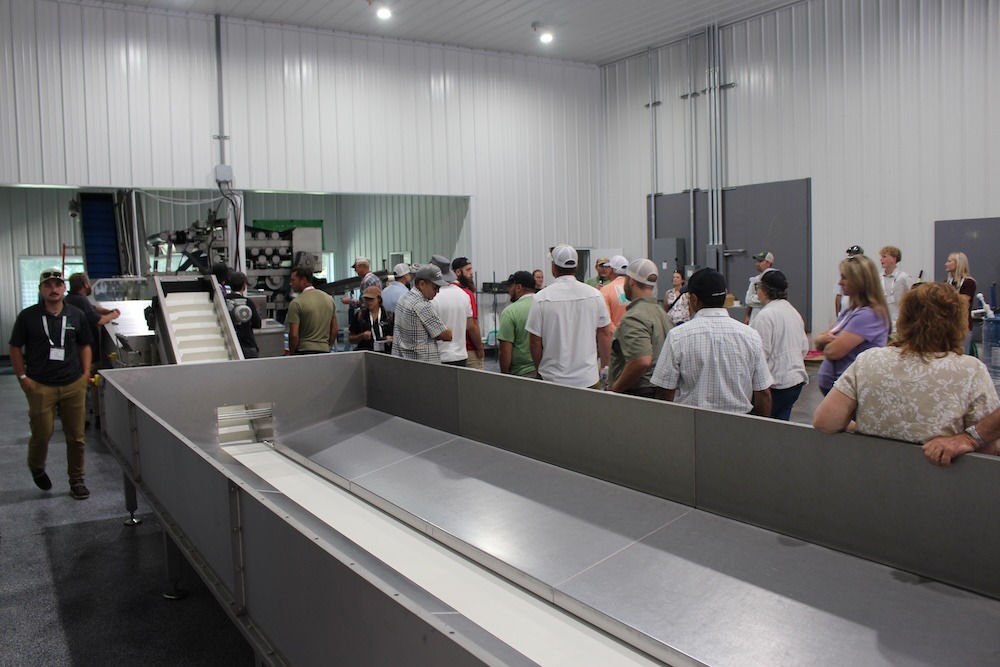
Cornell University fruit IPM coordinator Anna Wallis set the stage, telling the group “if you take nothing else away…I hope you take away diversity” to introduce fourth generation farmers Jake and Bryan Samascott’s uber-diverse fruit and vegetable growing and U-pick/agritourism operation. The farm has been making fresh cider since the 1970s and Jake told the group that “no fruit goes to waste” on his watch. The farm recently upgraded with a new apple cider press and CE storage facility for its hand-harvested produce.
While it grows a wide range of crops, the farm’s biggest crop is 120-acres of apples, the bulk of which are harvested fresh and trucked down to NYC to be sold at farmer’s markets five days per week during the season. Unfortunately the farm lost nearly its entire crop of sweet cherries and strawberries to the April 21 freeze, but its on-farm market and U-pick offerings should carry it through another tough season. The farm recently started charging visitors a flat $5 per-head admission fee for U-pick because customers were getting creative in smuggling its fruit and vegetables out without paying the full per-pound pick rate.
Golden Harvest Distillery — Valatie, NY
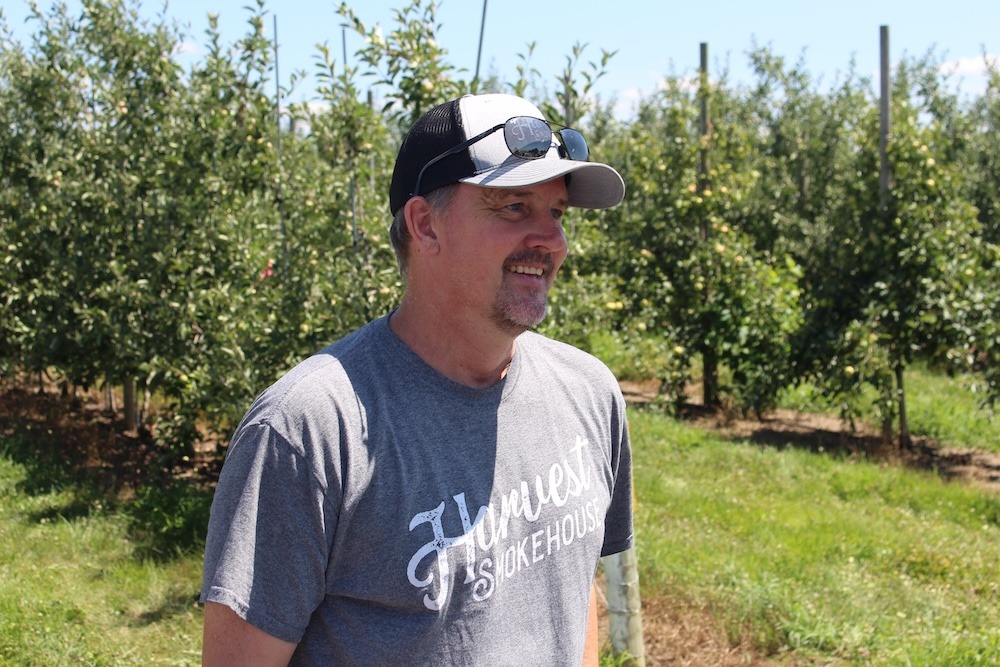
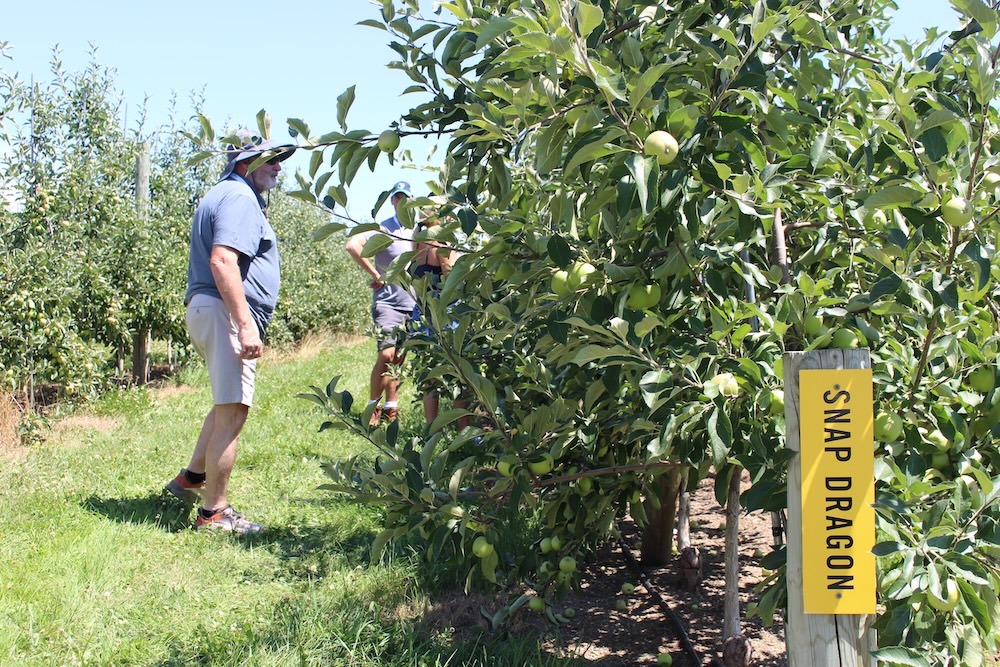
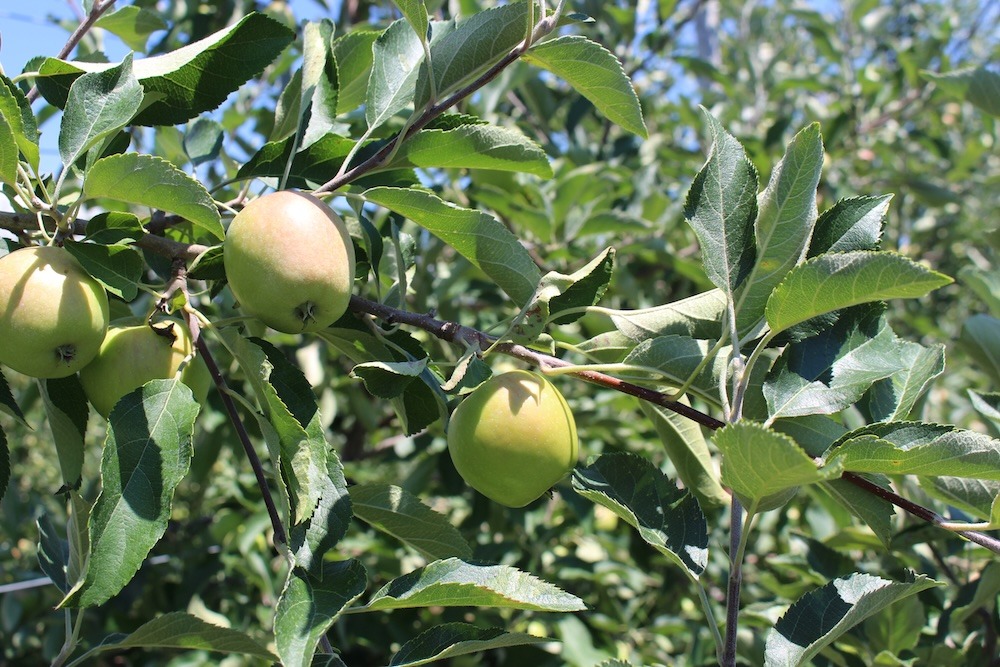
The tour stopped at Golden Harvest for a quick but delicious BBQ lunch and tour of the farm’s distillery and event hosting spaces. Diversity again was the theme as the Grout brothers walked attendees through the farm’s high density Snap Dragon block and discussed the evolution of its homemade apple vodka, AppleJack and apple-based balsamic vinegar offerings. The farm is known locally for its apple cider donuts and well-stocked country farm market full of unique, local products.
Yonder Fruit Farms —Valatie, NY
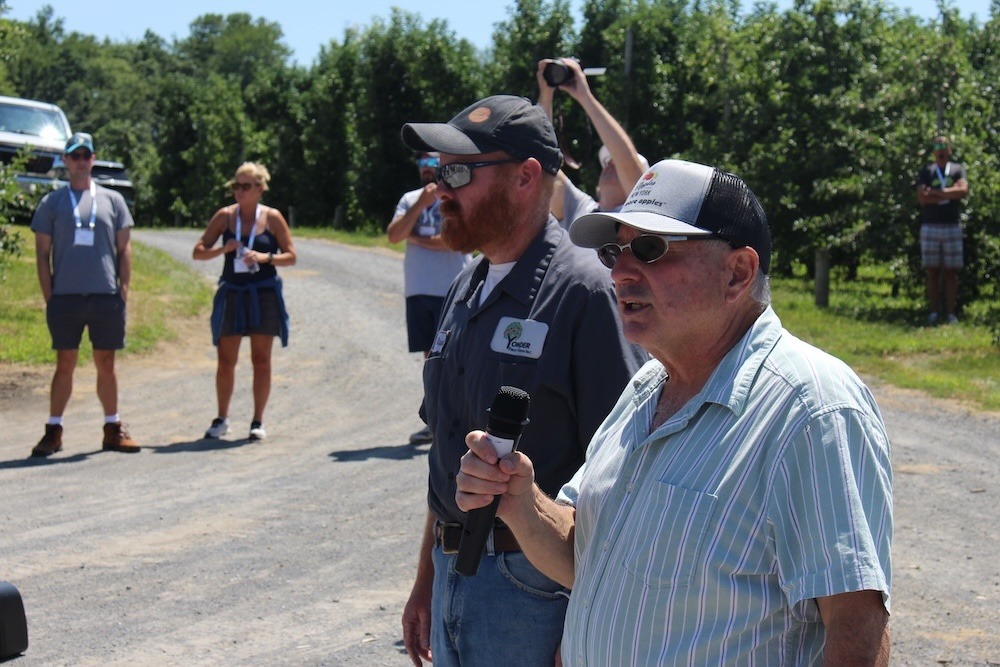
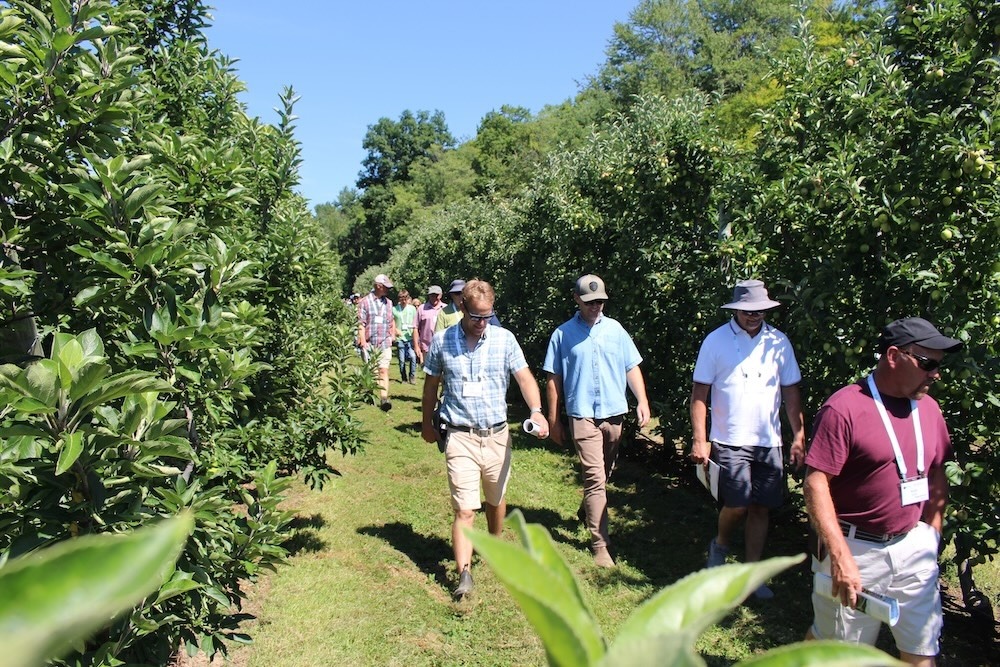
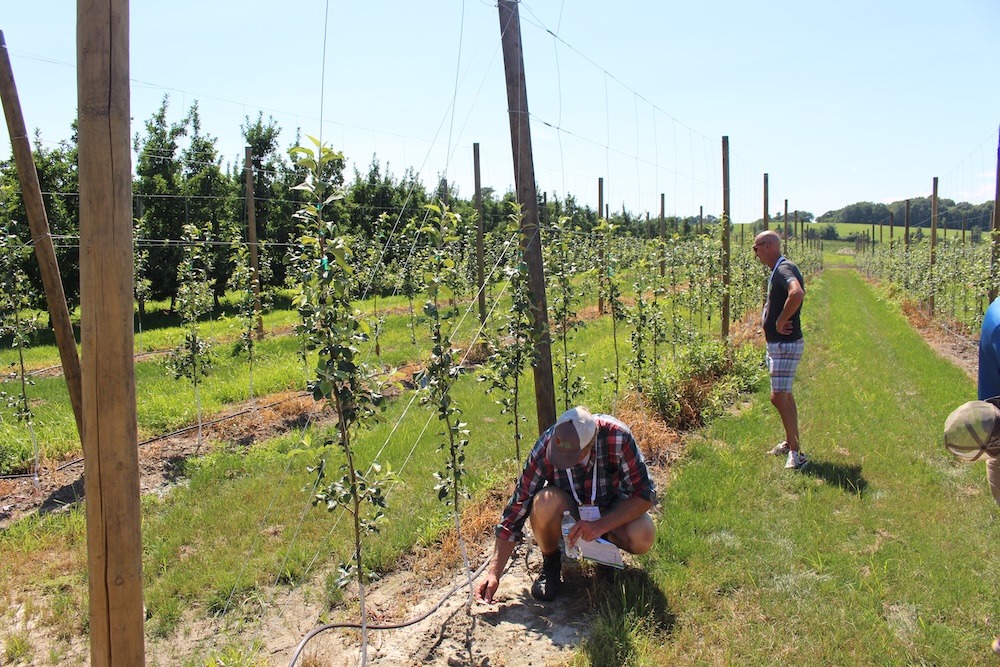
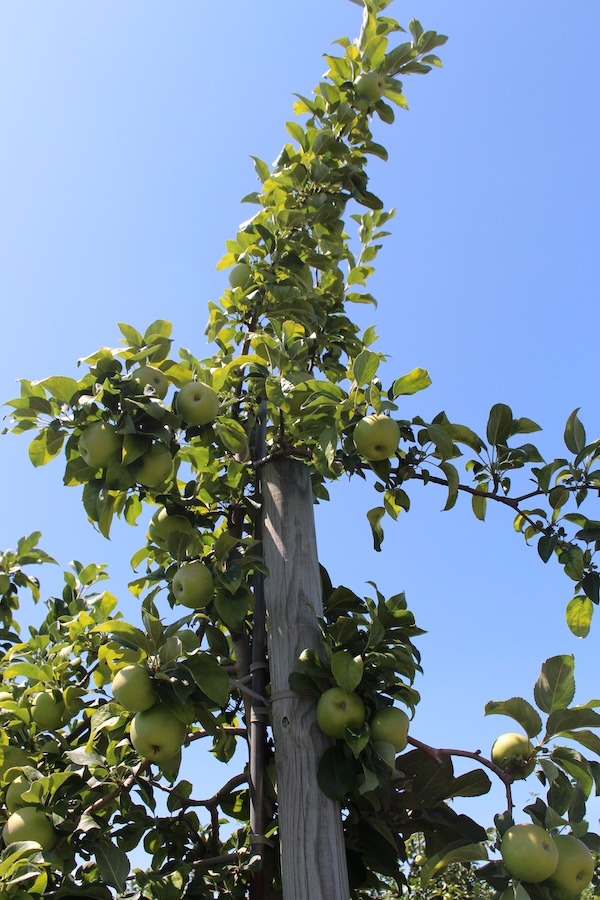
Right down the road from Golden Harvest, the group shook off the BBQ-induced sleepiness with a walk around Honeycrisp and EverCrisp plantings at Yonder Fruit Farms. Head grower Rusty Lamb and Cornell Extension’s Dan Donahue also walked the group through several plots showcasing the farm’s imported concrete trellis pole setup, Evercrisp rootstock coloration trials and a Honeycrisp bitter pit evaluation block.
“Honeycrisp bitter pit is a horrible problem in the Hudson Valley,” Donahue told the group. “The three most important factors [to overcome bitter pit] are regionality, root stock selection — B9 is superior for bitter pit mitigation — and finding the ideal, sustainable crop load.”
Rose Hill Farm Orchard — Red Hook, NY
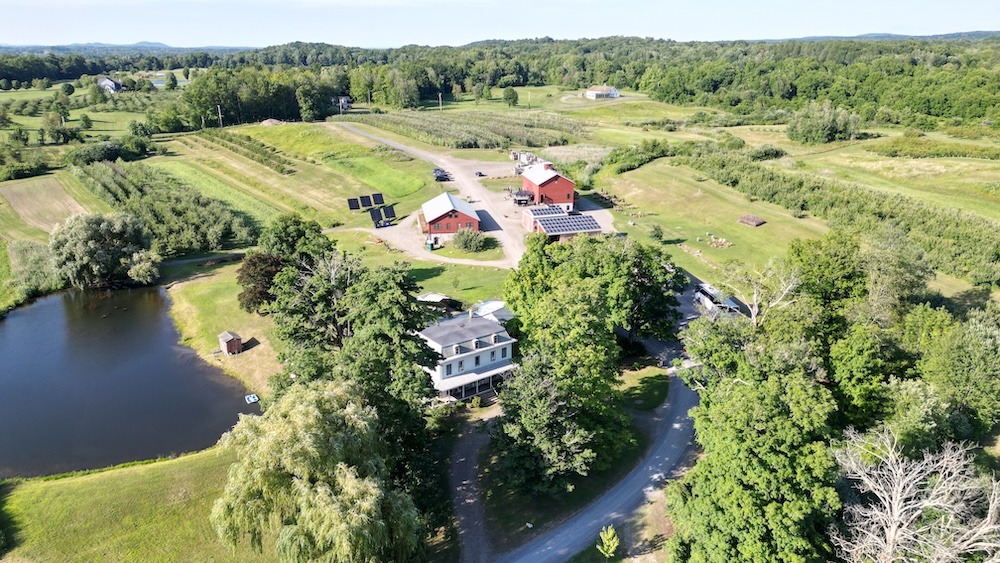
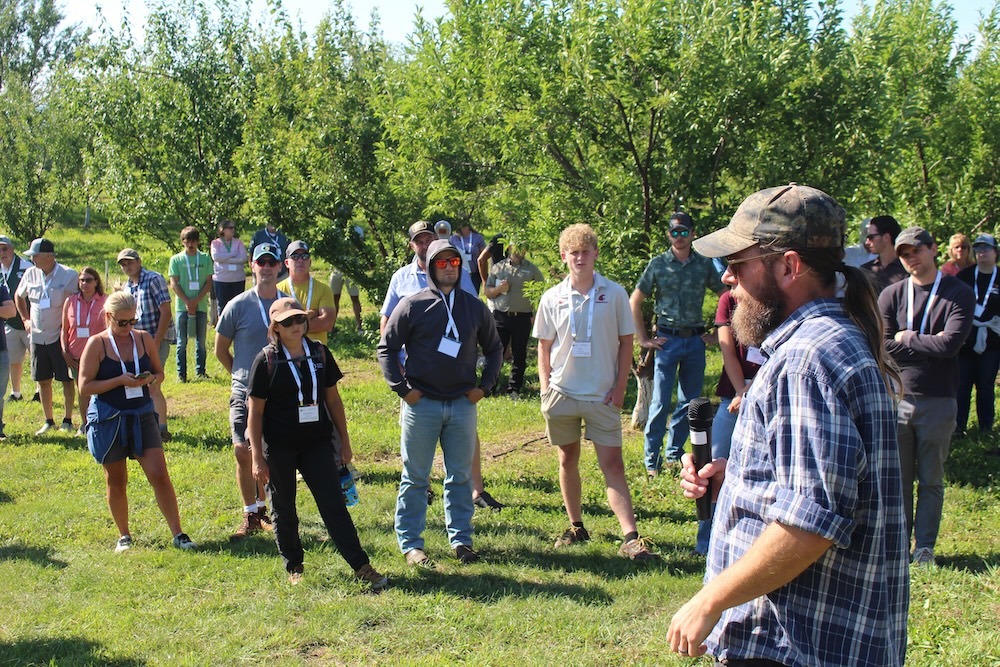
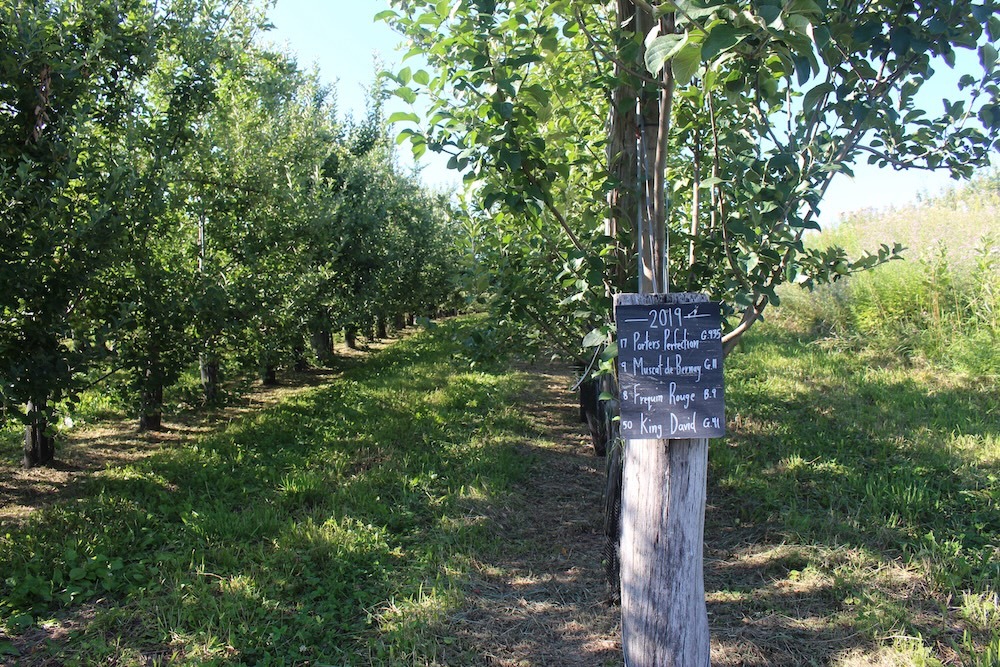
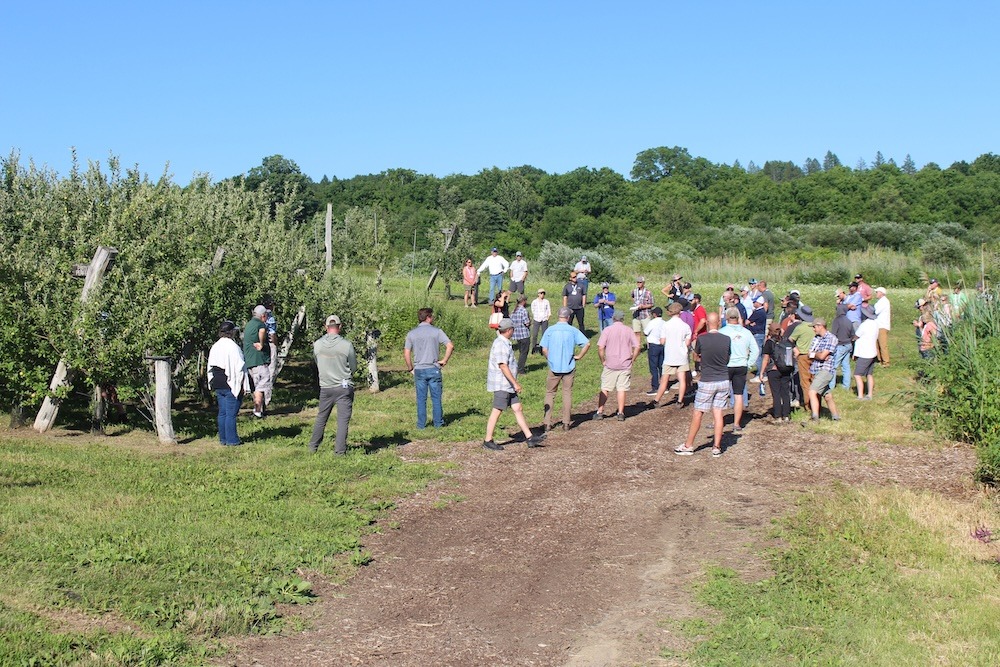
First generation farmer and orchard manager Kevin Clark walked the group through his unique approach to fruit production. When Clark started the farm was growing 27 varieties of apples, but today that figure has grown to over 100 different varieties under his leadership. The farm’s cider varieties are also prolific: 100+ cider apple varieties are planted together in a single, contiguous block up on a grassy bluff overlooking the scenic farm. The original intent was to plant cider varieties like Porter’s Perfection sequentially based on maturity date for coloration and ease-of-harvesting, but Clark says that effort didn’t quite work out as planned.
“Harvest is kind of all over the place,” he said in his signature deadpan delivery.
Despite Clark’s self identification as an introvert, Rose Hill hosts a lot of on-farm events throughout the year from wine and food truck festivals to an annual fruit tree blessing ceremony, which Clark says is unique among historically-preserved orchards in the area.
The April 21 freeze took out half of the farm’s apple crop while it’s cherries and apricots were a total loss, but its blueberry crops are looking good, he added. The farm also features a retrofitted barn that operates as a neighborhood tavern with hard cider, wine and local craft beer offerings. The old farm house on site was featured in an episode of HBO’s “The Sopranos” where Steve Buscemi’s character meets his untimely demise on the idyllic front porch. The farm’s team of skilled Jamaican H-2A workers reside there now.
Hudson Valley Research Laboratory (HVRL) – Highland, NY
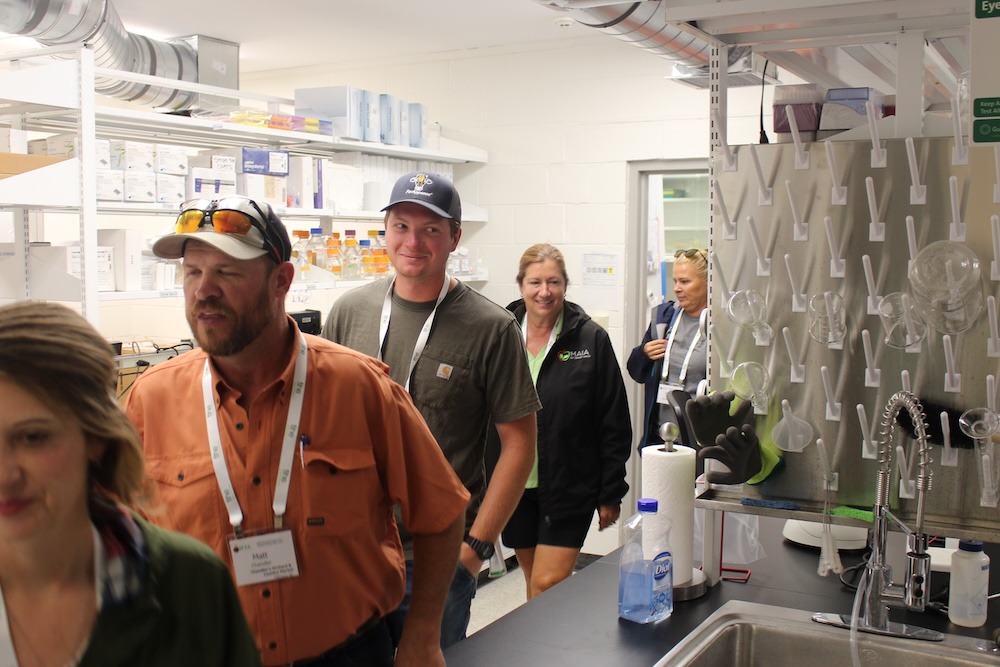
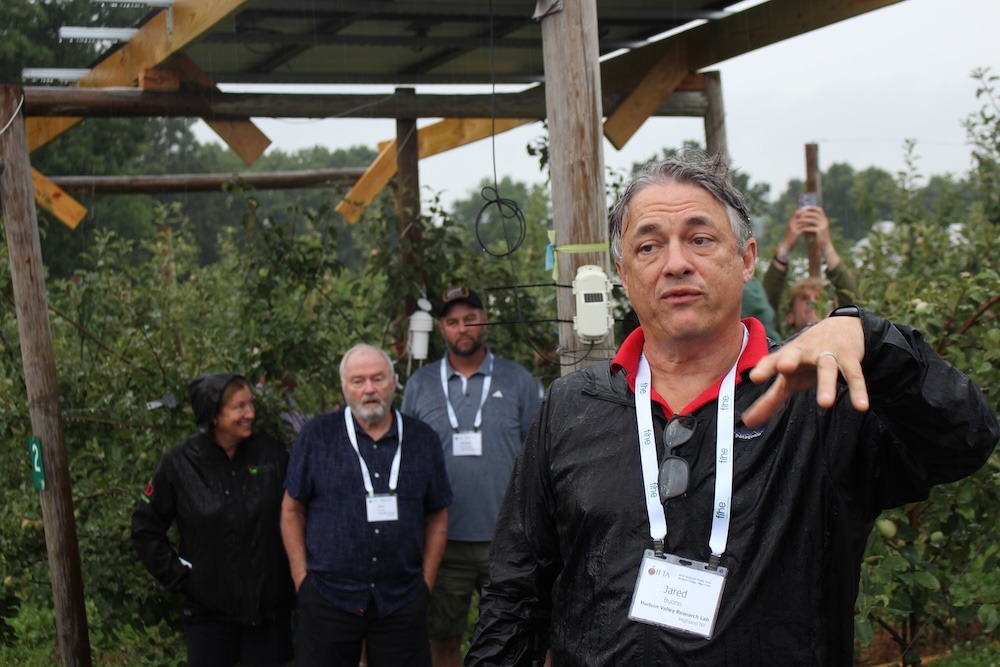
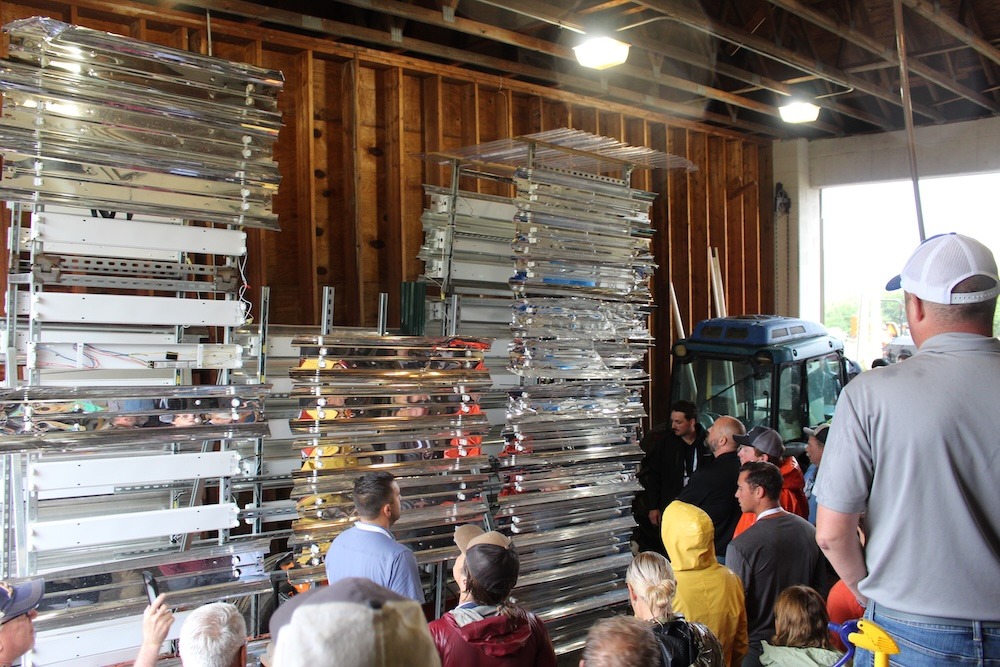
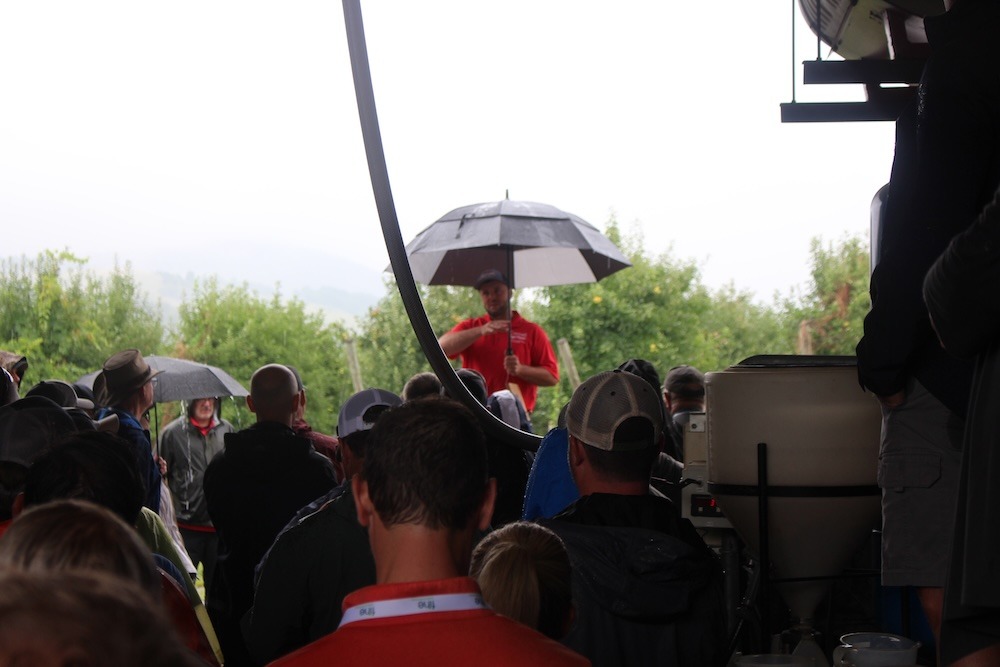
This unique physical embodiment of a 100-plus year old public-private-farmer partnership sits on 22 acres with an additional 7,000 sq. ft. of laboratory space, originally founded in 1913. It houses Cornell Extension researchers working on projects that span general horticulture, entomology, pathology and Integrated Pest Management (IPM).
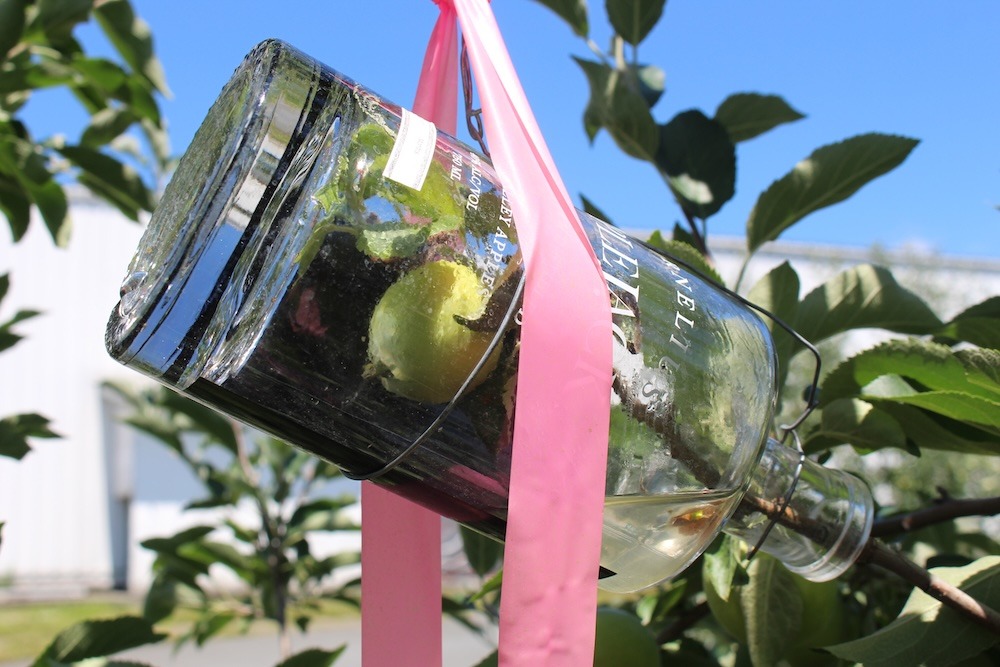
Cornell Extension’s Jared Buono showed tour attendees around it’s current experiments including a bait-and-kill approach to Spotted Lantern Fly (SLF), the use of UV-C to kill plant disease pathogens on tree foliage, an agrivoltaic tree fruit evaluation project and looking at biochar as a commercial orchard soil health amendment.
Hurds Family Farm —Modena, NY
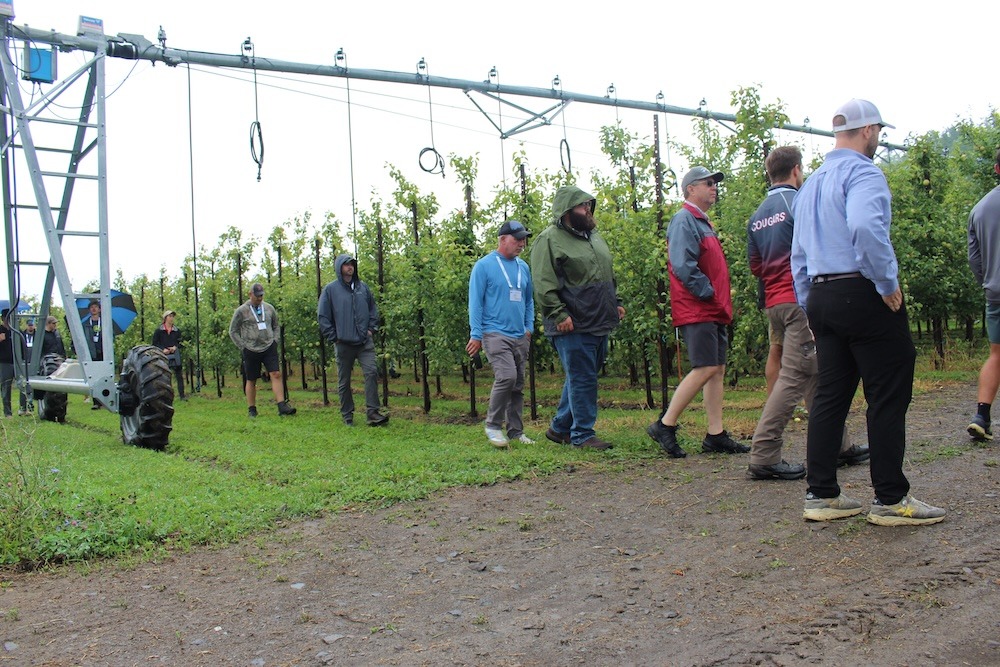
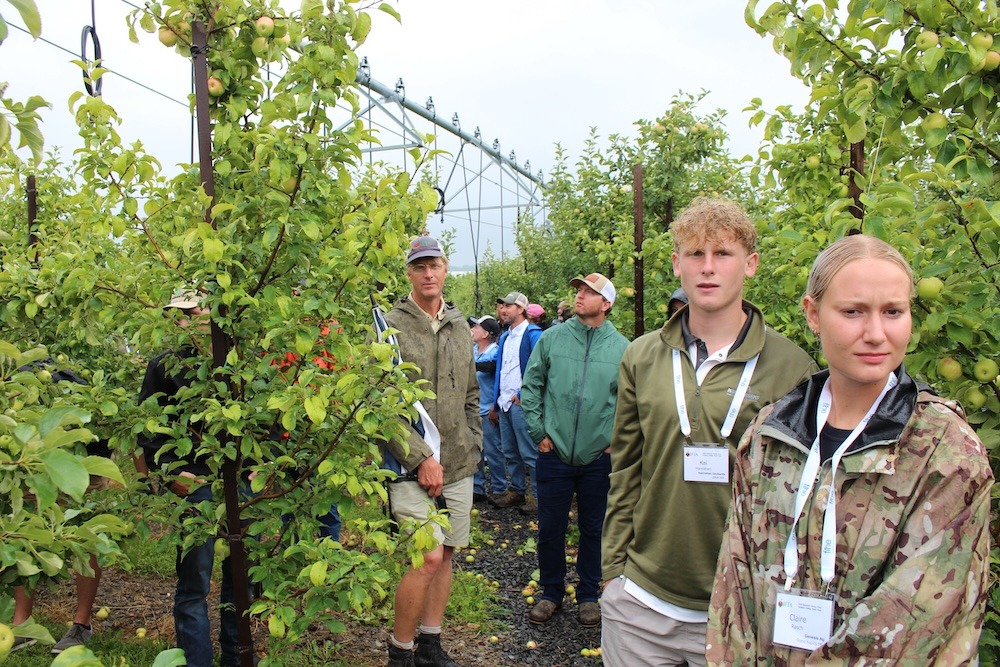
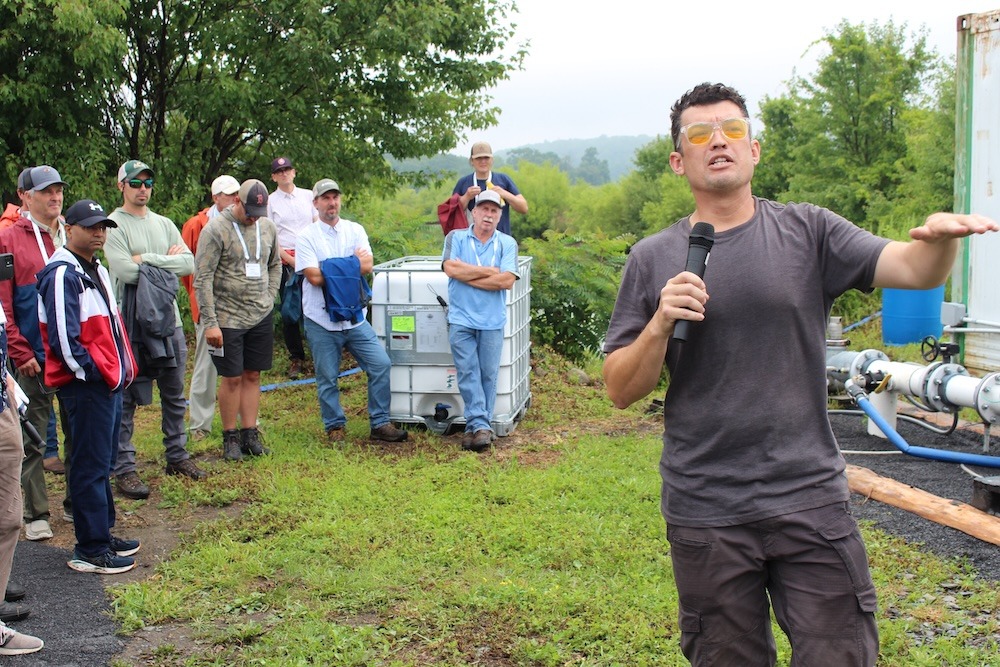
Perhaps no one operation on this year’s tour embodied the “show me, don’t tell me” ethos more than Hurd Family Farm, where 7th generation farmer Charles Hurd’s unique approach to growing was intricate enough to leave attendees brains spinning for the remainder of the day. The orchard, which was founded in 1863 and grows mostly apples for U-pick and direct-to-consumer sales, features a semi-circle high density half-acre Honeycrisp planting beneath a mammoth Valley Irrigation center-pivot you’re more likely to see dotting the flatlands of western Illinois vs. an orchard in Upstate New York.
Hurd recaptures every single drop that comes out of the irrigation pivot and measures and regularly tests everything from his irrigation water to soil and plant tissue in a constant effort to manage his farm’s soil and plant health to the umpteenth degree. “You have to do it [tissue sampling] three times a year to really get an understanding of where you’re going,” Hurd said. “I don’t care what you use to grow your fruit, I’m concerned with what’s in your fruit when I eat it. I want [to produce] the highest nutrient density in our fruits.”
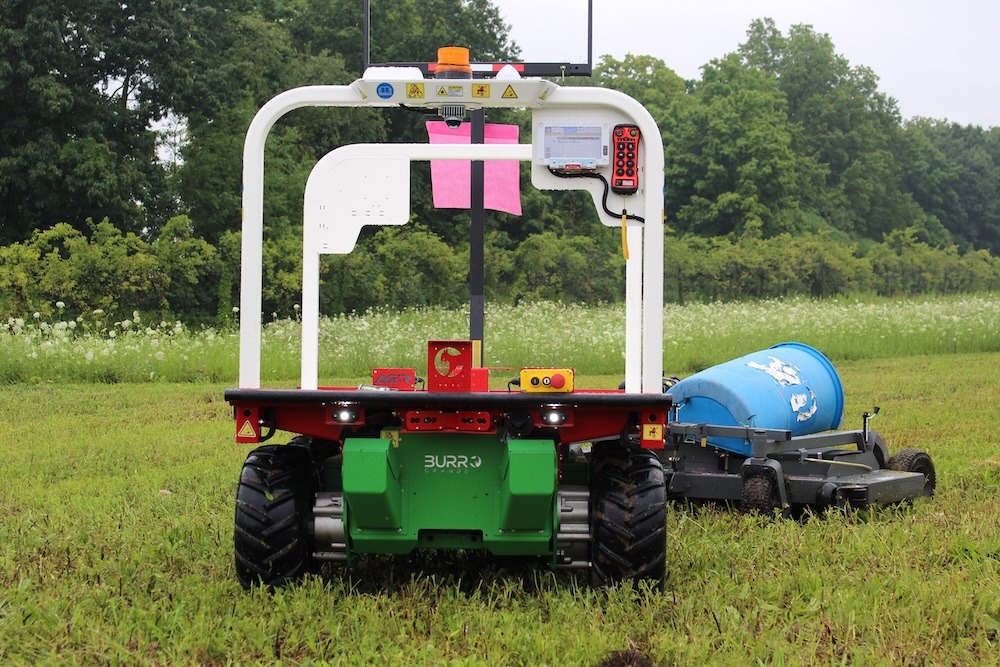
He is also a big fan of the farm’s autonomous Burro robots for in-row mowing and towing harvested fruit back to the packing area. “This thing will do everything the future told you a robot would be able to do,” he told attendees.
Crist Bros. Orchards, Inc. — Walden, NY
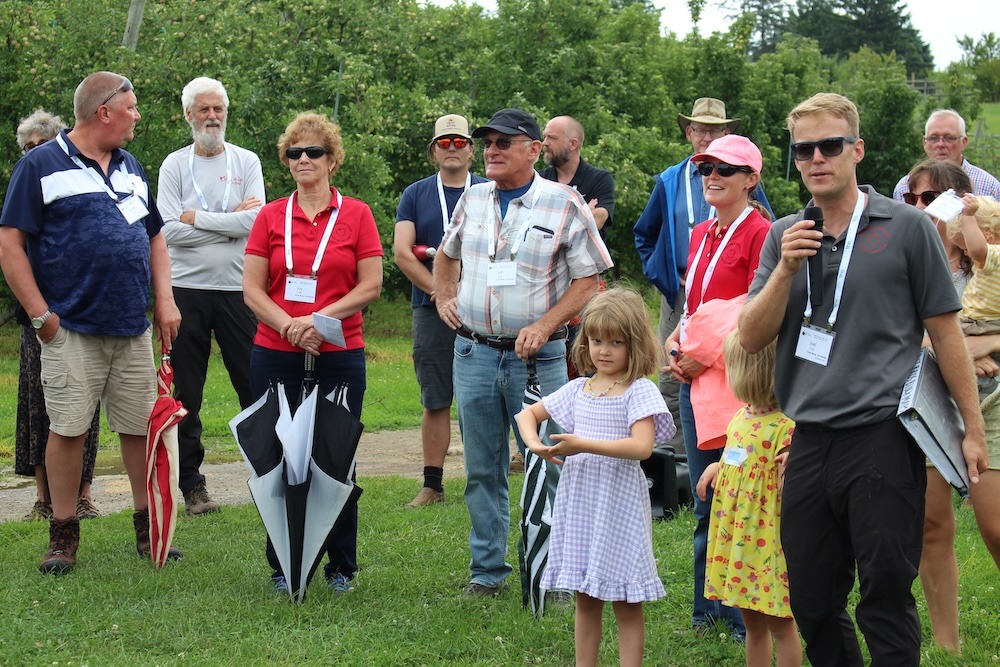
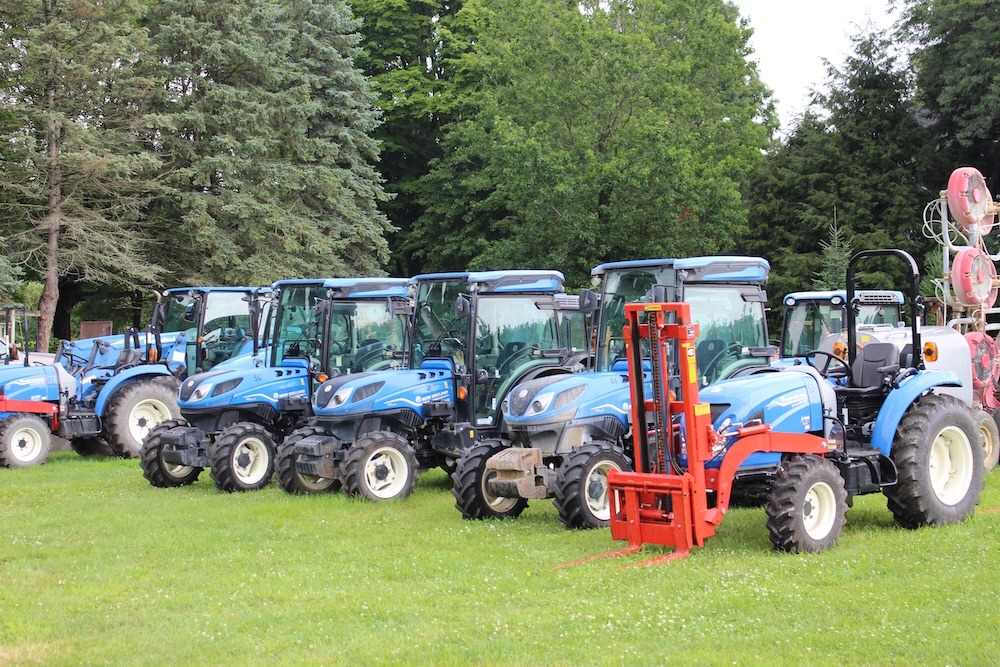
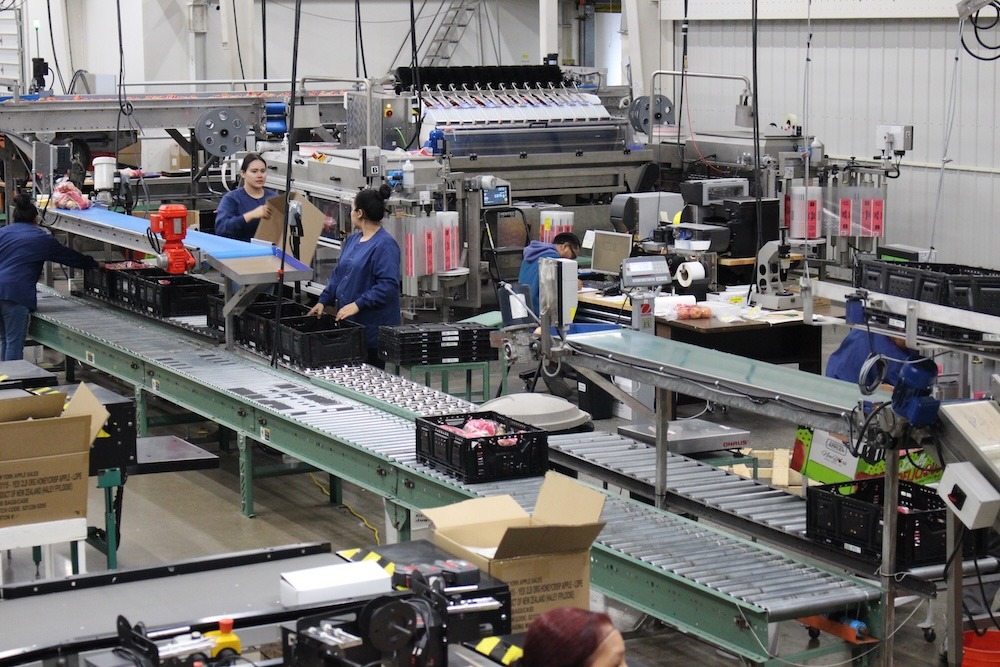
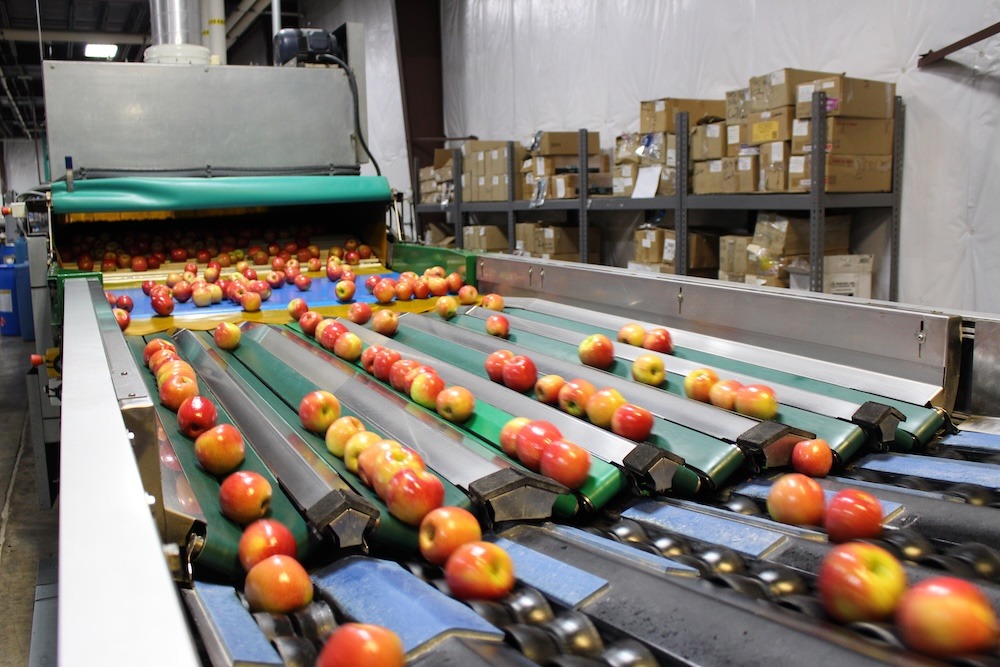
The Crist family traces its roots in the Hudson Valley all the way back to the area’s first white settler, Sarah Wells, who put down roots in 1712. Fourteen generations of the family have farmed the valley’s highly variable soils, and today the Crist family continues that legacy through the cross generational leadership of Jeff and Joy Crist and offspring Joel, Jenny and Jed Crist. There’s also a flock of grandkids that seem poised to take the reins someday.
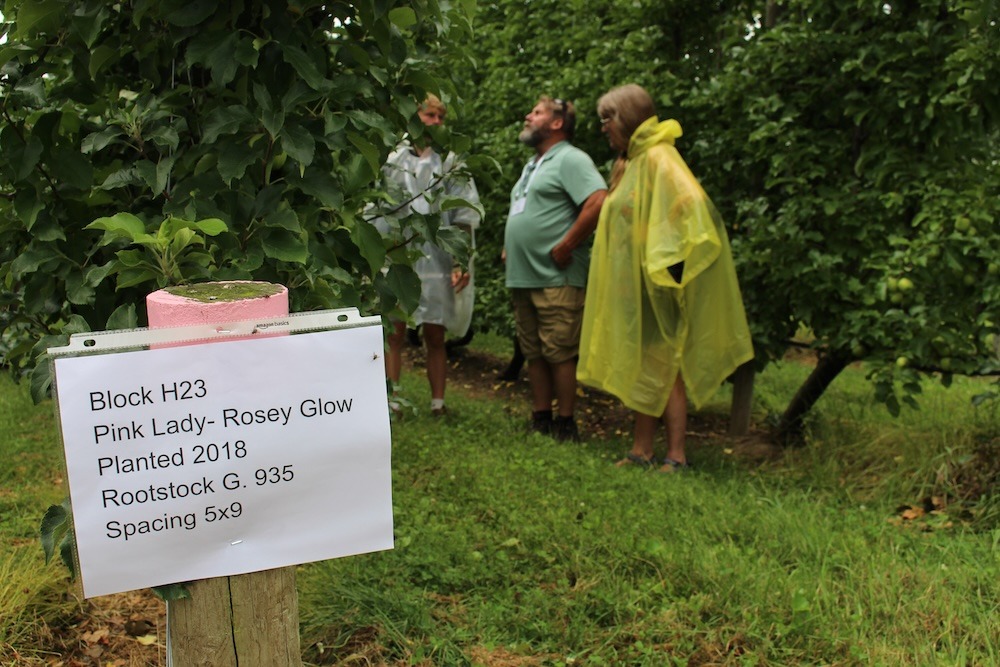
Today the orchard spans 9 distinct sites from Newburgh north to Clintondale on a total of 625 acres, and its key apple varieties include Gala, Honeycrsip, Snap Dragon, and Pink Lady. The farm is one of the few commercial operations left in the valley that wholesales 100% of its crop, and it has a 52-week supply agreement with Walmart to stock its shelves year-round with farm fresh apples.
Despite is size and well-regarded reputation, Mother Nature did not spare the Crist operation from the April 21 freeze. Joel Crist told attendees the freeze resulted in “not a great crop this year” and it came at an especially bad time for the farm’s popular Pink Lady apples. Attendees also went on a behind-the-scenes tour of the family’s automation-jammed packing house, which is partly powered by a two-year old, two-acre solar field near the farm’s H-2A housing block.
Angry Orchard — Walden, NY
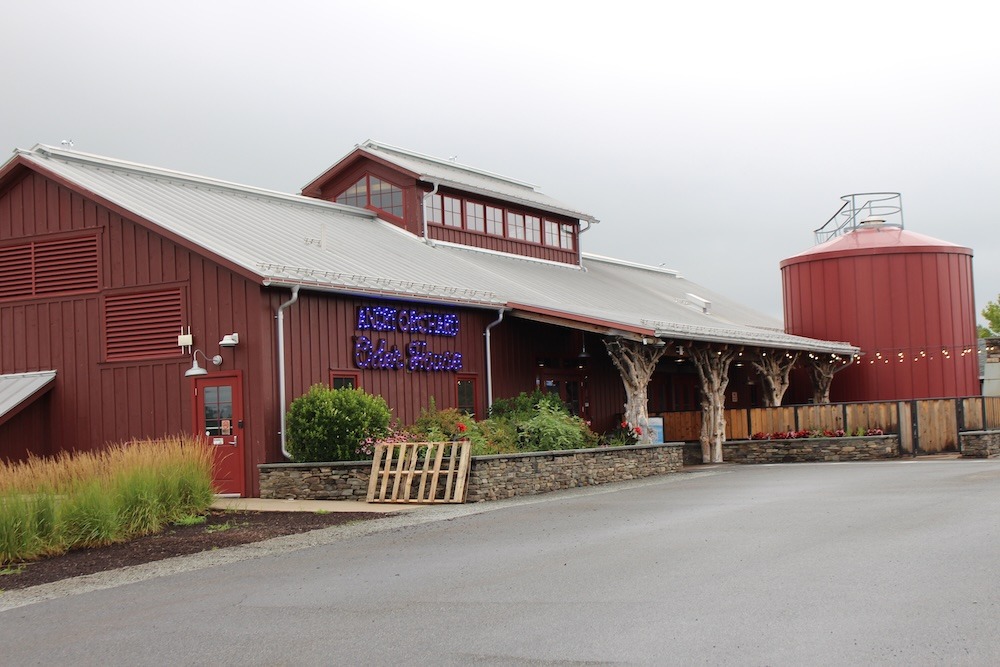
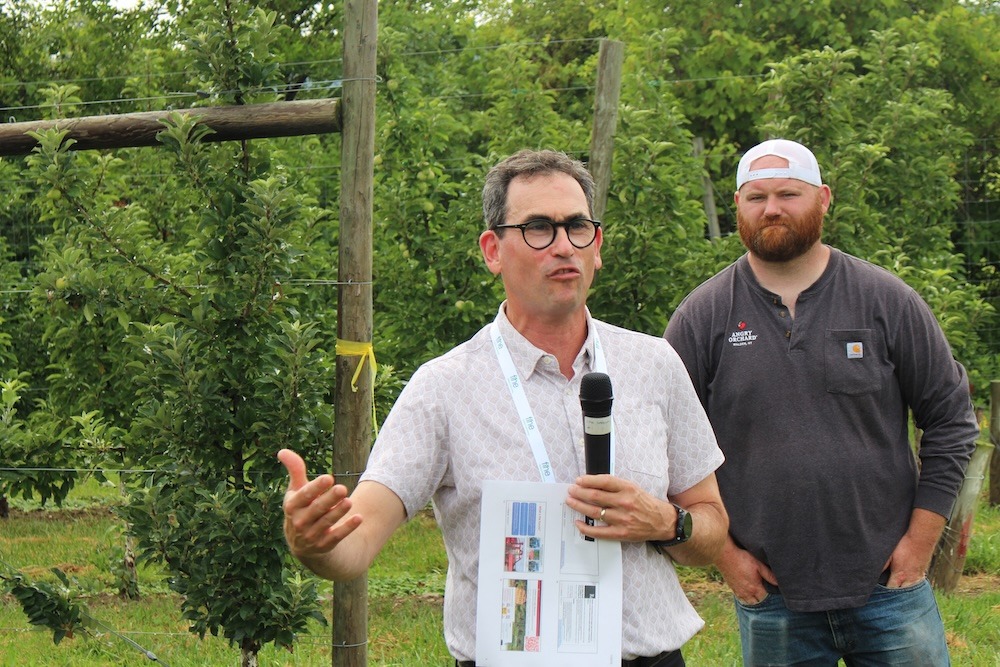
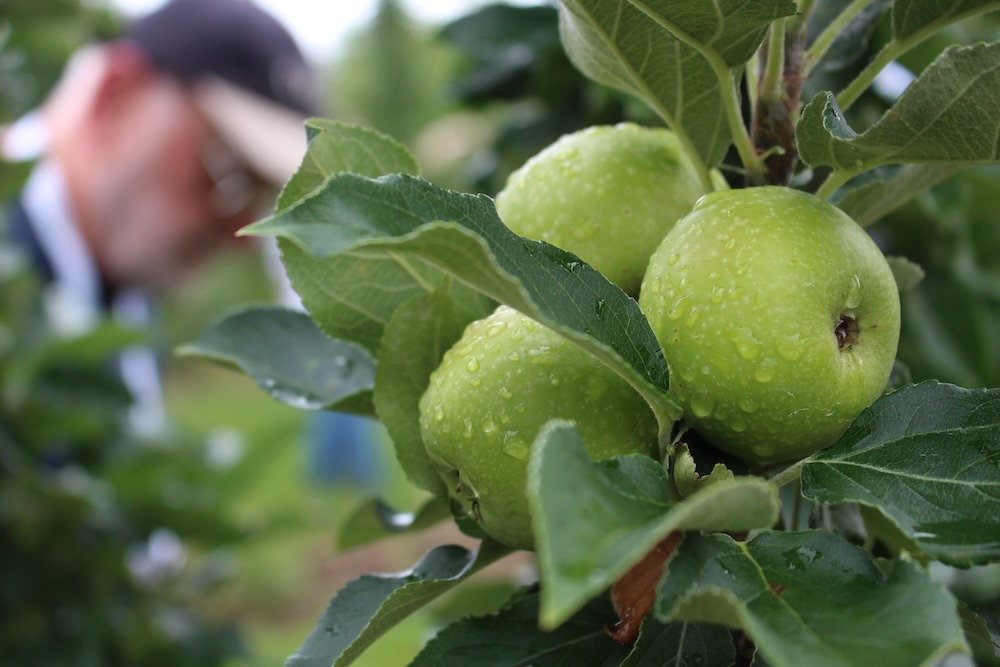
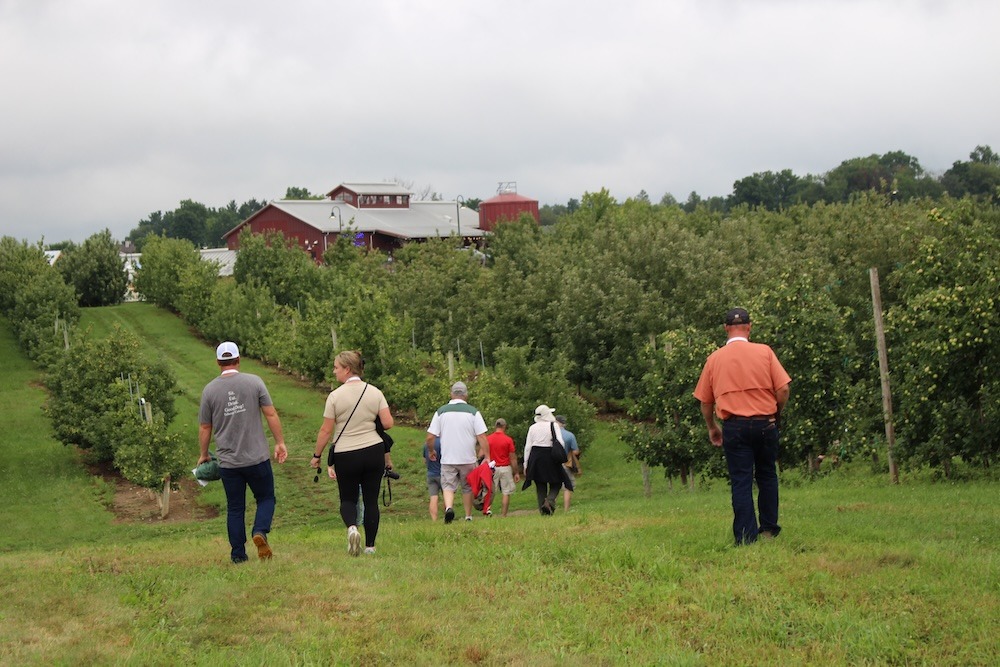
Right up the road from the Crist Bros. operation is an old cider orchard the family sold to Boston Beer Company — the parent company of Angry Orchard — in 2014 to serve as the brand’s Hudson Valley HQ. The family signed on as caretakers of the orchard as part of the deal, and so began the painstaking decade-plus process of replanting and/or grafting new varieties of cider apples across the entire orchard.
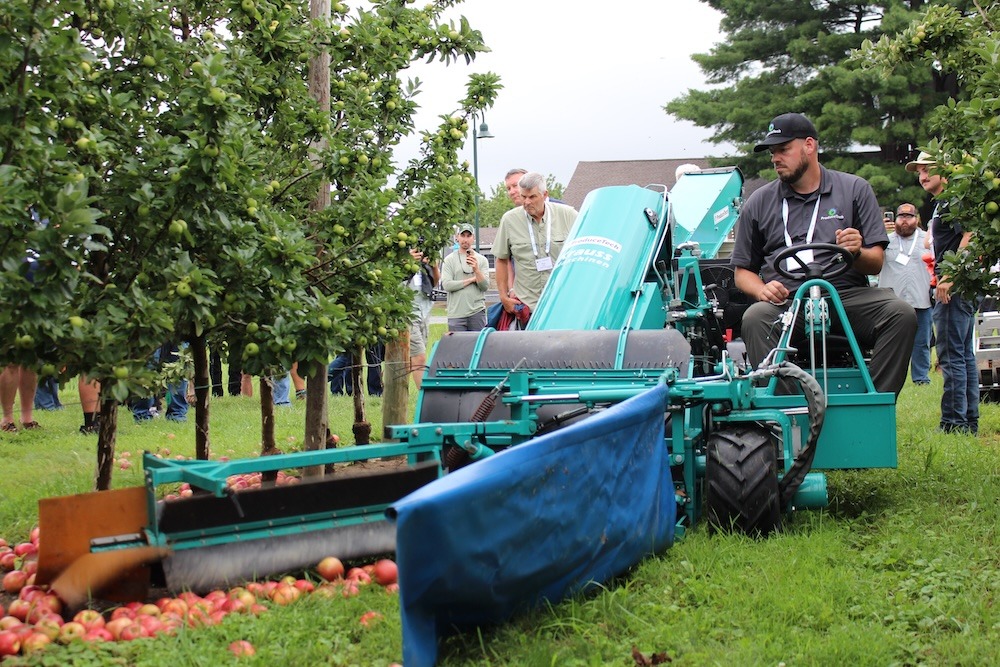
Cornell University also came on-board to help the cider brand with its variety and rootstock selections. The site hosts an ongoing research project — now in it’s second year and headed up by Cornell Extension researcher Greg Peck — that looks at different combinations of cider apple varieties and rootstock to figure out the best combinations for tannin production and crop load. The research data is then combined with similar rootstock evaluation data from sites across the U.S. The group also witnessed a demo of a new ground apple sweeping machine manufactured in Quebec.
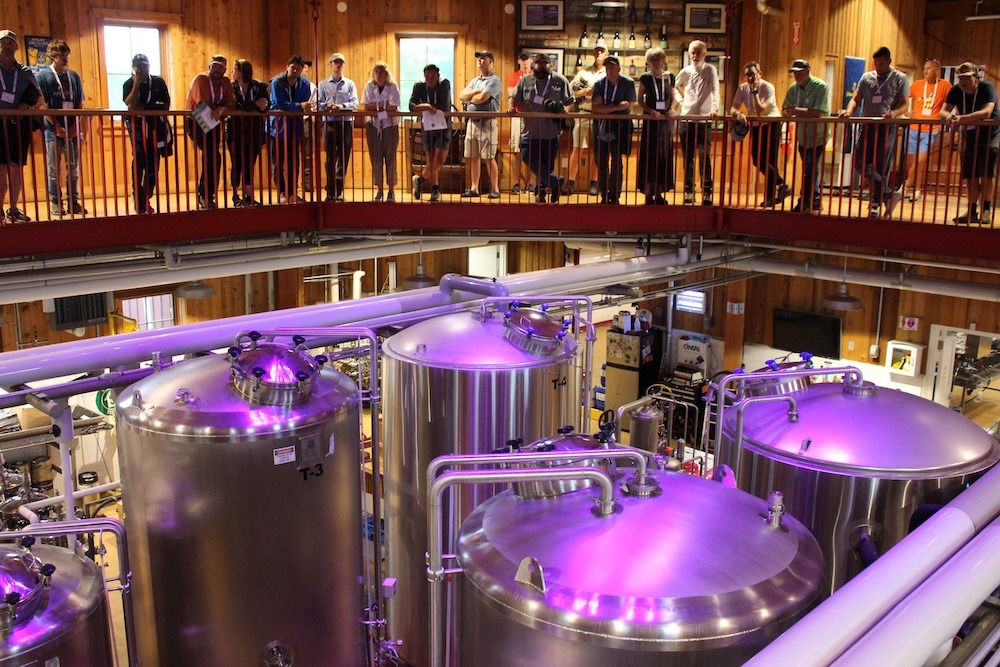
The group then received a quick tour of the operation’s cider making facilities from Angry Orchard’s head cider maker. The site produces about 20,000 gallons of Angry Orchard brand hard cider annually to supplement its main production facilities in Lehigh Valley, Pennsylvania, and Cincinnati, Ohio, as well as small-batch ciders. The property features a large treehouse where patrons can sip ciders from high in the tree canopy and outdoor entertainment spaces for events.
—by Matthew J. Grassi, managing editor