

Blueberry legacy: Tawas Blueberry Farm remains a staple of its community
Tawas Blueberry Farm grows blueberries along Lake Huron. Read how the grower has experienced success with u-pick operations.





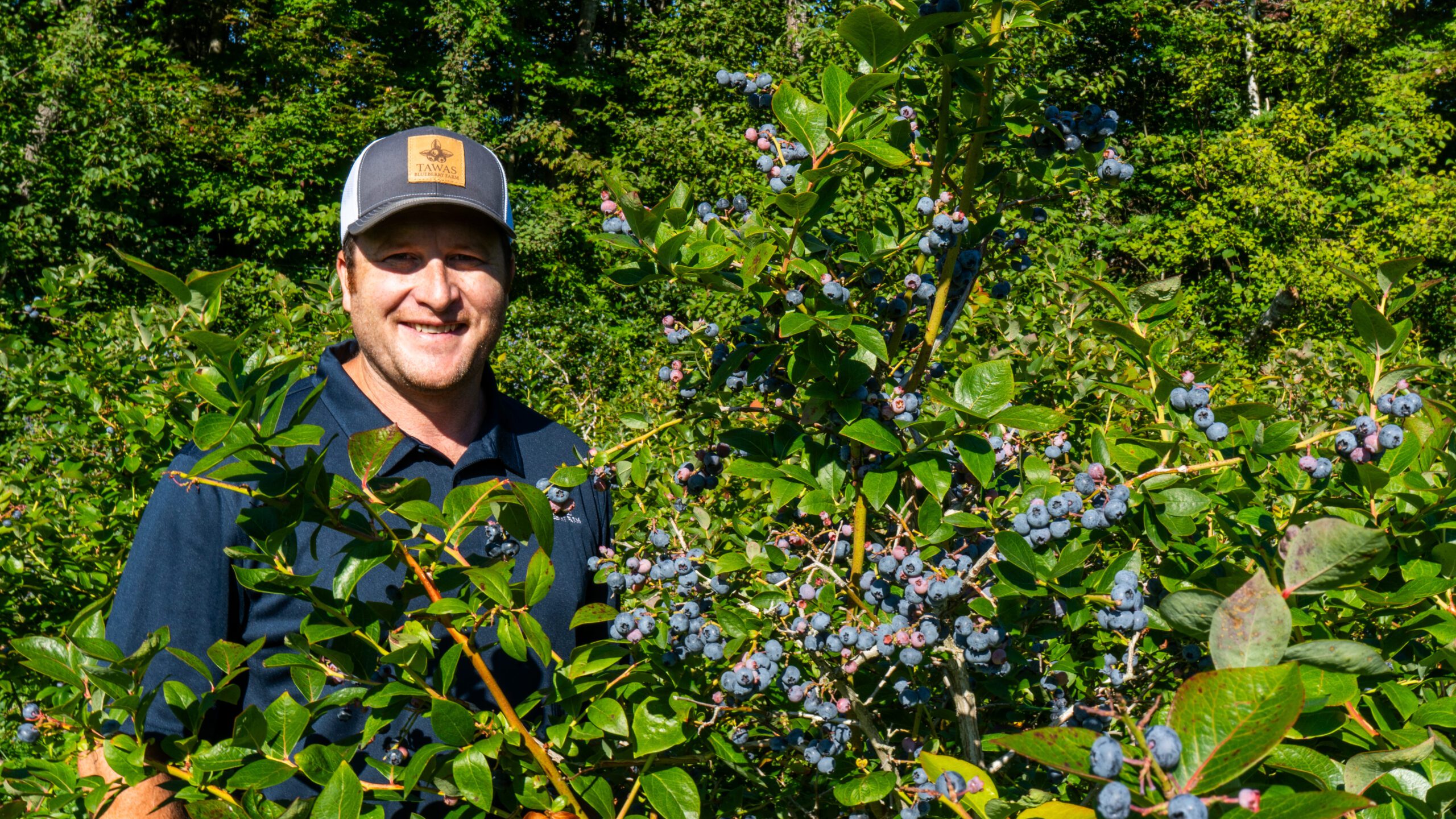
Tawas Blueberry Farm in Tawas City was originally known as Czaika’s Blueberry Farm until the Payne family acquired the business and its six prime acres of Northland, Toro, Patriot and Earliblue bushes from Joe and Sharon Czaika in 2019.
“We are a u-pick farm in a small town of about 5,000 people in an 1,800-square-mile county of only about 20,000 people,” said Nathan Payne. “We are a small little niche. We don’t have any other fruit growers around us. It’s about an hour out west to get apples, another hour-and-a-half south to get any other blueberries and an hour-and-a-half north to get strawberries, so we sit by ourselves.”
“I went to the University of Notre Dame, and upon graduation I worked as a wildlife biologist in Illinois doing predator research,” he said. “I then worked in Wyoming and Montana doing research on wolves as well as working on the National Bison Range. After that, I moved to New York and worked as a forester for the city of New York.”
Payne’s wife, Cindi, took a job in Tawas in 2019, and the farm happened to be for sale. The couple felt that with their background they could figure out the farming side of the business and decided to take the leap and purchase the family farm.

When he passed away in 2003, his son Joe Jr., an engineer by trade, moved back home from Mississippi and took over the farm. But as they got older, he and his wife decided it was time to sell with the goal to find someone who would keep it a blueberry farm.
The Paynes were excited to take over and, thankfully, the Czaikas live less than a minute away and are there to offer advice and tips as the new family learns the blueberry biz.
“They have been a great asset to us these first couple of years as we have gotten our feet wet,” Payne said. “I am also trying to move it into the next era and take the business to the next level.”
The next level
To achieve his goals, Payne began going to different grower meetings and blindly showed up at the Michigan Blueberry Advisory Committee to make as many connections as he could.
“I started reaching out to other blueberry growers and cold-calling people and learning what I needed to learn,” he said. “I am now the vice president of the Michigan Blueberry Advisory Committee.”

Payne is also the chairman of his county’s conservation district, on the steering committee for the invasive species network and the president of his county’s farm bureau.
Over the years, Tawas brought some fun additions to the farm, including making doughnuts on-site and selling them fresh, which is a big hit, he said. In collaboration with the town’s chocolatier, Tawas sells blueberries hand-dipped in chocolate.
Tawas Blueberry Farm also sells honey that is produced from the bees that pollinate the farm and plan to add a blueberry syrup and barbecue sauce that Payne is excited about introducing later in 2025.
“We try to add one thing one year and something else the next year, and try not to do things too fast,” Payne said.
Keys to success
In addition to networking and coming up with new innovations for the farm’s blueberries, Payne said leaning on the old owners has been a salvation and a major key to success.
“We came in green, and there are a lot of things that we think could be a good idea, but they lend their years of experience on why that may or may not work, or they may have tried it already 10 years ago, so they know what the result will be,” he said. “We’re really trying to hone in on being a quality blueberry farm. We have been able to increase production, and that has allowed us to put that many people on a small u-pick operation.”
Today, the farm will register u-pick numbers of 50,000 to 60,000 pounds a year, with about 12,000 people visiting the farm each season.

“We have a short window, and we probably see 1,000 people on opening day,” Payne said. “We are open sunrise to sunset on the first Saturday, and we usually have a line of people that start to form at the gate around 5 a.m.”
Not that there aren’t issues. With three kids and a wife that works full-time, finding enough time for everything is always a challenge.
“Any farmer will tell you, there’s never enough hours in the day,” Payne said. “I’m one person, and even though it’s small, growing some of these older, larger varieties can take some extra time to farm.”
He also sometimes gets stressed that the farm won’t have enough fruit to meet demand or that bad weather could decimate the crop, noting the farm isn’t big enough to sustain a major weather event and still have enough for the community
“We are here for the public,” Payne said. “That’s how Joe Sr. started it, as a food source for the community. And we are so ensconced in the community, we’re really expected to be there for people.”
One change included a new more efficient sprayer that didn’t require going down every row. That saved a significant amount of time as well as thousands of pounds of dropped fruit during harvest. Another change was pruning the bushes more on a yearly basis to create optimal harvest.
“We do small things, like we also have a better cash register, and when you have 1,000 people on the farm that can make a big difference,” Payne said. “Whatever the little bit of efficiency I can get, it gives me more time, which gives me more ability to do more with the farm.”

Looking ahead
How to grow and do more with the blueberries is always on Paye’s mind.
“Now, knowing what I know and becoming a better farmer, the hope is to maybe add more acres,” he said. “Either increase the u-pick or supplement it with some farm market avenues or pre-pick avenues.”
Payne appreciates his land and loves being part of the community, where he’s known as “The Blueberry Guy.”
“Part of our goal is to keep blueberries attainable for everyone,” he said. “Our whole family enjoys what we have going on here.”
— A graduate of the University of Miami, Keith Loria is an award-winning journalist who has been writing for almost 20 years. View his recent writing at keithloria.contently.com.