







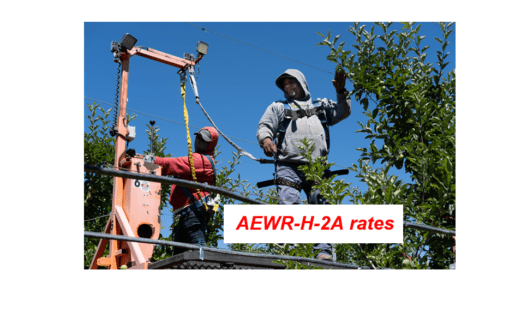
Jan 23, 2025Ag Employer Labor Forum highlights labor, compliance, and legal battles
The 11th Annual Ag Employer Labor Forum had a sold-out crowd of more than 420 attendees representing over 200 companies. The event featured panels, presentations, and a packed trade show. They focused on economics, farm safety, compliance, litigation, robotics, and ethical labor recruitment.
Industry engagement and research insights from the Ag Employer Labor Forum
Attendees explored exhibits from foreign labor ministries, software companies, logistics experts, and government agencies. Regulators spurred conversations on navigating complex compliance rules.
One of the event’s most discussed presentations came from Alexandra Hill, a University of California, Berkeley researcher. She analyzed data from the Department of Labor’s National Agricultural Workers Survey (NAWS) in California. Hill’s work showed that new state overtime rules reduced farmworker take-home pay. Such work confirmed the testimony that both workers and growers gave before lawmakers.
“Overtime regulations reduced worker pay dramatically,” Hill explained, validating concerns raised by farm employers and employees alike.
H-2A regulations and financial strain
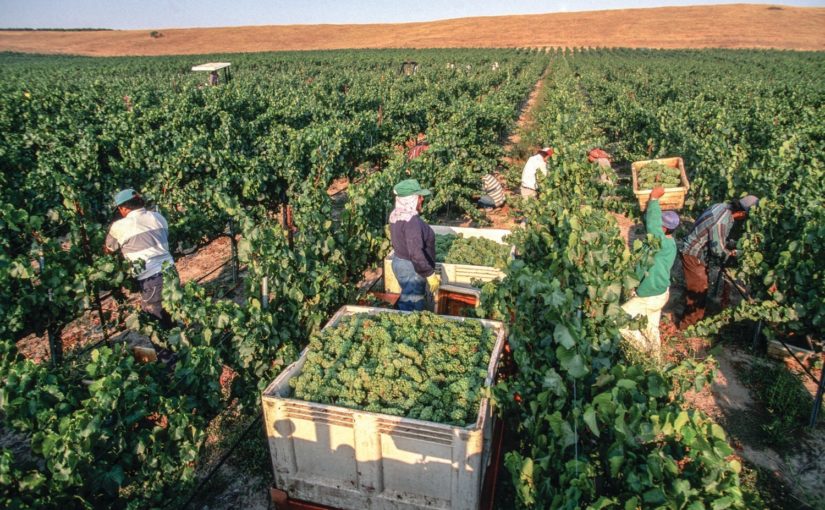
Hill’s analysis reinforced what the National Council of Agricultural Employers (NCAE) has warned Congress and regulators about for years. Michael Marsh, NCAE president, noted that complying with H-2A regulations, particularly the Adverse Effect Wage Rate (AEWR), has made labor-intensive farming unsustainable.
“For every apple, cherry, cucumber, tomato, orange, strawberry or blueberry harvested in the U.S., employers are losing equity in their legacy operations,” Marsh said. “This is unsustainable.”
Legal challenges and court victories
A panel of attorneys reviewed ongoing litigation. They highlighted recent injunctions against the Department of Labor’s worker protection rule in Georgia, Kentucky and Mississippi. Marsh said the Mississippi ruling extended the injunction nationwide.
“The relief provided by courts across different jurisdictions echoed the very comments NCAE submitted to DOL,” Marsh said.
The panel also discussed NCAE’s litigation against the AEWR in Florida, as well as related cases in North Carolina and Louisiana. Panelists pointed to the U.S. Supreme Court’s ruling in the Loper Bright case, which overturned the Chevron precedent, as a potential game-changer for challenges against agency deference.
Looking ahead to 2025
The Ag Employer Labor Forum concluded with a forward-looking discussion featuring two longtime Capitol Hill insiders. They outlined possible outcomes of a new administration and Congress in 2025 and pathways for agricultural employers to succeed under changing political and regulatory conditions.

— Michael Marsh has led the National Council of Agricultural Employers since 2017. A Wyoming native and certified public accountant, Marsh worked for a CPA firm with farm and ranch clients investigating fraud. He was director of finance for the Almond Board of California for 7 years and for 15 years was CEO of the largest U.S. dairy producer trade association.






Current Issue

Michigan researchers flag rising grape risks
Blueberry legacy: Tawas Blueberry Farm remains a staple of its community
Organic Grower: Mechanical advances help target weeds in organic vegetable farm setting
Farm Market & Agritourism: Identifying underperforming products in your farm market
Ag Labor Review: Low-hanging fruit opportunities
see all current issue »