







Feb 13, 2023Midwest growers turn to aronia berry production for diversification
Some Midwest grain growers are branching out by adding aronia berry production to their operations. Aronia berries, also known as chokeberries, grow on a deciduous woody shrub native to the eastern United States and are proving to be a valuable addition for farmers seeking to diversify their grain crop systems.
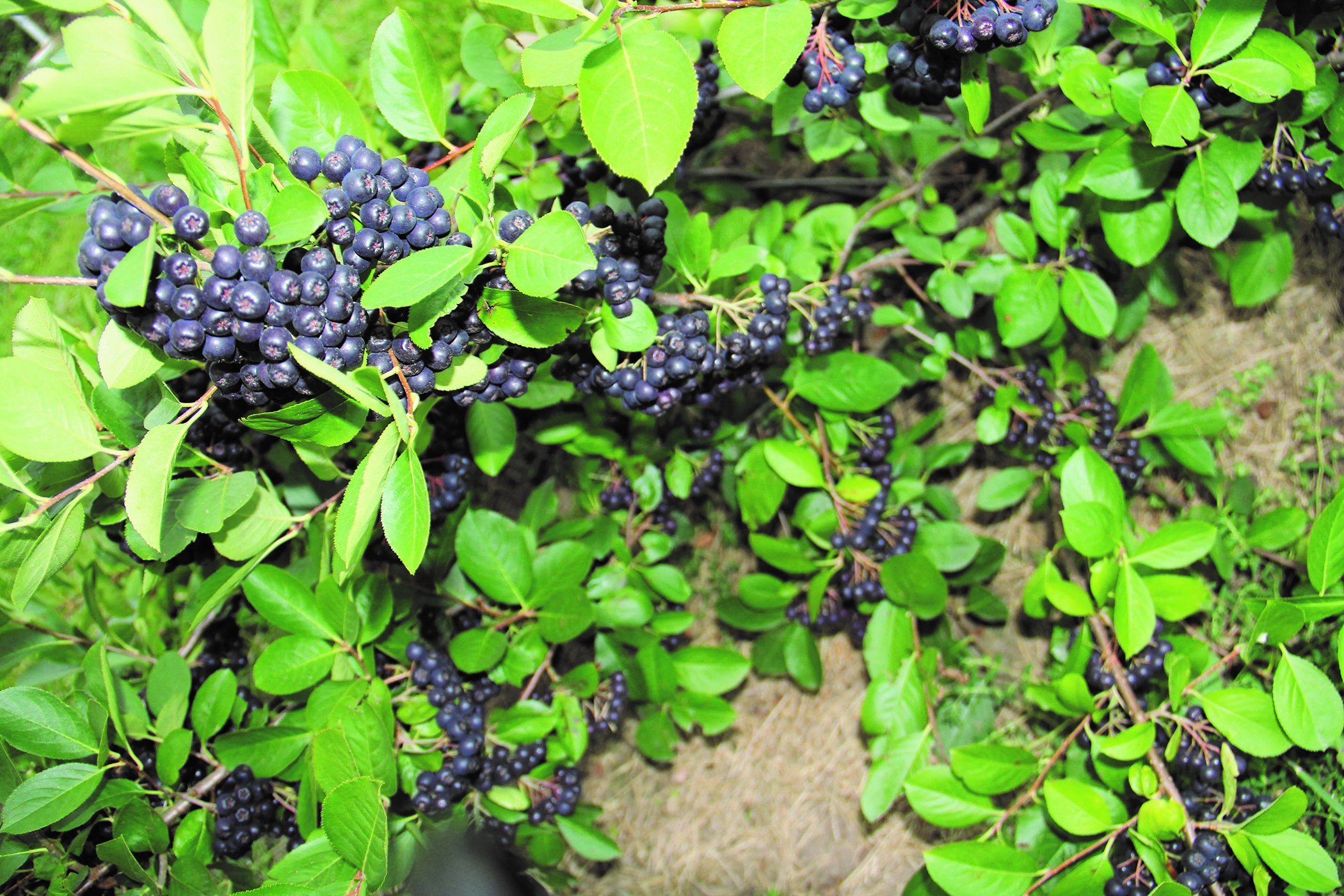
In the U.S., approximately 200,000 aronia berry bushes are planted across an estimated 1,100 acres. Because plant density can vary by grower — typically 700 to 1,000 plants per acre — plantings are considered a more accurate measure than total acreage.
Most commercial aronia berry production occurs in the Midwest, especially in Iowa, Nebraska, South Dakota, Wisconsin and Missouri. Iowa leads in grower numbers, but the American Aronia Berry Association also includes members from North Dakota, Minnesota, Illinois, Michigan, New York, Mississippi and California.
Hardy plants fit midwest conditions
Aronia berries are hardy and easy to grow. Because they require cold temperatures for dormancy, they do not thrive in the Deep South.
Dean DuVal, a retired scientist with a doctorate in analytical chemistry from Iowa State University, grows aronias near Castana, Iowa. “They represent a perennial crop you can cut off at ground level every eight to 10 years, and they come back quickly and are producing berries again within three to four years,” he said. “And they do not grow well in low-lying areas where the roots stay wet. They are quite cold-hearty, growing well in North Dakota, Canada, Poland and Russia without any problems.”
A profitable complement to row crops
For many row crop growers, aronia berry production offers a profitable and labor-balanced complement to traditional farming.
Dale Hilgenkamp is a corn and soybean grower in Arlington, Nebraska, northwest of Omaha. He saw potential in aronias after hearing about them from other farmers, and he now serves as the president of the American Aronia Berry Association.
“It looked like aronias had some good profit potential and was a way to diversify, to spread your labor a bit better throughout the year,” Hilgenkamp said. “That’s how we got started.”
Aronias bloom later than apples, pears and cherries, making them less susceptible to late-season freezes, said DuVal. In northwest Iowa, growing degree days should range between 2,700 and 2,900.
“From a grower viewpoint, they complement other berry crops in terms of seasons as well as traditional row crops,” DuVal said. “The season fits in just before other small fruit, such as cranberries and apples. It’s kind of an off-season crop.”
In Iowa and Nebraska, aronia harvest runs from late August through early September — just before corn and soybean harvest. After fertilizing and spraying row crops, growers gain extra time to devote to aronias, making the crop a convenient fit.
“Aronias work well with any producer, but particularly smaller farmers, as they don’t take a lot of acre to grow,” Hilgenkamp said.
Pest and soil management
The berries are relatively pest- and disease-free, according to Hilgenkamp. During his first seven years of production, he had little pest pressure until Japanese beetles arrived. Unlike winegrapes, which are highly sensitive to spray drift, aronia bushes appear unaffected by herbicides and pesticides used on neighboring grain crops.
Japanese beetles remain DuVal’s primary pest. “Other growers do not appear to have that problem,” he said. “It’s really a localized issue. I’m not aware of any disease problem in the United States. The plant is quite hardy.”
Adaptable to a range of soil types, aronias prefer slightly acidic, moist soils but do tolerate dry conditions. Hilgenkamp grows his on silty clay loam soils. “You don’t really want a lot of heavy clay or too sandy, either,” he said. Too much clay can restrict plant growth.
“They grow well in any odd-shaped ground you may have,” he added. Some growers apply foliar fertilization in June to enhance fruit set, according to DuVal.
Weed management can be a challenge, especially for organic growers. DuVal initially struggled with grass pressure but controlled it using Clethodim. For Japanese beetles, he found Sevin to be the most effective insecticide labeled for aronias after trying neem oil for several years.
Because nitrogen creates excessive vegetative growth, Hilgenkamp avoids over-application. He applies foliar fertilizers and, every couple of years, spreads a mix of dry chicken litter and humic acid to increase soil nutrients. “Chicken litter decomposes slowly, so the plants avoid receiving a big flush of growth,” he said.
Harvest and maintenance challenges
After a decade, aronia berry production declines as canes grow too large for mechanical harvesting. Growers can prune older canes by hand, but DuVal noted that the labor costs make that approach impractical. Instead, he recommends using a forestry mulcher for clean cuts. “A bush-hog is not recommended,” he said.
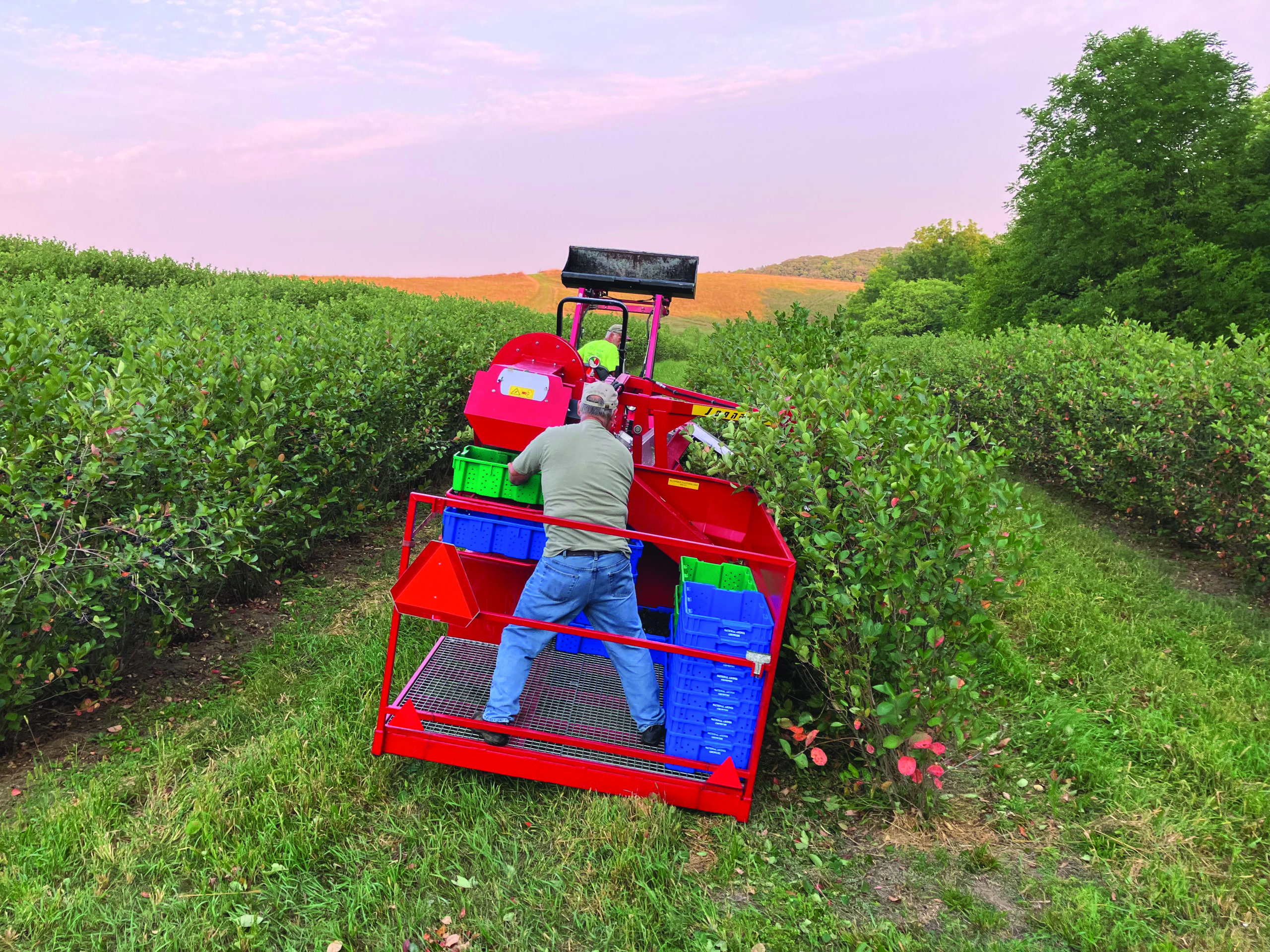
Regular trimming helps maintain an ideal bush heigh of six to eight feet. “Taller bushes simply cannot go through a side row harvester,” DuVal said. “A sickle cutter like those used in the vineyard business would work for both top and side trimming bushes to keep them at an optimum width and height.”
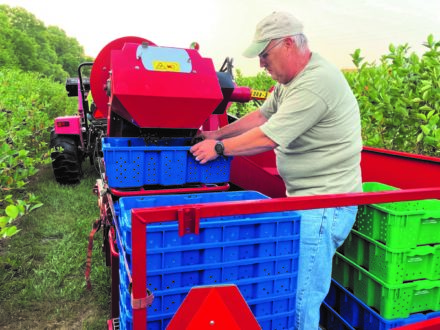
Harvest equipment can pose a challenge for smaller growers. Few custom harvesters are available, and timing is critical. Hilgenkamp and his brothers pooled resources to buy a Polish-made harvester designed specifically for aronias.
DuVal and Hilgenkamp both encourage new growers to start small. “Learn from others before investing a lot of money,” Hilgenkamp advised.
— Doug Ohlemeier, assistant editor
Latest News
Michigan State expert: Heed these food safety tips for u-pick agritourism fun all year long





Current Issue

Michigan researchers flag rising grape risks
Blueberry legacy: Tawas Blueberry Farm remains a staple of its community
Organic Grower: Mechanical advances help target weeds in organic vegetable farm setting
Farm Market & Agritourism: Identifying underperforming products in your farm market
Ag Labor Review: Low-hanging fruit opportunities
see all current issue »