





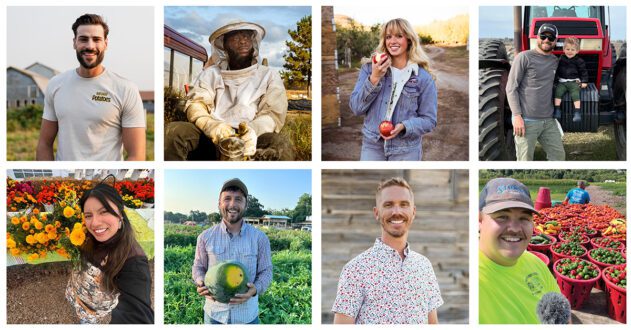
Jan 20, 2026Meet the new ag storytellers
Scroll through social media today, and you’re just as likely to land in a potato field or apple orchard as you are on a cooking reel or vacation video. That’s no accident. A growing number of specialty crop growers are using social platforms to show what farming actually looks like, one post at a time.
These storytellers are sharing harvest days, equipment hiccups, weather stress and the small wins that make it all worth it. A quick video shot from the tractor or a post written at the end of a long day often says more about agriculture than any polished campaign ever could.
What makes these voices resonate is their ability to explain — and show — the work that really happens on farms. They talk about apples, cherries, vegetables, strawberries and potatoes in ways that make sense to people who didn’t grow up on an orchard or farm. They answer questions, push back on misconceptions and invite their audience into the decision-making that happens every day in the field.
For specialty crop growers, this kind of visibility matters. Consumers are hungry for transparency and connection, and social media has become one of the most effective tools to deliver both. Whether it’s a viral clip or a steady stream of everyday moments, these farmers are building trust in real time. In doing so, they’re helping shape how agriculture is understood far beyond the farm gate.
Tyler Heppell @PotatoTyx
Tyler “Potato Ty” Heppell doesn’t overproduce his content, and that’s exactly the point. His videos feel like you’re riding along in the pickup or standing at the edge of the field while work gets done.
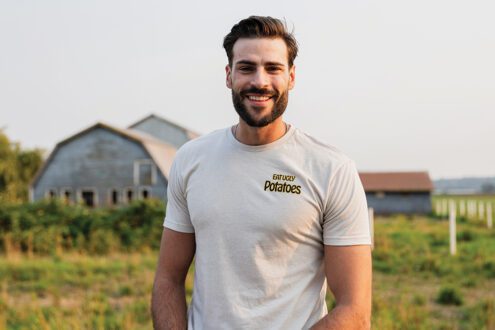
A potato grower from a multigenerational family farm, he uses social media to show what day-to-day farming really looks like, without filters or fanfare. Sometimes it’s harvest, sometimes it’s equipment, sometimes it’s just dirt and questions — and that honesty is what keeps people watching.
His voice is curious and conversational, often using simple moments to open the door to bigger discussions about farming, food and land. He’s not trying to “educate” in a formal way; instead, he explains things as they come up, responding to comments and inviting people into the process.
That approach resonates with both growers and consumers, especially those who don’t have a farm background but want to understand where their food comes from.
At its core, Potato Ty’s storytelling is about connection: connecting generations, farmers with the public, and people with the land that feeds us. It feels natural, not scripted, and that’s exactly why it works.
Follow Ty:
Kamal Bell @SankofaFarms
Kamal Bell is all about hands-on farming and beekeeping done with care at Sankofa Farms.
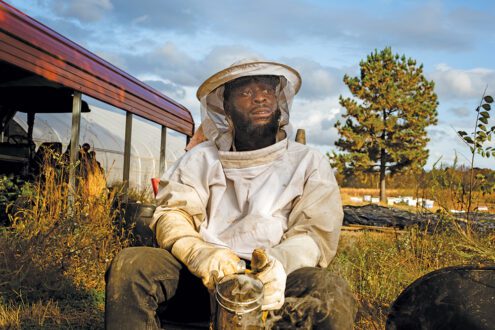
Founded by Bell in Efland, North Carolina, the farm grows a mix of vegetables — from kale and chard to cucumbers and squash — using practices that work with the land, not against it. The farm’s bee colonies are a key part of the operation, helping pollinate crops and support a healthy ecosystem. The bees aren’t just a side project; they’re part of the rhythm of farm life and a reminder of how everything on a farm is connected.
Farming and education go hand-in-hand at Sankofa.
Through the Sankofa Farms Agricultural Academy, young people get hands-on experience planting, harvesting and caring for the hives, learning real skills while discovering the work that goes into growing food. Visitors and followers get to see the daily ups and downs of farm life, from field prep to harvest and hive care.
At Sankofa Farms, farming is about more than crops. It’s about tending the land, supporting pollinators and showing up every day to keep good food growing.
Follow Kamal:
Kaitlyn Thornton @Apple.Girl.Kait
You don’t get the nickname “Apple Queen” just by growing up on an apple orchard. You must earn a title like that.
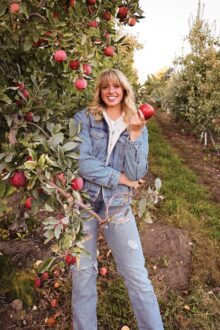
Kaitlyn “Apple Girl Kait” Thornton has done that and so much more. It all started when her great-grandfather Roy founded the family farm a century ago on 100 acres outside Tonasket, Washington.
Today the farm sits at over 400 acres, and if creating social media content was an Olympic sport, Kait would be standing atop the medal podium, her signature bright smile flashing wide and a shiny SugarBee apple in her hand.
When she’s not creating ag content – her TikTok boasts nearly 390,000 followers – Thornton has more jobs than your average farm tractor. She’s set to graduate from Washington State University this spring while also running a social media consulting side hustle, Agnovo, and of course helping around the farm when she can.
“If you’re a grower that’s selling commercially or direct-to-market, [social media] is a great opportunity to reach your end consumer — the people who are actually eating your fruit,” she says. “And for ag businesses, it’s a great way to reach your consumers in a way that doesn’t feel overly salesy.”
Follow Kait:
- Instagram: @AppleGirlKait
- LinkedIn: @KaitlynThornton
- SnapChat: @Katy1Thornton
- TikTok: @Apple.Girl.Kait
Talon Felker @PomesandStones
Growing cherries in Northern Michigan — a region known as the “Cherry Capital of the World” — Talon Felker is a man on a mission to promote Michigan specialty crops.
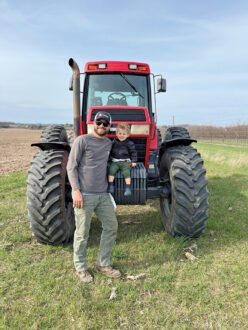
His YouTube channel has grown to nearly 8,000 subscribers, and his “The Specialty Crop Cast” podcast shines a spotlight on the people working to make Michigan’s specialty crop industry tick.
His farming operation has also grown by leaps and bounds: Cherry Ke (located in Kewadin, Michigan) grows conventional and organic tart cherries on 2,400 acres in five counties. He also tends 35 acres of apples north of Traverse City. His farm traces its roots to 1969.
His social media journey started when Felker began to notice farmers in the row crop world gaining a following online simply by documenting the trials and triumphs of everyday farm life. He thought, “This is something I can do,” and was driven to spotlight fellow growers helping feed families across Northern Michigan and the U.S.
“There has never been a time where the consumer has had more interest in knowing and seeing where their food is coming from and being grown; specifically, the specialty crops of cherries and apples,” he said.
Follow Talon:
Liset Garcia @SweetGirlFarms
On Sweet Girl Farms, Liset Garcia isn’t just growing vegetables and flowers — she’s reshaping what people picture when they think of a farmer.
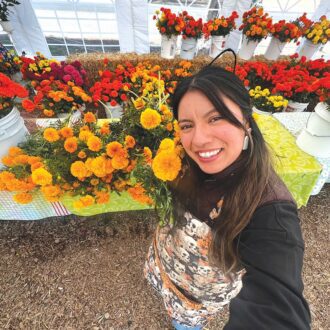
Based in California’s Central Coast, Liset took a family farm stand and turned it into a vibrant, year-round operation that celebrates the diversity of crops and growers behind them. Her feed is full of the everyday work that makes a small farm tick: planting rows, harvesting tomatoes, arranging bouquets, explaining why diversity in the field matters and laughing through the seasons with honesty.
Garcia’s voice stands out because it feels like a conversation with someone who’s been in your shoes — curious about where food comes from, ready to get her hands dirty and eager to share what she’s learning along the way.
She highlights crops that aren’t always in the mainstream spotlight, and in doing so she’s giving space to stories and harvests that don’t always get airtime. Her presence online brings people back to the soil and back to the joy of watching something grow.
Follow Liset:
- Facebook: @SweetGirlFarms
- Instagram: @SweetGirlFarms
- TikTok: @Sweetgirlfarms
- YouTube: @SweetGirlFarms
Tyler Froberg @Farmer.Froberg
Farmer Froberg, aka Tyler Froberg, is a fourth-generation specialty crop grower who shares fun videos and updates showing daily life on his families’ 250-acre farming operation in Alvin, Texas.

Froberg has a degree in agriculture from Texas Tech University and spent time as a tree care specialist with the Pearland Parks and Natural Resources Department before coming back to the family farm. He also spent some time teaching ag science in his local school district.
The Army veteran began sharing content during the COVID-19 pandemic and has built a massive tribe online, with more than 780,000 TikTok followers and 272,000 YouTube subscribers. His videos and posts have racked up 437,352 “likes” on Facebook.
His families’ operation, Froberg Farms, started off on just 22 acres of strawberries in 1936. In September 2024, Froberg’s uncle retired from running the farm, and Tyler and his wife took the reins. Today, they’re the driving force behind the largest U-pick strawberry farm in Texas.
Follow Tyler:
- Facebook: @Farmer-Froberg-100070159218126
- Instagram: @Farmer.Froberg
- LinkedIn: @tyler-froberg-54b6b4b0
- TikTok: @Farmer.Froberg
- X: @FarmerFroberg
Shay Myers @ShayFarmKid
Shay Myers is a third- generation farmer with deep roots in the specialty crop world.
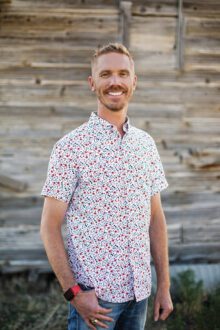
He hosts the Produce Common Sense podcast and also serves as the CEO of Owyhee Produce, an Oregon-based operation that grows onions, potatoes, asparagus, watermelon, sweet corn, mint oil, wheat, corn and sugar beets.
Myers has cultivated a unique, boots-in-the-dirt perspective on social media, sharing behind-the-scenes content that shows how farming really works in the real world. And he doesn’t just show it — he takes the time to explain the why and the how behind the farming practices he documents and pushes out to his massive online following (almost 700K TikTok followers), all with an approachable storytelling style that resonates across generations.
Under his stewardship Owyhee has expanded its agritourism tours and event hosting program, with an annual asparagus festival designed to educate but in a fun way. It’s all part of his mission to ensure the farm continues on long after Myers and his social media accounts call it a career.
“We as farmers have to advocate for ag or we will lose it,” Myers said. “We need to create a way to bridge the gap between producers and consumers, and this is a great way to do it.”
Follow Shay:
Andrew, Matt, Daniel & Joel Ochs @TheVeggieBoys
The Veggie Boys bring a little fun and a lot of heart to small-farm life.
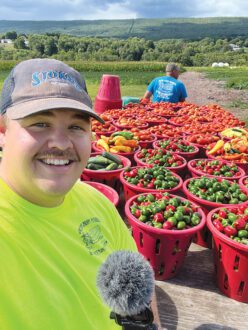
What started as a way to share the daily grind of growing vegetables and flowers has grown into a community full of people who want to see farming through the eyes of the people doing it. On camera, the brothers are honest about broken tools, unpredictable weather, long days and wins like a great harvest or a field finally weeded. There’s no polish or pretense — just life on the land and the real work that goes into producing food.
Their content feels like a conversation with friends who happen to know tractors and tomatoes. They take viewers from planting beds and transplant lines through hoop houses, into markets and sometimes out for a slice of pizza after a long day in the field. Whether they’re talking seed varieties, soil quirks or how to trellis cukes, The Veggie Boys have a knack for making agriculture approachable and entertaining.
Follow The Veggie Boys:





Current Issue

FIRA USA 2025: Robots redefine specialty crop farming
Inside Pandol’s success: How a multigenerational California grower leads in table grapes
Spray drones: best practices for specialty crop use
Farm Market and Agritourism: Strategies to attract today’s farm market shoppers
Ag Labor Review: Taking the reins — a new era for agriculture
see all current issue »