







Oct 30, 2024Hurricane Helene damaged communities aided by Virginia Cooperative Extension
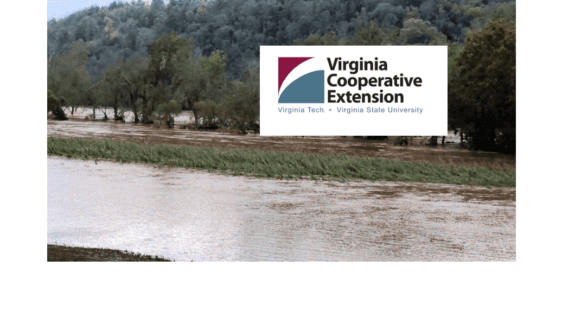
Virginia Cooperative Extension is helping growers and communities damaged by Hurricane Helene.
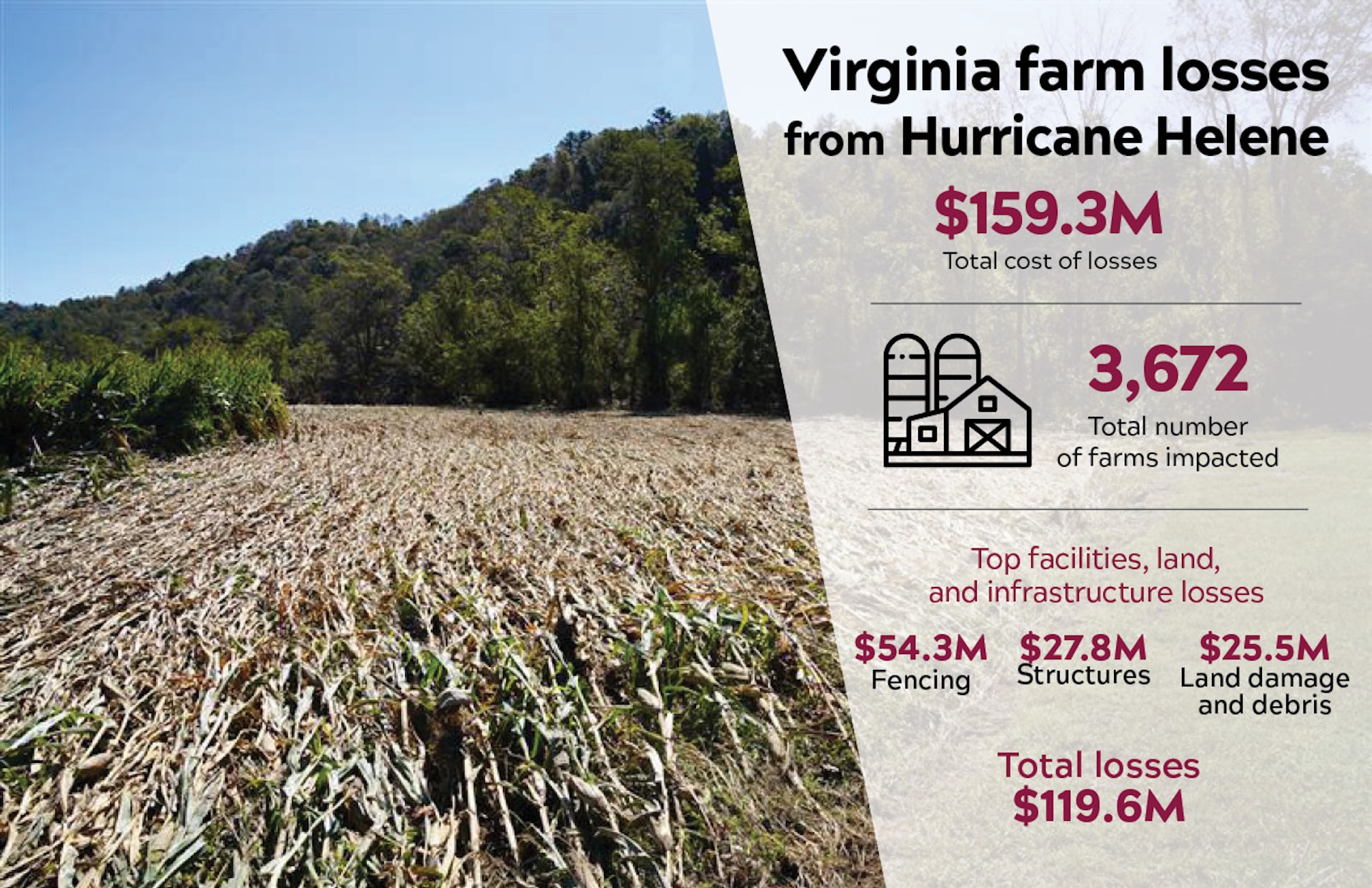
Though the floodwaters have receded, the recovery for growers including one who grows organic berries will last for months and even years. As of Oct. 17, Virginia Cooperative Extension had reported that 3,672 farms in 21 counties and cities faced almost $160 million in losses – including crops, livestock, fencing, equipment, buildings, timber, and hay and feed to sustain their animals through the winter.
Damage assessments are critical in informing state and federal disaster and relief response – and one of the many ways Extension supports the commonwealth and its No. 1 private industry as the outreach arm of Virginia Tech and Virginia State University
“The Extension agents have led the effort,” Brantley Ivey of organic berry grower River Ridge Farm, said in a news release. Ivey is also chairman of Grayson County’s Board of Supervisors. “They know and care about everybody and bring everyone together in a crisis.”
Like the majority of the rural Virginia counties hit hardest by the storm, Grayson County is predominantly dependent on agriculture, which constitutes 67% of its revenue.

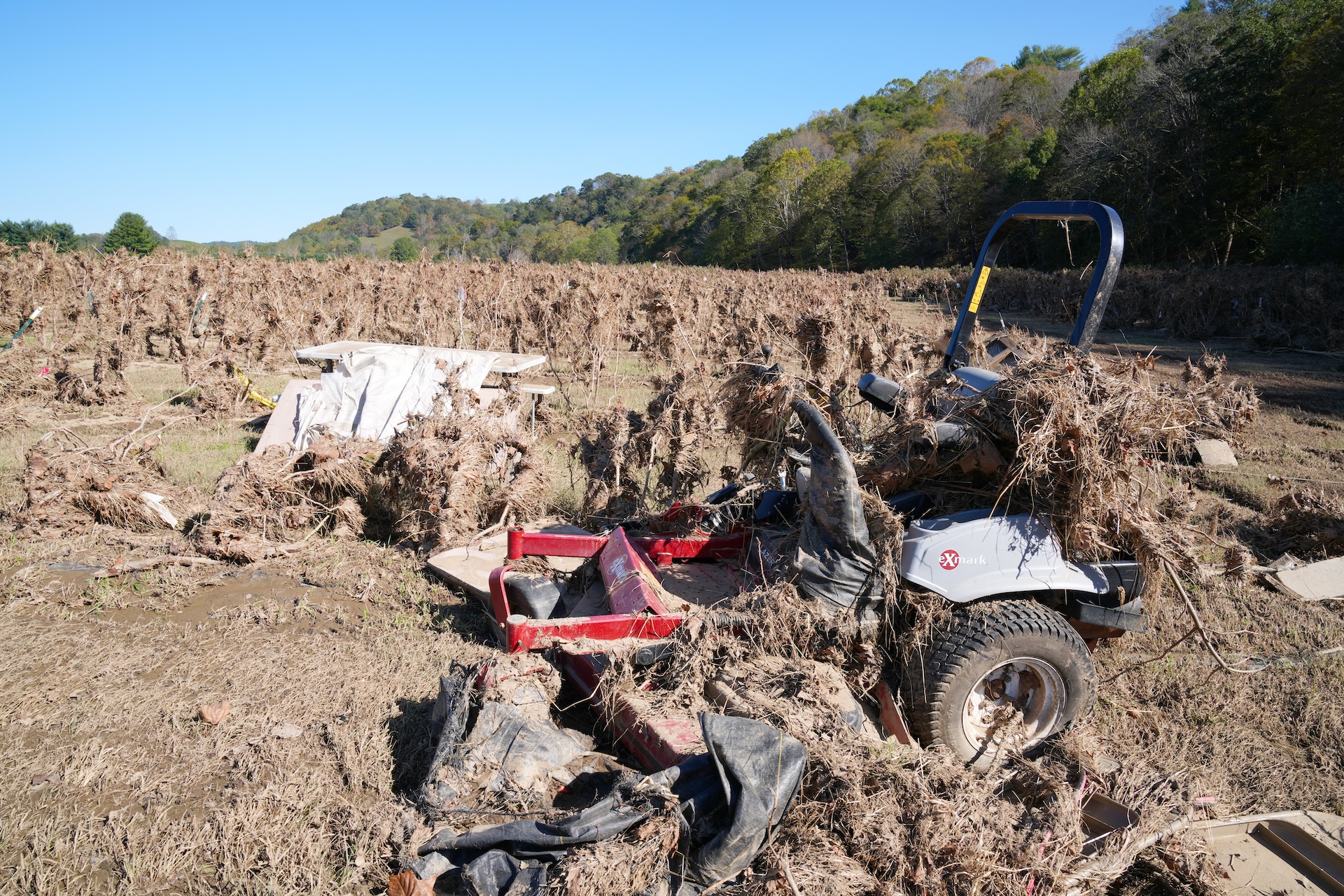
“Agriculture is the lifeblood of these little counties,” Ivey said. “It’s absolutely crucial to keep these small rural communities with healthy, thriving agriculture. It’s not just saving the family farms, you’re saving the whole county.”
From the onset of the storm, Extension agents have led community and statewide efforts to help farms recover and rebuild – conducting damage assessments, marshalling vitally needed resources, and preserving agriculture as a key driver of Virginia’s economy.
“We have a long journey forward, but it’s going to be our honor to do everything we can to support our communities,” said Mike Gutter, director of Virginia Cooperative Extension and associate dean in the College of Agriculture and Life Sciences. “Neighbors helping neighbors is what Extension has done for over 100 years.”
“In Extension, we do it together with our community”
In the first 24 hours after the storm, Grayson County Extension Agent Kevin Spurlin ’98 helped neighbors trapped in their homes cut away fallen trees and clear debris. When he started visiting farms the next day, he immediately saw the gravity of the destruction.
“A lot of farmland along the river is gone,” Spurlin said. “There are streams that have a completely different flow now.”
With over $61 million in agricultural losses, Grayson County was hardest-hit by the hurricane, sustaining over 38 percent of Virginia’s total damage. Its neighboring counties, Wythe, Smyth, Washington, and Carroll, together sustained 80 percent of the state’s total agricultural damage.
Spurlin has never seen such flooding in Southwest Virginia. A county resident for all of his 47 years, he went to Virginia Tech to study dairy science and later returned to serve his community as an Extension agent.
“This will stick with people the rest of their lives,” he said. “We have to help each other. In Extension, we do it together with our community.”
At an old Vaughn Furniture warehouse in Galax, Spurlin works with county officials and other agents to collect donations of hay, feed, fencing, chainsaws, and other crucial supplies that he distributes to farmers in need.

“Even though it’s a Band-Aid on a big cut, these donations are a tangible benefit that we can provide to our community now,” he said. “It fills an immediate need while they wait to see what insurance and federal programs and reimbursements are going to cover.”
He added that long-term, help with debris removal and putting up fencing will be farmers’ greatest need.
“There are hay fields that have 2 feet of sand on them. What was a green field now looks like a beach,” he said. “You can’t go back in and re-establish crops on that land. We’ve got to bring that land back into productivity.”
“I wanted to help carry some of the load”
After surveying over $7 million in damage in Lee County, where she is an Extension agent and unit coordinator, Amy Byington wanted to do more to help rural communities in Southwest Virginia.
“I saw what happened in eastern Kentucky in their flood in July of 2022 and saw the efforts those Extension agents made for their farmers,” Byington said. “My county has been affected by damage, but not to the level of the others. I wanted to help carry some of the load for my counterparts and help as many farmers as I could.”
She quickly helped set up the Southwest Virginia Agricultural Relief Program to connect farmers in need with donors offering hay, feed, fencing, water, volunteer assistance, and other necessities. The program is a partnership between Extension and the Virginia Cattlemen’s Association, Virginia Farm Bureau, Virginia Agribusiness Council, and Farm Credit of the Virginias. As the program’s coordinator, Byington directs donations and supplies to where they are most needed.
“We are so grateful to all the people who are helping out,” Byington said. “We still need around 4,000 rolls of hay and people willing to transport it. Hay remains a big need that will be an issue for farmers this winter.”
“It’s a blessing to be able to support these people”
Read more about the Extension agent’s disaster recovery efforts here.





Current Issue

FIRA USA 2025: Robots redefine specialty crop farming
Inside Pandol’s success: How a multigenerational California grower leads in table grapes
Spray drones: best practices for specialty crop use
Farm Market and Agritourism: Strategies to attract today’s farm market shoppers
Ag Labor Review: Taking the reins — a new era for agriculture
see all current issue »