





Jan 20, 2026Inside Pandol’s success: How a multigenerational California grower leads in table grapes
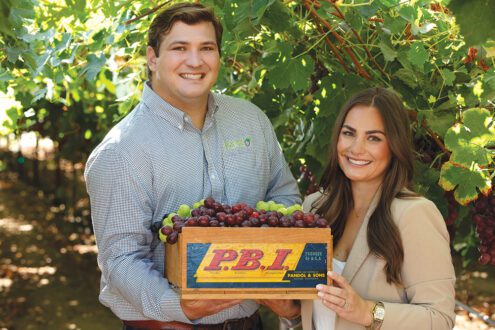
As Pandol Brothers enters its 85th year, family and worker dedication are important to the third- and fourth-generation family members who ship table grapes worldwide.
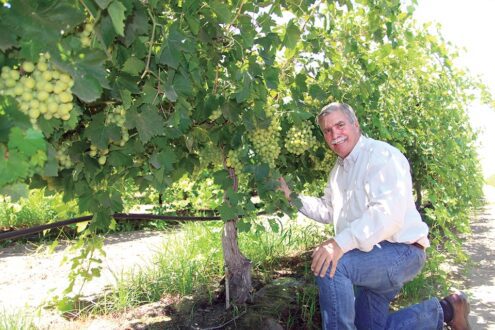
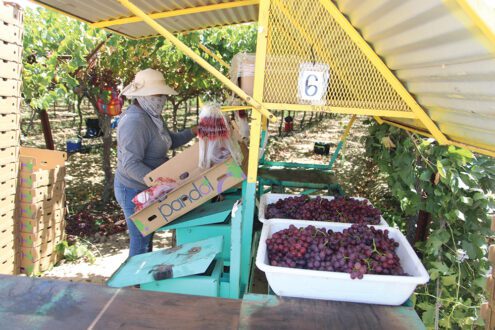
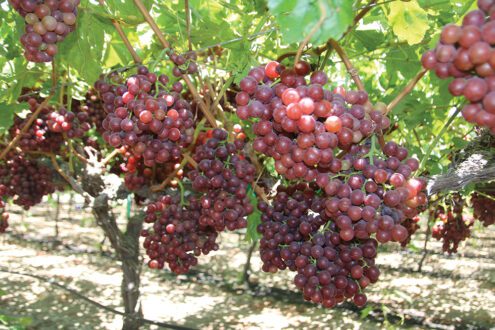
Though the Delano, California, operation grows more than a dozen green, red and black table grape varieties, three premium varieties — Sweet Celebration, Sugar Crunch and Sweet Globe — lead the pack.
Farming longevity
Pandol’s agribusiness operations began in 1941 when Croatian immigrants Steve and Margaret Pandol arrived in California’s Central Valley.
“The same family principles of hard work and integrity that were important when the company was founded in 1941 are still the cornerstones of Pandol today,” said Stefanie Pandol, marketing and sustainability specialist. “With over 75 years of farming in the Central Valley and nearly 70 years of Pandol Brothers, every harvest reminds us why we do this: to share something delicious, honest and grown with pride — and to honor the support of the community that has helped us thrive.”
Table grapes face significant agronomic challenges, including mealybugs, thrips, spotted wing drosophila (SWD), powdery mildew and botrytis. Weeds also threaten efficient production.
Weed management
“We use a variety of tools to control weeds, including herbicides, cultivation and hand weeding,” said Matt Pandol III, grower and ranch manager.
Access to herbicide is limited, according to Matt.
“There are a limited number of herbicides available for the use in table grapes, and they are becoming less effective,” he explained.
Cultural practices help the Pandols manage weeds when chemical options are scarce.
“One of the best ways to prevent weeds is to maintain a strong canopy, which shades out weeds and prevents new weeds from sprouting,” he said.
Soil health
“Soil health is crucial to grape development,” Matt said. “Good soil health correlates to higher grape quality and yields. Without healthy soils, the vines are less vigorous and more prone to infection, disease and heat stress.”
Pandol improves soil health through cover crops, composting and annual soil sampling.
“We apply large amounts of compost and any necessary soil amendments as indicated by the analysis,” Matt said.
The farm uses vertical shoot-positioned (VSP or V) trellis systems to support grapevines.
Extreme weather, including drought and floods, remains a challenge. In 2023, an atmospheric river destroyed about 20% of Pandol’s crop.
“We’ve experienced droughts, fires and floods,” said John Pandol, partner and vice president/director of special projects. “That’s the history of the West.”
Labor and management
Labor availability and cost also remain critical issues.
“Paying minimum wage and managing hour restrictions, along with water allocations, are some of the biggest challenges we face,” John said. “We try to pick, pack and grow smart. We analyze every decision thoroughly.”
Balancing inputs is key.
“The questions are, ‘How can I use less water, less land and less labor to get the same output?’” John asked. “But now, like with the organic deal, I’d use fewer chemicals, but have to replace them with labor, which is more expensive.”
Adaptability is essential.
“The key is to scale the operation with our managerial ability and resources, and produce each crop in an amount that is reasonable for the markets we have access to,” John said. “As that equation changes, we must change with it.”
Technology, including field mapping, also plays a large role.
“We are constantly exploring new technology to create efficiency in our processes, and we’re also implementing sustainable packaging solutions to support the industry. Innovation is exciting, but every step is thoughtfully considered, not just for today, but for decades to come,” Stefanie said.
“Our dedicated and experienced quality and operations teams work year-round to ensure that all fruit meets the Pandol standard,” she added. “We take pride in the fruit that comes out of our fields and into the hands of people around the world.”
Produce industry icon
Jack V. Pandol Sr., who died in 2010, was a produce industry icon and pioneer. In the 1950s, he began direct Free On Board (FOB) sales, breaking from the era’s terminal market auctions.
In the 1960s, he was the first grower to bypass railroads by loading refrigerated trucks for cross-country shipments.
“The wisdom of past generations — patience, land stewardship and respect for relationships — guides us, while innovation allows us to serve customers better and adapt to new markets,” Stefanie said.
The second generation of Pandols — Jack, Matt and Steve, who are known as the “3 Brothers” — built one of the premier table grape brands and are the namesake of Pandol’s flagship label.
“From our earliest days in the fields to today’s boardroom, our decisions are guided by the values my great-grandparents instilled: trust, respect and a commitment to one another,” Stefanie said. “This sense of family extends beyond bloodlines. It thrives in the generations of employees, growers and partners who have stood alongside us.”
Pandol remains family-owned but not family-managed. Outside perspective helps guide major company decisions.
“While farming techniques and practical know-how are passed down, the passion and love for the traditions that came before us is something that can only be shared, not taught,” Stefanie said.
-Contributing writer Doug Ohlemeier





Current Issue

FIRA USA 2025: Robots redefine specialty crop farming
Inside Pandol’s success: How a multigenerational California grower leads in table grapes
Spray drones: best practices for specialty crop use
Farm Market and Agritourism: Strategies to attract today’s farm market shoppers
Ag Labor Review: Taking the reins — a new era for agriculture
see all current issue »