








Nov 19, 2024Michigan Ridgefest: Industry consumption push drives Ridgefest apple updates
Michigan’s Ridgefest typically focuses on tours and discussions regarding what apple growers are doing in the orchard.
The 13th annual field day, which was Aug. 1 in Fremont, Michigan, centered on the end result of the production season: consumer consumption.
The Michigan Pomesters event included presentations by marketing specialists who addressed a downward trend in apple consumption and efforts to increase consumer engagement.
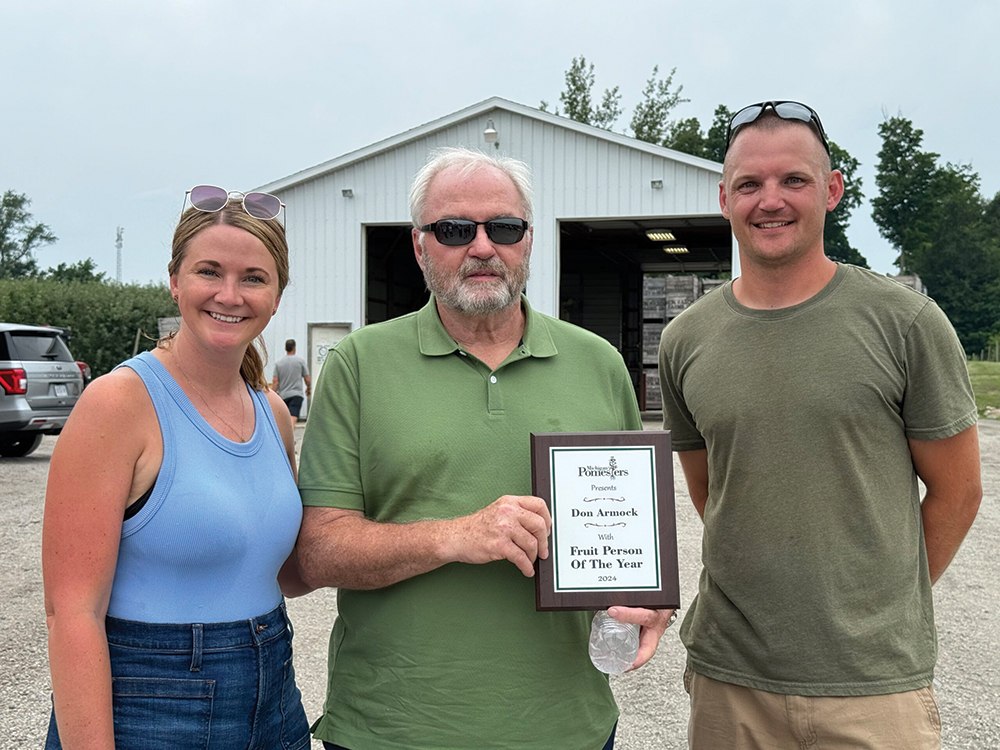
present the Fruit Person of the Year award to Don Armock, president of
Riveridge Produce Marketing. Photos by Gary Pullano.
Angela Sommers, board member for Michigan Pomesters and senior account manager for Ten Acre Marketing, said the intent of the focus shift was to “foster collaborative discussions and introduce forward-thinking marketing strategies to invigorate interest in the apple category.”
The Apple Consumption Project is a national effort to boost sales of apples. Funding for the initiative will come from industry sources outside of the growing community, according to Kari Soldaat, director of sales at Riveridge Produce, an apple packer and marketer in Michigan.

The effort, which has been underway for less than a year, supports all fresh-grown apples in the U.S. Soldaat said the initiative was the brainchild of Julie DeJarnatt, brand manager of Chelan Fresh, a Washington packer and marketer. “We wish it was something we would have thought of a few years ago, before encountering the situation in which we are today,” Soldaat said.
The organizers requested growers sign a letter of support to show the campaign is something producers will take seriously. “We need everybody’s help to move this thing forward,” she said. Soldaat explained that the industry has an oversupply issue. “Acreage has continued to go down, but production has gone up. Yields are up about 43% versus where they were in the past.” The industry also faces an “export problem” that is impacting the category, she noted.

Produce Marketing.
“We have a steady, declining category. The consumption rate of the apple product is not being maintained,” Soldaat said. “We really need to understand why consumers are not choosing apples anymore.” A 2020 study by Produce for Better Health found that U.S. produce consumption has declined by 10% over the last 18 years.
The study also showed apples remain the second most consumed fruit, but are the sixth most declining fruit, Soldaat said. “The apple category is losing in eating occasions, while bananas, grapes, blueberries, strawberries and oranges are increasing,” she said.
Survey data showed that consumers believe apples are too expensive and of poor quality. Soldaat also said that even with the rising restrictions and regulations, consumers feel the quality is not where it used to be.
Variety selection also is a problem consumers have identified. Consumers who prefer legacy varieties are experiencing difficulty finding them, Soldaat said. “The really scary thing is, today, 18% of consumers say they don’t even think about apples when they’re making a purchase,” Soldaat said. “Now is the time for us to take our voice back and really push the category forward.”

The Apple Consumption Project has solicited grower participation throughout the country. More than 130 growers had joined the effort by Aug. 1, DeJarnatt told the gathering, and the effort is targeting nearly 200 partners as donor sources.
“We want a collaborative consumer marketing campaign focused on driving fresh apple consumption in the domestic market,” DeJarnatt said. “We need to show that the industry is united on this, and then we’re going to benefit on a nationwide scale. It is consumer-insight led.”
DeJarnatt said territorial differences must be put aside to turn the slower sales tide. “What we haven’t ever done as an industry is collaborate,” she said. “Why can’t we band together and try to drive difference? Nobody is denying we have a consumption problem — the data is there.”
The group will conduct a consumer marketing campaign in partnership with retailers. “If we can get this consumption turned around, and get demand going, that’s how you are going to get retailers back excited about the category,” DeJarnatt said.

Fresh.
“Absent that excitement, is where you see (retailers) leaning more on margin. What you don’t want to be is a commodity that takes up a lot of space with slow traffic because they are going to want a margin driver. Getting this campaign off the ground, exciting the customer, driving the brand, is going to be a good way to get back in the conversation about this being more than a margin-driven category.”
A main strategy will be built around wellness and helping consumers understand the benefits of apples. DeJarnatt said funding for the initiative will come from a variety of industry partners. “We do think there’s an avenue for everyone who benefits from our success to participate,” DeJarnatt said. “We need to show holistically that the industry is needing this, and we will benefit on a nationwide scale.”
Written by Gary Pullano
Gary Pullano is a Michigan-based journalist with more than 45 years of industry experience. As a semi-retired former managing editor for Great American Media Services, Pullano has covered the specialty agriculture sector for the past decade. He can be reached at garypullano@gmail.com.






Current Issue

FIRA USA 2025: Robots redefine specialty crop farming
Inside Pandol’s success: How a multigenerational California grower leads in table grapes
Spray drones: best practices for specialty crop use
Farm Market and Agritourism: Strategies to attract today’s farm market shoppers
Ag Labor Review: Taking the reins — a new era for agriculture
see all current issue »