
Jun 8, 2020Director set for NH Agricultural Experiment Station at University of New Hampshire
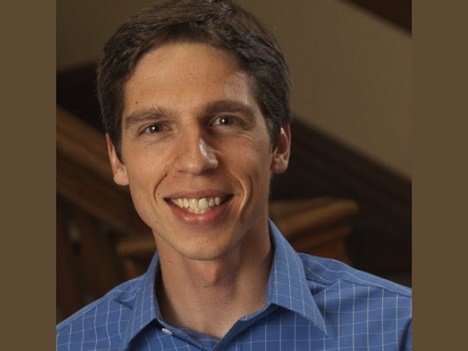
Anton Bekkerman, associate director of the Montana Agricultural Experiment Station and associate professor of economics at Montana State University, has been named the next director of the New Hampshire Agricultural Experiment Station (NHAES) and associate dean in the College of Life Sciences and Agriculture (COLSA) at the University of New Hampshire.
Jon Wraith, who has served as the dean of the college and director of the experiment station for nine years, following three years as associate dean of COLSA and associate director of the experiment station, will step down at the end of June and return to the faculty. A national search for the next dean of the college is ongoing.
An agricultural economist, Bekkerman will join UNH and the experiment station in mid-July. “I’m really pleased that we’ve found such a good person to lead the organization after I step down. I know that our faculty and staff will enjoy working with Anton,” Wraith said.
Bekkerman received his PhD in economics from North Carolina State University and his bachelor’s in business economics from the Sellinger School of Business at Loyola University in Maryland. His research focuses on a broad range of issues, including crop price dynamics and forecasting, market valuation of food quality characteristics, management of invasive species and pests, farm policy analysis, crop insurance, fertilizer market dynamics, wine pricing, and co-operatives. He also works with interdisciplinary teams of scientists to analyze the agronomic and economic effectiveness of alternative cropping systems, trade-offs of alternative soil management strategies, and cover crops. Finally, his research area has involved broader economic topics, including the economics of education, economics of public libraries, and economic information.
“It’s great to be joining an already highly successful group of scientists whose research, outreach, and engagement make important contributions to moving forward their professions and the sustainability of the state’s and region’s food and natural resource system,” Bekkerman said.
In particular, he is looking forward to learning more about ongoing research efforts and working with the College of Life Sciences and Agriculture and the New Hampshire Agricultural Experiment Station faculty and professionals to develop strategic efforts for ensuring that the station continues to facilitate meaningful, transformative science—especially in uncertain times. “Being able to join a team that’s already very successful and impactful and help grow those successes is a professional dream. The most important part of any agricultural experiment station is the people, and UNH has some of the very best,” he said.
Bekkerman is committed to strengthening existing connections between experiment station scientists and stakeholders in the state and region as well as building new ones. He sees his role as station director to be a liaison between scientists and the beneficiaries and supporters of that science.
“New Hampshire has so many diverse communities that are, whether they know it or not, served by the experiment station. How can we better communicate our science to assist those communities? How can I help bring more attention to those communities about the incredible research being done at their state agricultural experiment station and their land-grant university?” Bekkerman wants to help lead the effort to answer these questions.
And after living for over a decade in Montana—where it could take five to seven hours one way to reach a destination—Bekkerman said he’s ready to put some miles to highlight the efforts of the New Hampshire Agricultural Experiment Station and to grow the diversity and inclusion of New Hampshire communities that look to the station or science-based solutions and would support future research.
“I see so many great opportunities to contribute. I can’t wait to get started!” he said.
When not meeting with stakeholders and scientists, Bekkerman said he’d like to get involved with an area rec ice hockey league (no word yet on if he’ll pass muster), become a season-pass holder of the UNH women’s and men’s hockey teams (whenever those become available), and potentially capitalizing on his more than five years of DJing at KGLU, Montana’s community-run radio station, by moonlighting at WUNH 91.3FM.
Founded in 1887, the NH Agricultural Experiment Station at the UNH College of Life Sciences and Agriculture is UNH’s original research center and an elemental component of New Hampshire’s land-grant university heritage and mission. We steward federal and state funding, including support from the USDA National Institute of Food and Agriculture, to provide unbiased and objective research concerning diverse aspects of sustainable agriculture and foods, aquaculture, forest management, and related wildlife, natural resources and rural community topics. We maintain the Woodman and Kingman agronomy and horticultural research farms, the Macfarlane Research Greenhouses, the Fairchild Dairy Teaching and Research Center, and the Organic Dairy Research Farm. Additional properties also provide forage, forests, and woodlands in direct support to research, teaching, and outreach.
The University of New Hampshire is a flagship research university that inspires innovation and transforms lives in our state, nation and world. More than 16,000 students from all 50 states and 71 countries engage with an award-winning faculty in top ranked programs in business, engineering, law, liberal arts and the sciences across more than 200 programs of study. UNH’s research portfolio includes partnerships with NASA, NOAA, NSF and NIH, receiving more than $100 million in competitive external funding every year to further explore and define the frontiers of land, sea and space.
– Lori Wright, PhD, NH Agricultural Experiment Station



Current Issue
On-farm AI: Water, farm, labor research guide decisions
Data collection tool expands farm management
Carmel Valley winegrapes: Parsonage Village Vineyard
IFTA Yakima Valley tour provides orchard insights
IFTA recognizes tree fruit honorees
Pennsylvania recognizes fruit industry professionals
Fresh Views 40 Under 40
see all current issue »