







Feb 6, 2025Stevenson’s Strawberries
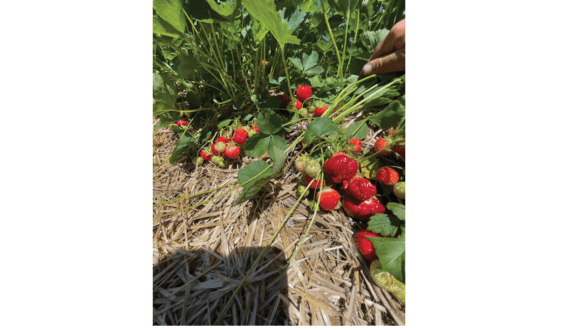
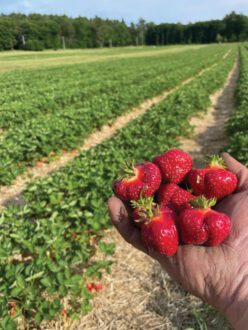
Stevenson’s Strawberries began with one acre and almost five decades later is one of the most popular strawberry and pumpkin farms in Wayne, Maine, now growing 130 acres.
It was back in the late 1970s that Ford and Susan Stevenson began cultivating strawberries at their pick-your-own farm, after the couple researched the best product to grow in such a small space.
Their son Tom joined the business after graduating from college, and set out to expand the farm’s offerings by adding a wide variety of fruits and vegetables — sweet corn, tomatoes, watermelon and more — as acreage expanded.
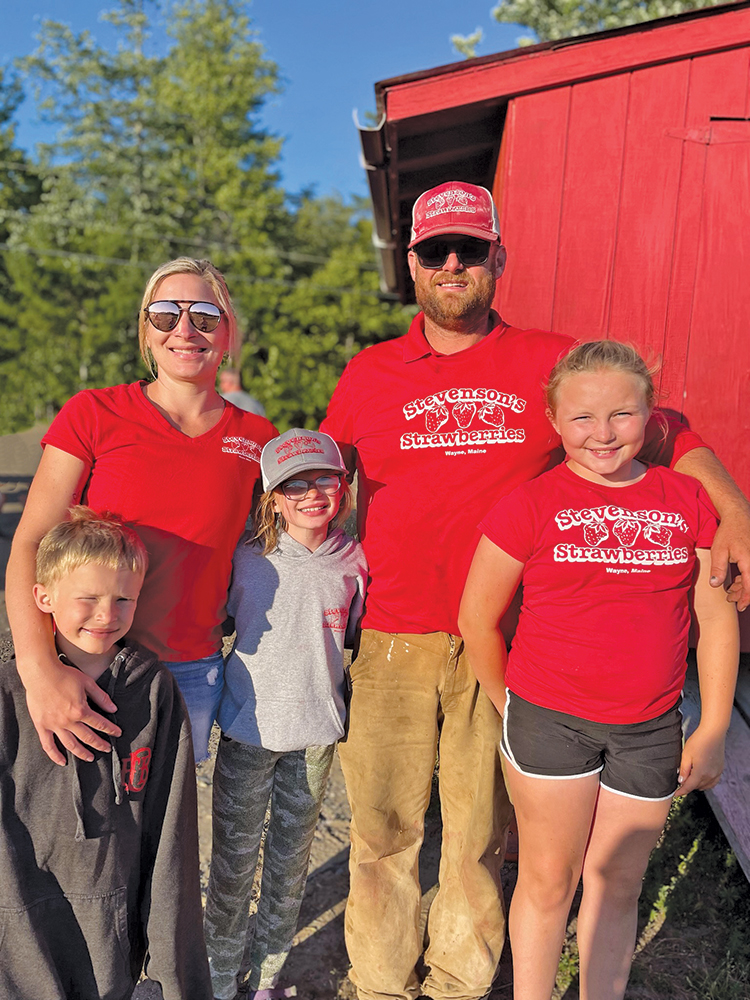
“I grew up on the farm but left as soon as I could drive and get away,” Tom Stevenson said. “But I came back in 2004 and started growing corn and mixed vegetables and ran a couple of farm stands — one I leased and one I owned.” In fact, father and son would open Stevenson Farm Stand in Winthrop in 2008, offering all that was grown, and became a go-to stop for people looking for produce.
Although Maine is known for crops such as potatoes, blueberries and apples, those are not crops the farm grows, as it wanted to differentiate itself from the majority of the state’s farmers.
“Most people who grow in the state sell directly to retailers; we rely on pick-your-own strawberries, we have the farm stand off the farm and we supply some other local farm stands as well,” Stevenson said. “A very small percentage of our business is wholesale.”
A change at the top By 2015, Ford was ready to retire. Tom took the reins over the strawberry side of the farm, and he continues to run it today with his wife Ashely and children Hadley, Hannah and Ford. “We successfully transitioned the farm, and it wasn’t an easy job,” Stevenson said.
“Throughout the years, we have received great satisfaction as we have watched our valued customers return time after time to pick our fresh berries.” Today, Stevenson’s Strawberries farms approximately 130 acres, with 20 acres devoted to strawberries, 30 acres for mixed vegetables and 50 acres for rye or oats, with the rest for rotation.
Pick-your-own season
Between strawberries and pumpkins, Stevenson’s Strawberries has enjoyed strong business in recent years with its pick-your-own options. Strawberry season runs from the end of June to early August and is especially popular with customers.
“It has changed a little bit, as we see less people jamming and freezing,” Stevenson said. “We still have some heavy pickers who will pick 30 panels, but we’ll get the families picking five panels or so. We also do a discount for 10% off if you pick more than 30 just to promote more picking.”
In 2024, the strawberry season was a little early, which presented a challenge as some schools weren’t out for summer break yet, which meant fewer people were coming in to pick. “A big part of our market is people here on vacation, and that doesn’t really get rolling until mid-June,” Stevenson said. “We still had a fine year. The crop was good.”
That was good news since southern Maine had a lot of rain in 2023, which created other pressures.
“It rained almost every day for a month and a half, and just never stopped all summer,” Stevenson said. “So, 2024 has been a real treat. We had some rain and wacky weather, but it was considerably better.”
Improving plant health
When it comes to increasing soil health, the grower prepares for the next growing season with an extensive green manure plan.
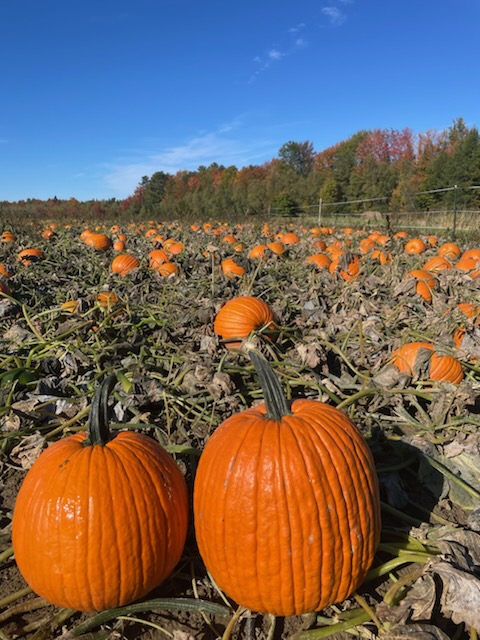
“We essentially keep every acre covered with something growing as long as possible,” Stevenson said. “Pumpkins are tough, and we only grow about 6-8 acres depending on the season, as those you have a hard time getting a cover crop on because they are so late picking.”
One of the biggest challenges the farm faces concerns the upcoming regulations of PFAS forever chemicals. But that’s something that the farm has been working hard to improve.
Beginning every May and running through mid-June, frost is something that Stevenson must be prepared to deal with.
“Frost protection on the strawberries on our farm is a huge deal,” Stevenson said. “Just where we’re located — we’re in wicked frosty hole, one of the first valleys in front of the four of the mountains of western Maine, so cold air in the spring just piles in off those hills.”
So, three times a week during the May to mid-June period, Stevenson uses overhead irrigation for the strawberry fields to help prevent frost damage. “Our strawberries are on real light, light sand and a huge benefit is we can really pile the water on and get on the fields within a day or two,” he said.
A team approach
In addition to having his family help with the business — including his parents occasionally — Stevenson employs a few seasonal workers from April to November, and the farm’s crew size increases to about 20 people during strawberry season, with another six to eight working at the farm stand.
“We find a good team, especially anyone we can get to return, helps to make us a success,” Stevenson said. “We need a bunch of people for about three weeks, and we’ve had really good luck with people in the school system — teachers or ed tech — because they generally have summers off. We’re flexible with our schedule, which helps us retain employees, and we try to pay as much as we can.”
On the horizon
Stevenson wants to continue the legacy his parents started and possibly get it ready for the next generation.
“I want to grow the farm without requiring a ton of pickers,” he said. “If we do get into selling more stuff, we may need to start using H-2A workers.”
Still, he sees the easiest path to growth is getting into the wholesale business, though it’s not something he’s ready to do in the immediate future.
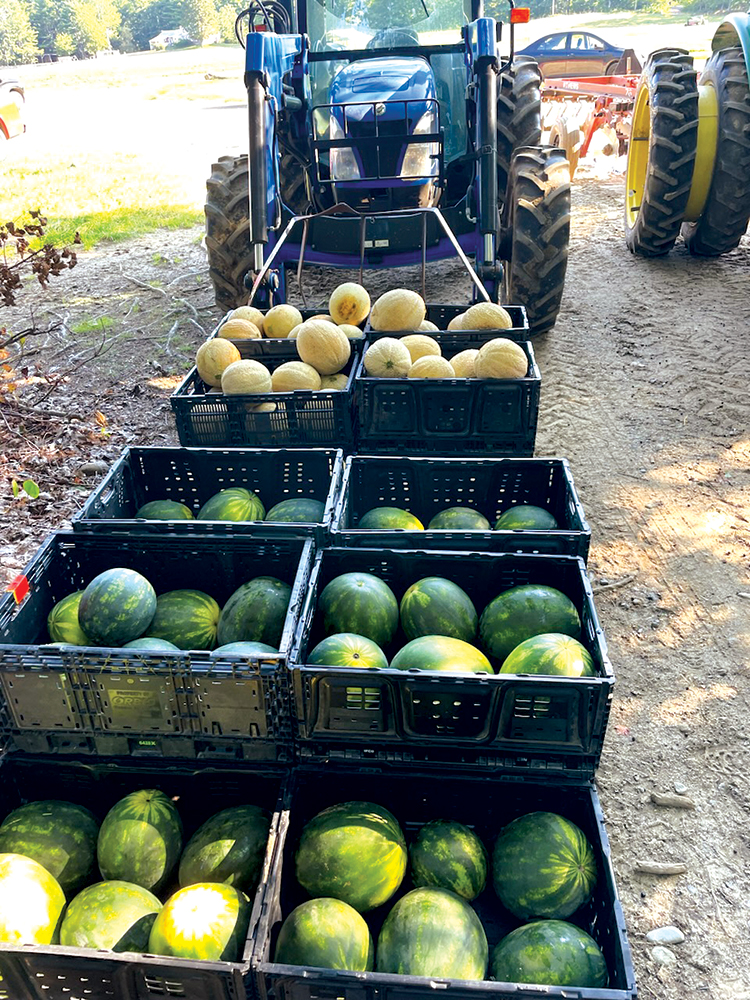
“As far as expanding crops, we do grow watermelon and cantaloupes already and those are easy to sell, and we’re always looking for other things we can get into, and the hunt continues with that,” Stevenson said. “We’re a small farm in a small farm state, surrounded by big guys, but we will continue to consciously expand.”
Looking back, he’s glad he decided to come back to the farm, as he enjoys the lifestyle and schedule that it brings.
“It’s a great life; of course, it’s not so great when you don’t have a successful year, but it’s really rewarding to call your own shots,” Stevenson said. “You reap the rewards and suffer the risk, and it would be really hard for me to give this up at this point in my life.”





Current Issue

Michigan researchers flag rising grape risks
Blueberry legacy: Tawas Blueberry Farm remains a staple of its community
Organic Grower: Mechanical advances help target weeds in organic vegetable farm setting
Farm Market & Agritourism: Identifying underperforming products in your farm market
Ag Labor Review: Low-hanging fruit opportunities
see all current issue »