







May 1, 2025Cherry grower Cherry Ke promotes specialty ag through social media
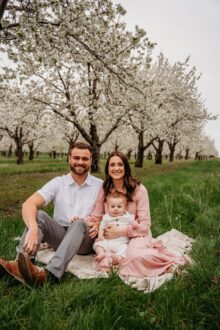
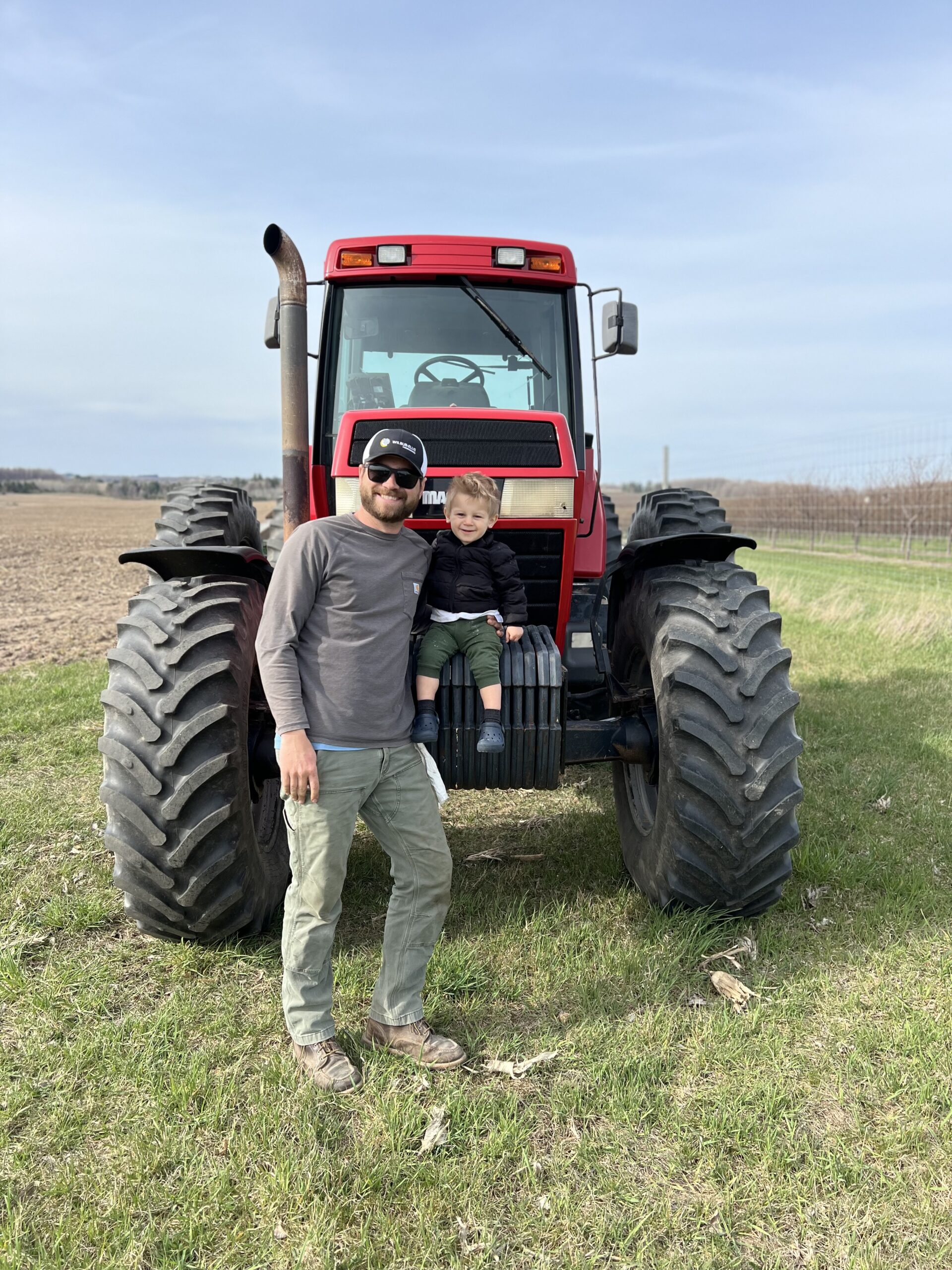
Growing cherries in a region known as the “Cherry Capital of the World,” tree fruit grower Talon Felker is a social media influencer who’s on a mission to promote Michigan’s specialty crops.
Through his social media channels, Felker, farm manager of Cherry Ke, a northwest Michigan cherry- and apple-growing operation, showcases projects and day-to-day farm occurrences throughout different seasons.
In his Pomes and Stones social media efforts, Felker’s 302 YouTube channel videos attracted nearly 6,000 subscribers and 3.9 million views in just over a year. Felker started a specialty crop podcast, where he and a rotation of guests and co-hosts, including growers and crop specialists, discuss in-season issues, agricultural topics and agribusiness.
From Kewadin, Michigan, Cherry Ke grows 2,400 acres in five counties, the bulk being conventional tart cherries, with 250 acres of organic tart cherries and 35 acres of apples north of Traverse City, Michigan.
Cherry powerhouse
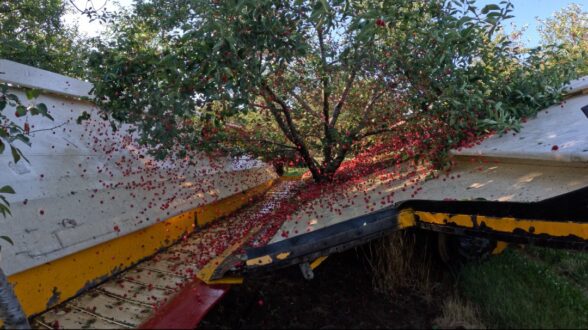
For cherries, Cherry Ke grows 98% tart Montmorency, with sweets and Balaton sour cherries constituting the balance. In apples, Cherry Ke grows Honeycrisp, Premier Honeycrisp, Ida Red, MacIntosh, Galas, Jonagolds and Ambrosia varieties. The first apple orchard was planted in 2021, with initial harvest in 2024.
A farm-to-table operation, Felker’s tart cherries are marketed through Shoreline Fruit Growers Co-op (SFG), a part of Cherry Ke’s vertically integrated family of companies. SFG handles around 20% of the national tart cherry crop.
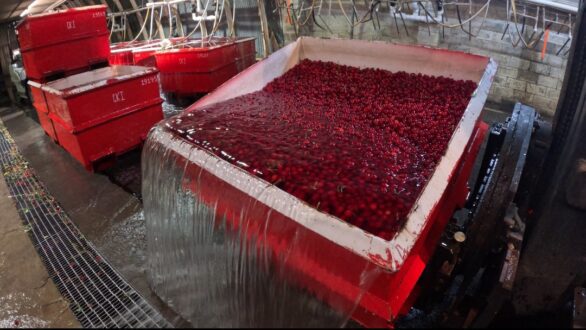
Dried and juice/concentrate are Cherry Ke’s largest market, with fruit for the frozen, juice, dried and pie fill markets sold through Shoreline Fruit (SFL) and its Cherry Bay Orchards retail brand. Felker’s sweet cherries are processed and marketed into Maraschino cherries via SFL.
“Growing varieties that the consumer wants is always important,” Felker said. “Planting apples that people want to buy and eat is important to keep sales up.”
Cherry Ke traces its roots to 1969, when Norm, Dean and Gene Veliquette formed the cherry farming partnership Century Farms. In 1972, Cherry Ke was founded, consolidating several other partnerships that had worked cooperatively, sharing labor, equipment and skills.
Felker’s biggest challenges are costs, including fuel, labor and spray materials.
Spotted wing drosophila (SWD) and plum curculio are the top pests Felker battles. SWD is a fruit fly that stings and infests cherries early in the ripping or unripe stage of cherries and is difficult to control once established. Plum curculio is an early-season pest that stings the fruit, leaving a crescent moon-shaped scar on the fruit’s surface.
Crop protection
“Battling these pests is all about timing,” Felker said. “One must have a great IPM plan, but having a plan is not enough on its own. Being on top of the spray program is a must. To me, being active and scouting your orchards, checking traps and paying attention to weather trends that favor pest activity are musts. Sometimes that still isn’t enough. These two pests are almost unmanageable in our organic program if they get out of control.”
Cherry leaf spot and brown rot are the biggest disease issues in cherries, with scab, fire blight and powdery mildew troublesome in apples.
“The best way to deal with these problems is to be ahead of them, being prepared and rotating chemistries to prevent resistance,” Felker said. “Consistent spraying is very important. All it takes is one spray infection period that you miss and pests, infections and diseases and the populations can explode with the right conditions.”
To control weeds, Felker uses a combination of pre- and post-emergent sprays.
“Weed control can be very difficult once the weeds grow to a certain size and vigor,” he said. “The ability to get a product on the weeds while they are in the early stages of their life cycle is so important. With the amount of acres that we farm, it can be difficult to cover all the ground while all the conditions line up.”
Felker added GPS to one of its tractors to aid in the accuracy of tree plantings. Tractors drive in a straight line while the system also plots perpendicular lines for tree placement. When the tractor arrives at the location of where the tree should be planted, a light flashes on the planter, producing an almost perfectly square orchard.
Deploying old school buses as spray trucks, Cherry Ke sprays with 750 gallon tanks covering 60 to 90 acres per load at 7.5 to 8 mph. A spray apparatus and second diesel engine added to the truck’s rear power a blower system.
For crop protection, Felker has for many decades constructed frost fans from old pickup trucks and Suburban engines and transmissions. A fabricated drive shaft and fan blades circulate orchard air. The fan units are paired with Phil Brown towers, Chinook wind machine blades and Orchard-Rite front towers.
Social media focus
Receiving positive social media feedback from family, friends, coworkers and ag peers, Felker was inspired by growers of other crops.
“For years I’ve seen plenty of row crop farmers be very successful simply by showing only what they do on a day-to-day basis,” he said. “I thought to myself, ‘This is something I can do.’”
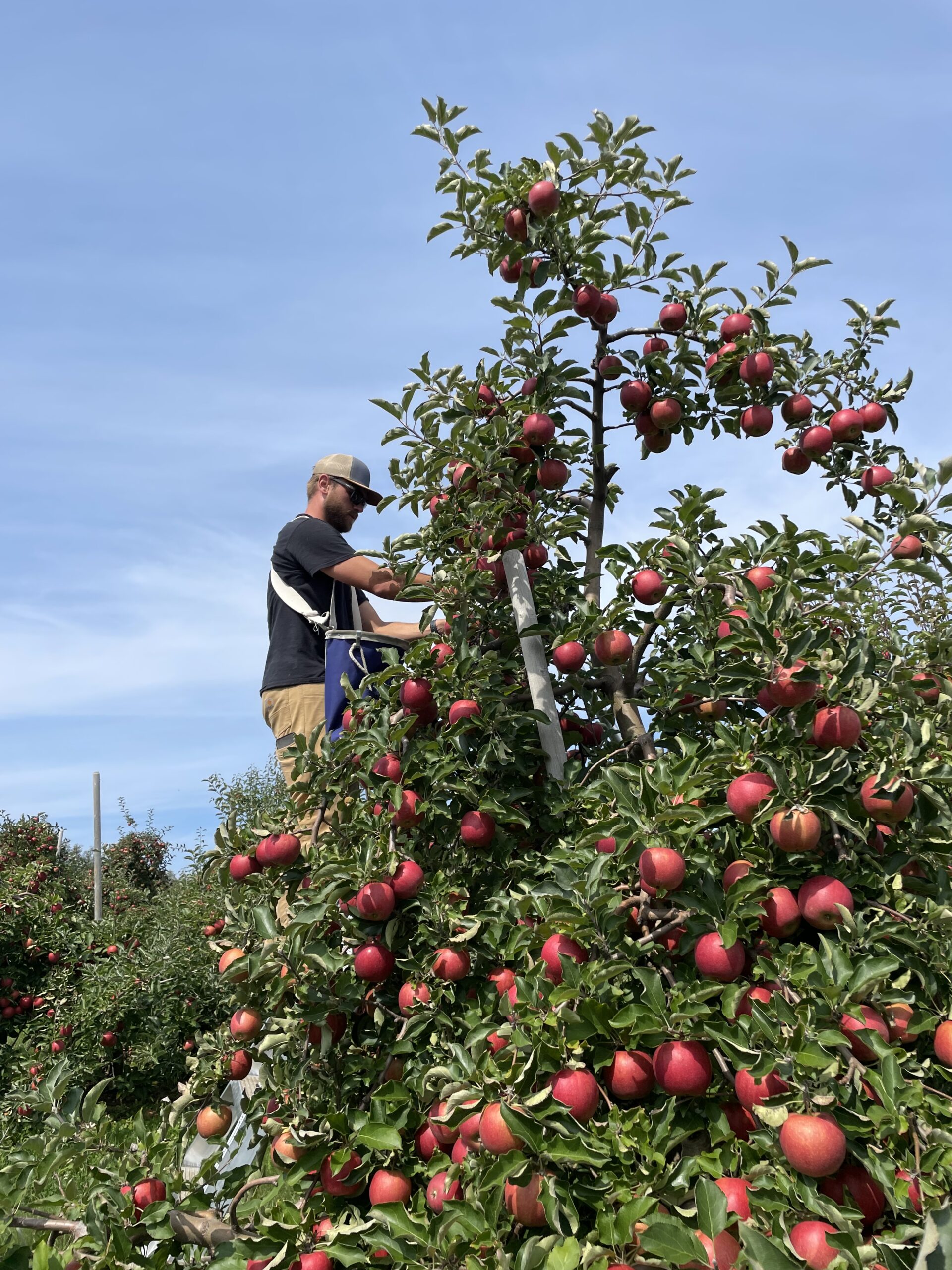
Felker’s initial vision was showing the pros and cons of what it’s like to be a millennial farmer growing specialty crops in Michigan.
“What’s encouraging is the reach that I’ve been able to gain in the short time since I started my social media journey,” he said. “I’ve seen all types of people comment and watch my farming videos, all ages, genders and even from different countries. This tells me that there is a great interest in agriculture. People are interested in what we do in the agriculture field. It is great to see the results and validation of the work I’ve done returned in that way.”
After being disappointed by seeing grocery stores last July and August selling imported cherries when growers a few miles away were harvesting fresh Michigan cherries, Felker said he saw an opportunity to bring more attention to crops grown in the U.S. and northern Michigan.
“There has never been a time where the consumer has had more interest in knowing and seeing where their food is coming from and being grown; specifically, the specialty crops of cherries and apples,” he said. “It has been neat to hear from people across generations about things they have learned from my videos.”
— Doug Ohlemeier, Assistant Editor




Current Issue

Michigan researchers flag rising grape risks
Blueberry legacy: Tawas Blueberry Farm remains a staple of its community
Organic Grower: Mechanical advances help target weeds in organic vegetable farm setting
Farm Market & Agritourism: Identifying underperforming products in your farm market
Ag Labor Review: Low-hanging fruit opportunities
see all current issue »